 Big Big GameFishing Co.
How to Choose a Fishing Reel & Line: Gear Ratio, Size & Line Type (2026)
Key takeaways
- Start spinning. Spinning reels are easy to cast and tangle less; baitcasters add control and power but need ~5–15 hours to master. (Ardent)
- Gear ratio = speed. Low (~5.2:1) means cranking power; high (7.1:1+) means fast retrieves. Spinning runs 4.8:1–6.2:1, baitcasters 5.4:1–9.1:1. (Wired2Fish)
- 1000 → 30000. Reel sizes scale from ultralight to offshore; 2500–3000 covers most freshwater. (West Marine)
- Three lines. Mono (stretchy, cheap, floats), fluorocarbon (invisible, sinks, abrasion-resistant), braid (no stretch, thin, strong). (Strike King)
- Braid is thin. 30 lb braid can match the diameter of much lighter mono, so you spool more and cast farther. (Tackle Village)
- ~$6B market. The global fishing reels market is roughly $5.7–7.6B in 2026, growing ~4–5% a year. (market reports)
Spinning vs baitcasting vs spincast
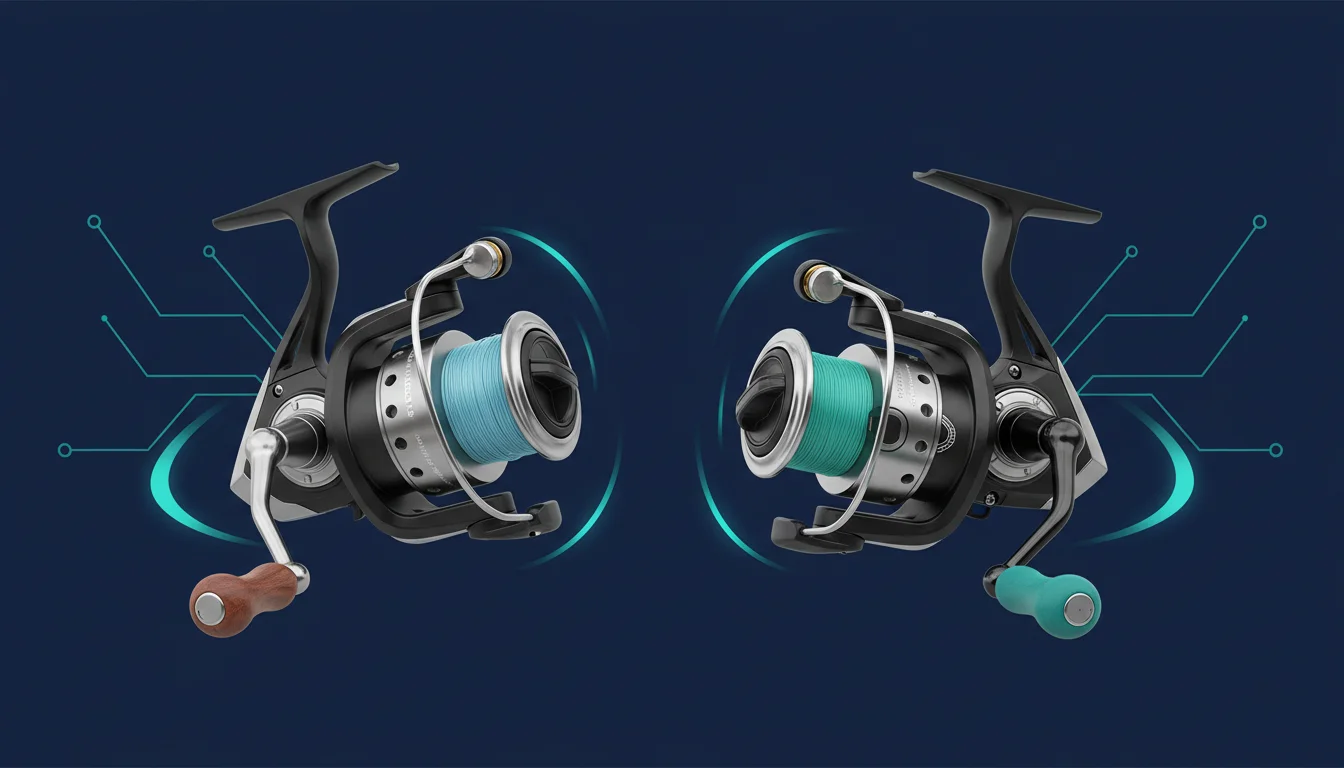
Spinning reels are the beginner-friendly default; baitcasters trade a learning curve for control and power; spincast reels are the simplest push-button option for kids and first-timers.
| Type | Character | Best for |
|---|---|---|
| Spinning | Hangs under rod; easy cast, fewer tangles | Beginners, light lures, finesse |
| Baitcasting | Sits on top; more control & power, backlash risk | Heavy lures, cover, accuracy |
| Spincast | Push-button, enclosed spool; simplest | Kids, absolute beginners |
The reel you learn on matters more than the badge on it. A mid-range spinning reel paired with the right rod power and action will out-fish an expensive baitcaster you can't cast yet.
Gear ratio: speed vs power
Gear ratio is how many times the spool rotates per handle turn. A higher number retrieves line faster; a lower number gives more cranking torque for big baits.
| Gear ratio | Feel | Best for |
|---|---|---|
| Low | ~5.2:1 | Deep cranks, big swimbaits, torque |
| Medium | ~6.4:1 | All-round; most techniques |
| High | 7.1:1–9.1:1 | Reaction baits, jigs, quick pickups |
Spinning reels generally top out around 6.2:1, while baitcasters range from powerful 5.4:1 cranks up to 9.1:1 speed demons. If you own one reel, a medium ratio near 6.4:1 handles the widest range of techniques.
Reel size chart
Spinning reel sizes are numbered from 1000 (ultralight) up to 30000 (heavy offshore). Match size to line weight and target fish.
| Size | Line (mono) | Best for |
|---|---|---|
| 1000–2000 | 2–8 lb | Ultralight: panfish, trout |
| 2500–3000 | 6–12 lb | Do-everything freshwater: bass, walleye |
| 4000–5000 | 10–20 lb | Light salt, inshore, big freshwater |
| 6000–30000 | 20 lb+ | Surf & offshore big game |
Most anglers are best served by a 2500–3000. Step up only when you need more drag and capacity for inshore and offshore species — bigger reels add weight and cost you won't use on a bass pond.
Monofilament vs fluorocarbon vs braid
The three main lines each trade off stretch, visibility, and price. Most anglers end up using all three for different jobs — often braid main line with a fluorocarbon leader.
| Line | Stretch | Visibility | Cost | Best for |
|---|---|---|---|---|
| Monofilament | High | Moderate | Low | Beginners, topwater, knots |
| Fluorocarbon | Low-med | Near-invisible | High | Leaders, clear water, bottom |
| Braid | None | High | Med-high | Heavy cover, distance, sensitivity |
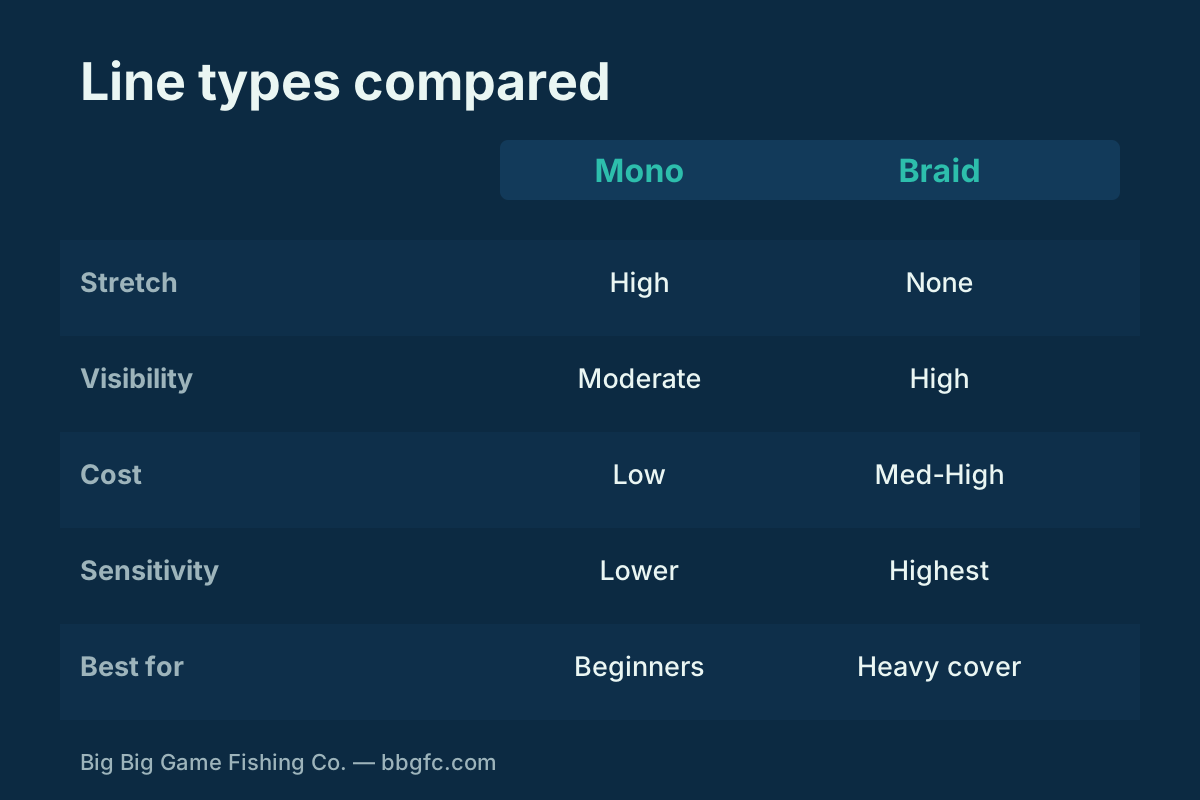
Mono floats and forgives, which is why it's the beginner's line and still the topwater favorite. Fluorocarbon disappears underwater and resists abrasion, making it the go-to leader. Braid's zero stretch telegraphs every bite, which pairs perfectly with sensitive fast-action rods and the lures in our tackle hub.
Pound test & leaders
Pick pound test to match reel size and target fish. Because braid is so thin for its strength, its pound tests run much higher than mono or fluoro at the same diameter.
A popular all-round setup is braid main line with a fluorocarbon leader: you get braid's strength and sensitivity on the reel and fluoro's invisibility and abrasion resistance near the hook. For clear water and spooky fish, that leader matters as much as the lure.
The fishing reel market (2026)
Reels are a multi-billion-dollar global market, growing steadily as materials and drag systems improve across price tiers.
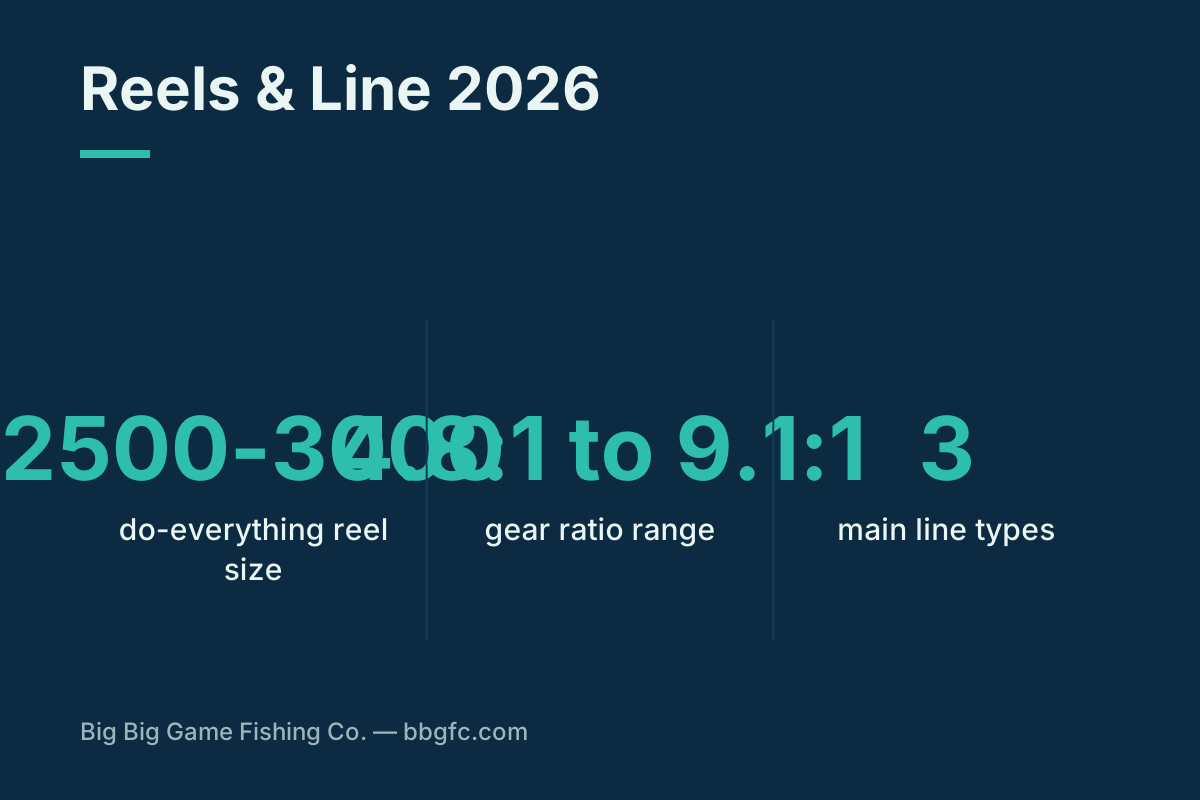
What that growth buys anglers is better value: sealed drags, lighter frames, and smoother retrieves now show up at mid-range prices that used to be premium-only — the same trend we track in our gear and accessories hub.
What reel setup do I need?
Explore our reel & line guides
Deep-dive guides on every reel type, brand, and line go live as we publish them.
Methodology
Reel selection specs (type, gear ratio, size) and line-type trade-offs are compiled from manufacturer and retailer references (West Marine, Strike King, Ardent) and established angling authorities (Wired2Fish), cross-checked for agreement. Market size and growth come from 2026 fishing-reel market analyses, whose estimates vary and are presented as a range. Sizes and ratios differ by brand — always verify on the spec sheet. Maintained as an evergreen reference.
Frequently asked questions
Spinning or baitcasting reel — which should a beginner get?
What size spinning reel do I need?
What does gear ratio mean on a reel?
Monofilament, fluorocarbon, or braid — which line is best?
Why is braided line so much thinner than mono?
What pound test line should I use?
Do I need a fluorocarbon leader with braid?
How big is the fishing reel market?
Sources
- Wired2Fish. "Choosing the Right Gear Ratio Fishing Reel." wired2fish.com. Accessed Sept 19, 2026.
- Ardent Tackle. "How to Choose the Perfect Fishing Reel (2026)." ardentoutdoors.com. Accessed Sept 19, 2026.
- West Marine. "Selecting a Spinning Reel." westmarine.com. Accessed Sept 19, 2026.
- Strike King. "Fishing Line Breakdown." strikeking.com. Accessed Sept 19, 2026.
- Tackle Village. "Fishing Line Diameter Chart." tacklevillage.com. Accessed Sept 19, 2026.
- IMARC Group. "Fishing Reels Market." imarcgroup.com. Accessed Sept 19, 2026.