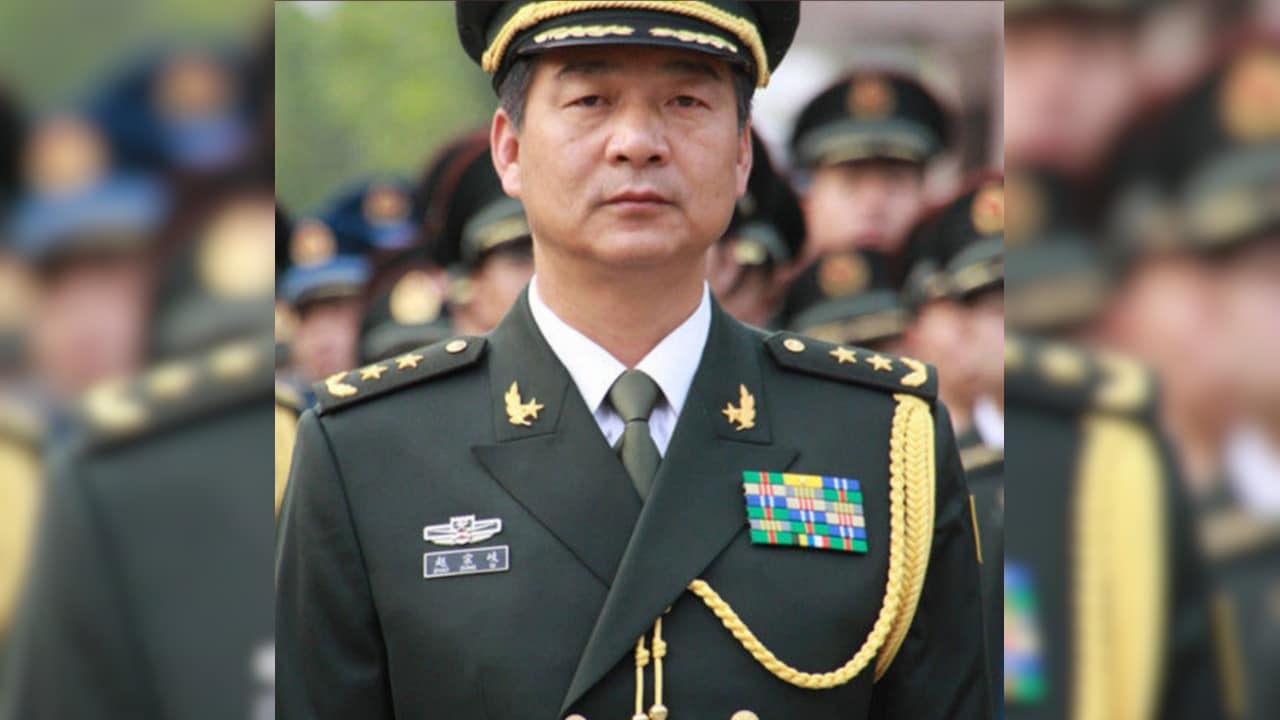
Power struggles inside Beijing don't happen by accident. When a top-tier commander gets stripped of his titles, heads turn. General Zhao Zongqi is out. The architect of some of the most tense standoffs along the disputed Asian frontier has lost his seat in China's top political advisory body, the Chinese People's Political Consultative Conference.
If you follow military affairs closely, you already know Zhao's name. He ran the Western Theatre Command during the 2017 Doklam confrontation and the brutal 2020 Galwan Valley skirmishes. Xi Jinping is cleaning house. But reading this purely as a standard anti-corruption drive misses the bigger picture of how Beijing handles military heavyweights who grow too influential.
The Rise of a Border Hardliner
Zhao didn't climb the ranks by staying behind a desk. Born in Heilongjiang province back in 1955, he joined the People's Liberation Army at just sixteen years old. That is a lifetime of service. He cut his teeth on the frontlines of the 1979 China-Vietnam War around Lao Cai and Sa Pa.
Military service in China requires adaptability. Zhao spent time studying Arabic from 1986 to 1988 before serving as a military attaché in Tanzania. When he returned home, he dove straight into specialized ground operations. He commanded the first newly formed mountain brigade in 1990, served in the Tibet Military Region, and eventually led both the 13th and 14th Group Armies.
By 2015, he had his full general stars. When Beijing restructured its military regions into massive theater commands in 2016, Zhao landed the most critical posting of his career. He took charge of the Western Theatre Command. That specific theater looks directly at India, Central Asia, and Tibet. Under his watch, the Himalayan frontier transformed from a quiet patrol zone into a heavily fortified flashpoint.
What Triggered the Fall
Western analysts often label these sudden purges as routine anti-corruption campaigns. Reality is messier. Xi Jinping demands absolute loyalty and complete operational obedience. When high-ranking generals build independent power bases or stumble during geopolitical maneuvering, the axe falls hard.
Alongside Zhao's removal, other heavy hitters vanished from high commands. Senior figures like Central Military Commission Vice Chairman Zhang Youxia and Joint Staff Department chief Liu Zhenli faced probes for serious disciplinary violations. When you clear out the entire military old guard, you change the operational DNA of a nuclear-armed state.
Zhao's tenure at the Western Theatre Command defined an era of aggressive posture. The 73-day Doklam standoff in Sikkim's tri-junction tested India's resolve. Then came Galwan in 2020, where hand-to-hand combat in sub-zero temperatures killed soldiers on both sides and permanently froze diplomatic normalization between New Delhi and Beijing.
Behind the Uniform
Away from the war rooms, Zhao held some unusual hobbies for a senior communist commander. He enjoyed photography. He even consulted on the popular Chinese military television drama Soldiers Sortie, helping production teams nail tactical details.
Yet, artistic hobbies don't protect you when political winds shift. Xi's consolidation of power leaves very little room for historical heavyweights. With Zhang Youxia and Liu Zhenli also sidelined, the Central Military Commission now sits nearly empty, leaving just a tiny core of loyalists around the supreme leader.
What Happens Next on the Frontier
Don't expect the border to suddenly turn peaceful because a retired general lost his political advisory seat. The operational architecture Zhao built in the high-altitude sectors remains fully active. New roads, airbases, and fortified habitats on the plateau were designed to stay.
However, command structures driven by absolute central control often react differently to friction points. Keep a close eye on upcoming rotational postings within the Western Theatre Command. New commanders will want to prove their loyalty to Beijing, which could either mean a rigid continuation of border pressure or a tactical pause while the dust settles in domestic politics. Watch the troop movements, ignore the diplomatic boilerplate, and judge the situation by what happens on the ground.