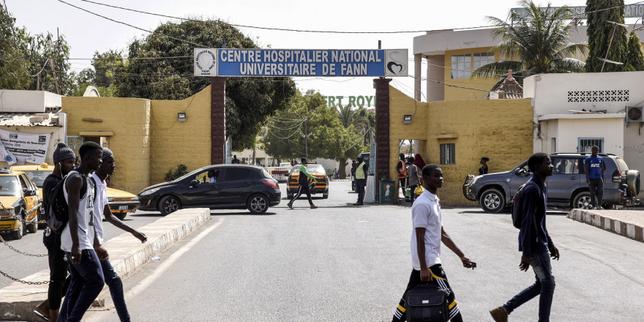
Dakar is quietly slipping backward. For over a decade, Senegal stood as the bright spot for progressive public health policies in West Africa. When the country opened the Centre de Prise en Charge Intégrée des Addictions de Dakar (CEPIAD) inside Fann Hospital back in late 2014, it defied regional taboos. Instead of throwing people who use drugs into overcrowded prisons, Senegal offered them medical care, psychological support, and daily doses of methadone. It worked. Hundreds of individuals managed to reclaim their lives, stabilize their families, and escape the constant threat of HIV and hepatitis C transmissions.
Now, that entire system is on the verge of collapsing. The reason isn't a lack of political will or a sudden surge in demand. It is a quiet, devastating retreat of international funding. As foreign donors shift their priorities or shrink their budgets in 2026, the local clinics that keep heroin users stable are running out of money. Without immediate intervention, hundreds of patients risk falling through the cracks, returning straight to dangerous street heroin and unsterile needles. Recently making waves in related news: The Cancer Warning Every Indian Household Needs To Take Seriously.
If you want to understand how a model public health program gets starved to death, you have to look at what happens when international aid evaporates. The problem isn't just a Senegal problem. It is a warning sign for health programs across the continent that rely on foreign checkbooks.
The Fragile Success of Dakar Pioneer Methadone Program
Before CEPIAD opened its doors, options for drug users in Dakar were bleak. The legal system viewed addiction purely as a crime. The medical system lacked the resources and the training to treat it as a chronic brain disease. People who injected heroin hid in the shadows, sharing dirty syringes in abandoned buildings and dodging police sweeps. HIV rates among people who inject drugs skyrocketed, reaching over twenty percent in some local studies, far higher than the national average. More details regarding the matter are covered by National Institutes of Health.
The launch of the methadone program changed the entire equation. By treating addiction as a medical condition, the center offered a lifeline. Methadone satisfies the opioid cravings without producing the debilitating high of street heroin, allowing individuals to hold down jobs and fix broken relationships. The center didn't just hand out medication. It built an environment where people felt safe. They introduced art therapy, gardening, and basic social reintegration services.
Data from the early years showed remarkable results. Within just a few months of starting treatment, over ninety percent of participants completely stopped using street opiates. Criminal behavior dropped. Health outcomes improved dramatically. Senegal proved to the rest of West Africa that harm reduction wasn't an idealistic Western fantasy. It was a practical, life-saving strategy that worked in a low-resource setting.
The success relied heavily on a South-South partnership with Morocco, where Senegalese medical teams traveled to learn how to run substitution programs. Local NGOs like the Alliance Nationale de lutte Contre le Sida (ANCS) stepped up to handle community outreach, ensuring that the most marginalized individuals could access the clinic without fear of harassment. For ten years, this combination of local dedication and international funding kept the gears turning.
How the Retreat of International Aid Threatens Years of Progress
The entire foundation of this harm reduction framework is built on shaky ground because Senegal didn't fund it. Foreign organizations did. Major institutions like the Global Fund to Fight AIDS, Tuberculosis and Malaria, alongside French initiatives and international NGOs, picked up the tab for the methadone, the clean needles, the staff incentives, and the laboratory equipment.
Foreign priorities change. Over the last couple of years, international donor strategies shifted. Some organizations decided to pivot their resources toward other crises or scale back their investments in nations that moved up the economic ladder. The result for CEPIAD and its satellite projects has been a slow, agonizing financial strangulation.
When international aid drops, the consequences aren't abstract financial figures on a spreadsheet. They hit the clinic floor immediately. Supplies of clean syringes become erratic. Maintenance on critical lab equipment gets delayed. Most dangerously, the supply chain for methadone and other essential medications becomes unstable.
Running out of methadone isn't like running out of vitamins. If a patient misses their daily dose, intense physical withdrawal sets in within twenty-four hours. The anxiety, the bone-deep aches, and the overwhelming cravings return with terrifying force. When a clinic can't guarantee a steady supply of medication, the trust that took years to build with a deeply suspicious community vanishes overnight. Patients stop showing up. They go back to what they know will stop the pain. They go back to the streets.
The Looming Resurgence of Heroin and Synthetic Substitutes
The danger isn't just that old habits will return. The drug market itself has grown much more dangerous since Senegal first launched its harm reduction programs. In the mid-2010s, the primary concern was brown heroin. Today, West Africa is dealing with a flood of cheap, toxic synthetic substances that complicate the addiction crisis.
Street corners in the region now see the widespread circulation of drugs like kush, tramadol, and cheap ecstasy variants. Kush, a highly unpredictable synthetic blend often laced with toxic chemicals, has already caused devastation among youth in neighboring Sierra Leone and Liberia. It is cheap, highly addictive, and inflicts severe mental and physical damage much faster than traditional opiates.
If recovering heroin users lose access to CEPIAD because of funding shortages, they won't just look for heroin. They will look for whatever is cheap and available on the street. The emergence of these new substances means that a relapse spike in 2026 will look very different, and much deadlier, than the drug problem of a decade ago. The United Nations Office for West Africa and the Sahel (UNOWAS) highlighted these precise threats during recent workshops in Dakar, noting that the combination of changing drug trafficking routes and declining health budgets creates a perfect storm.
When a person relapses after years on methadone, their tolerance is low. If they inject street heroin or mix it with synthetic substances, the risk of a fatal overdose skyrockets. The progress made in keeping HIV and hepatitis transmission rates low among drug users will unravel. A single shared needle can spark a localized outbreak that quickly spills over into the wider community. Shifting funds away from harm reduction doesn't save money. It just defers the cost to emergency rooms, morgues, and anti-crime budgets.
Moving Beyond Foreign Funding to Protect Public Health
Relying on international donors to fund core public health infrastructure is a trap. Senegal fell into it, and now hundreds of vulnerable citizens are paying the price. The only way to stop this cycle is to transition harm reduction from a collection of donor-funded projects into a permanent fixture of the national healthcare system.
If Senegal wants to protect the progress it achieved over the last decade, it needs to take immediate, practical steps to assume financial ownership of its addiction services.
Allocate Dedicated Domestic Health Budgets for Addiction Care
The Senegalese Ministry of Health must create a permanent budget line for addiction treatment and harm reduction. Relying on foreign grants to buy methadone is a massive national security risk. The state needs to buy these medications directly, integrating them into the national pharmacy supply chain just like treatments for malaria or tuberculosis.Integrate Harm Reduction into Universal Health Coverage
Senegal has worked to expand its national health insurance systems. Addiction care should not be treated as a separate, optional service. By integrating CEPIAD and similar regional clinics into the standard public health framework, the costs of consultations, psychological support, and maintenance therapy can be absorbed by national insurance schemes.Decentralize Services to Reduce Pressure on Dakar
Right now, too much of the burden falls on a single clinic in the capital city. Addiction doesn't stop at the borders of Dakar. Senegal needs to establish smaller, integrated addiction units within regional hospitals across the country. These regional hubs can distribute treatments and manage patients locally, reducing travel costs for users and making the program more resilient to localized disruptions.Update the Legal Framework to Protect Public Health Interventions
The country still operates under older anti-drug laws that criminalize possession and usage. While the government tolerated harm reduction programs, the legal ambiguity makes it harder to expand outreach services like needle exchange programs. The National Assembly needs to reform the penal code to explicitly protect health workers and ensure that drug users seeking treatment are met with medicine, not handcuffs.
The crisis unfolding in Dakar is entirely predictable. When you build a life-support system using someone else's money, you shouldn't be surprised when they eventually unplug the cord. Senegal proved to the world that it had the courage to change its strategy and treat drug users with dignity. Now, it needs the courage to pay for it.