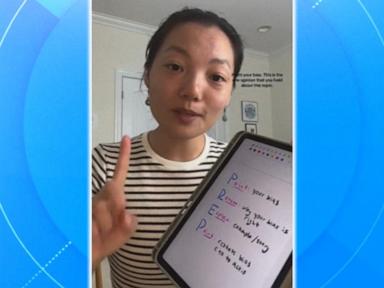
We all saw that viral video of a woman openly tackling her public speaking fear in front of a massive audience. It racked up millions of views in minutes. Why? Because watching someone sweat, shake, and push through a presentation anyway feels like watching a high-wire act without a safety net. It’s terrifying. Most of us would rather jump out of a plane than stand behind a podium.
The internet fell in love with her vulnerability. But watching a heartwarming video doesn't fix your own shaking hands the next time you have to present to your team. Don't forget to check out our previous post on this related article.
Public speaking fear is brutally real. The National Institute of Mental Health notes that public speaking anxiety affects a staggering number of people, often ranking higher than the fear of death. That sounds absurd until you're the one staring at twenty blank faces waiting for you to speak. Your stomach drops. Your throat closes up.
If you want to actually overcome this paralyzing anxiety, you need more than a generic pep talk. You need to understand what your brain is doing and how to short-circuit the panic button. If you want more about the history of this, Refinery29 provides an informative breakdown.
The Real Reason That Viral Public Speaking Video Hit Hard
The viral clip resonated because it didn't show a polished influencer pretending to be perfect. It showed raw panic. The speaker’s voice cracked. She took long, awkward pauses. She explicitly admitted she was terrified.
And guess what? The audience didn't boo her off the stage. They cheered.
This exposes the biggest lie your brain tells you about public speaking. You think the audience is a pack of wolves waiting for you to fail. They aren't. They want you to succeed because watching someone bomb a speech is excruciatingly uncomfortable for everyone in the room. When you show a bit of humanity, people immediately root for you.
Most corporate training programs tell you to fake it until you make it. That advice is trash. When you try to mask severe anxiety with a fake smile, your brain detects the mismatch. It panics even more. The woman in the video broke the internet because she stopped faking it. She owned the fear, and by doing so, she took away its power.
Why Your Brain Treats a Microphone Like a Sabre-Toothed Tiger
To beat public speaking fear, you have to understand the evolutionary biology behind it. Your brain has an ancient alarm system called the amygdala. Thousands of years ago, being stared at by a large group of people meant one of two things. You were either about to be eaten by predators, or you were about to be exiled from your tribe. Both meant death.
When you step up to a microphone today, your amygdala doesn’t know you're just presenting quarterly sales figures. It thinks you're about to die.
Your body floods with adrenaline. Your heart rate skyrockets to pump blood to your muscles so you can run away. Your digestive system shuts down, which causes that dry, cotton-mouth feeling. Your vision narrows.
You can't think straight because your prefrontal cortex, the part of your brain responsible for logic and language, gets hijacked by your survival instinct. You aren't weak or broken. You just have a fully functioning human brain that is terribly calibrated for modern office life.
The Wrong Way to Fix Public Speaking Anxiety
Most people handle this fear completely wrong. They try to fight the adrenaline. They tell themselves to calm down.
That never works. Telling a panicking brain to calm down is like throwing gasoline on a fire.
Another classic mistake is over-preparing. People write out their speeches word-for-word and try to memorize them. This is a trap. The moment you forget a single word, your entire structure collapses. You freeze. You scramble. The panic doubles.
Instead of trying to eliminate the adrenaline, you have to learn to drive the car while the alarm is going off. Harvard Business School researcher Alison Wood Brooks found that trying to force yourself to feel calm during a high-anxiety task actually hurts your performance. Her study showed that people who reframed their anxiety as excitement performed significantly better. The physiological markers for anxiety and excitement are almost identical. Your heart races for both. Your breathing quickens for both. Change the story you tell yourself about the physical sensations.
Actionable Steps to Build Real Speaking Confidence Today
If you want to move past the viral video inspiration and actually change your own life, you need a concrete strategy. Here is what works in the real world.
Use the Physiological Sigh to Reset Your Nervous System
When the panic hits right before you speak, your breathing becomes shallow. You trap carbon dioxide in your lungs, which signals to your brain that you're suffocating. Stanford neuroscientist Andrew Hubman champions a technique called the physiological sigh to instantly reverse this.
Take two quick inhales through your nose, followed by one long, slow exhale through your mouth. The second inhale pops open the tiny air sacs in your lungs, allowing you to dump carbon dioxide efficiently. Do this two or three times. Your heart rate will drop almost instantly.
Speak in Bullet Points Not Scripts
Never write a script. Write down concepts. If you know your topic, you can talk about it naturally with a friend over a cup of coffee. Treat your audience like that friend. Use simple note cards with three or four main bullet points. This keeps you flexible and prevents the catastrophic mental freeze that happens when you lose your place in a written essay.
Focus on the Content Not Yourself
Anxiety makes us intensely self-focused. We worry about how our voice sounds, what our hands are doing, and whether people can see us sweating. Shift your focus outward. You are there to deliver value to the audience. Think of your speech as a gift you're handing over. When you focus entirely on making sure the audience understands your message, your self-consciousness naturally fades away.
Embrace the Strategic Pause
Amateurs rush. When they get nervous, they speak at warp speed to get the ordeal over with. This makes them look panicked and leaves the audience exhausted. Force yourself to pause. A three-second silence feels like an eternity to you, but to the audience, it looks like supreme confidence. It gives them time to process what you just said.
What to Do Tomorrow Morning
Don't wait for a major presentation to practice this. Start ridiculously small. Speak up in your next internal team meeting. Volunteer to introduce a coworker. Record yourself talking to a camera for sixty seconds and watch it back without cringing.
The woman who went viral didn't wake up one day cured of her phobia. She chose to face it publicly, messily, and honestly. You can do the exact same thing in your own life. Stop waiting for the fear to vanish before you take action. Take action while you're still terrified. Your brain will eventually get the memo that you aren't actually dying.