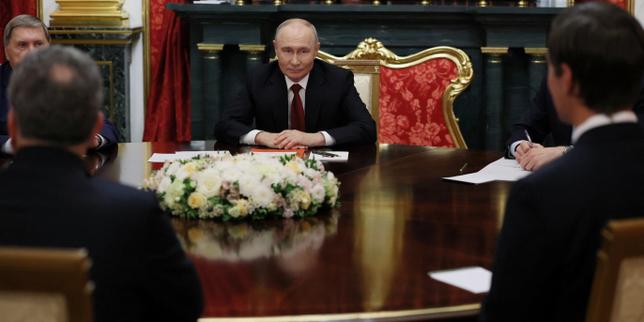
High-stakes diplomacy rarely looks clean from the outside. When closed-door meetings happen in Moscow between Russian leadership and American representatives, the stakes are always astronomical. Putin meeting US envoys in Moscow signals a tense reality beneath the diplomatic varnish.
You don't call high-level envoys to the Kremlin if everything is going according to plan. You call them when the math stops working on the battlefield and the economic pressure starts biting harder than official figures admit. Let's break down what's actually happening behind closed doors and why this moment carries immense weight.
The Reality Behind Closed Doors in Moscow
Diplomacy is theater. Everyone knows the script. Envoys arrive with stern faces. Kremlin officials project unshakeable calm. Photographers snap quick shots, and then the real friction begins behind closed doors.
Russian state media frames these encounters as proof that Washington is finally listening. Western outlets view them as desperate attempts to find an off-ramp from a grinding stalemate. The truth usually sits somewhere in the messy middle.
When Vladimir Putin sits across the table from American diplomats, he isn't negotiating from absolute strength or complete weakness. He's managing a complex web of sanctions, military attrition, and shifting alliances with Beijing and Pyongyang. Sanctions have stung harder than Moscow anticipated, but the Russian economy adapted faster than Western planners hoped. That creates a brutal stalemate. Neither side can completely crush the other quickly.
Why Washington is Sending Envoys Now
Timing is everything in geopolitics. Washington doesn't dispatch senior diplomatic figures on whim. Domestic political calendars in the United States, combined with mounting fatigue among European allies, create a narrow window for exploratory talks.
Voters in Western democracies are growing tired of blank-check funding and endless proxy conflicts. Inflation woes and domestic infrastructure crises dominate kitchen-table conversations. Politicians feel the squeeze. Sending envoys to test the waters in Moscow isn't necessarily about immediate peace treaties. It's about risk management and exploring whether any common ground exists before positions harden further.
The Core Disconnect
The fundamental problem hasn't changed.
- Moscow wants security guarantees that NATO will never expand further eastward.
- Washington demands a complete withdrawal from sovereign territories and respect for international borders.
Those two demands occupy completely different galaxies. There is zero overlap. When diplomats talk about a "difficult situation," they mean both sides are locked into maximalist positions that neither leader can abandon without looking weak at home.
What the Media Gets Wrong
If you consume mainstream coverage, you'll often hear that talks mean an imminent breakthrough or total capitulation. Both narratives are lazy.
Putin's inner circle thrives on ambiguity. They use diplomatic channels to test Western resolve, probe for cracks in the transatlantic alliance, and signal to domestic audiences that Russia remains a global superpower capable of forcing the United States to the table. Meanwhile, American envoys use these meetings to establish red lines and prevent miscalculations that could spiral into direct military confrontation.
We aren't watching a movie where peace is signed with a dramatic flourish. We are watching a slow-motion chess match where both players are running low on pieces.
Where This Leads Next
Diplomatic backchannels will remain active whether the public hears about them or not. Intelligence chiefs and special envoys will keep meeting in neutral capitals or behind heavily guarded Kremlin walls.
If you want to understand where global stability is heading, stop watching the public press releases. Pay attention to supply lines, energy flows, and quiet diplomatic missions that rarely make the front page. The situation in Moscow remains fluid, and anyone pretending to know the exact outcome is selling you fiction. Keep your eyes open, ignore the political spin, and look at the raw leverage each side actually holds.