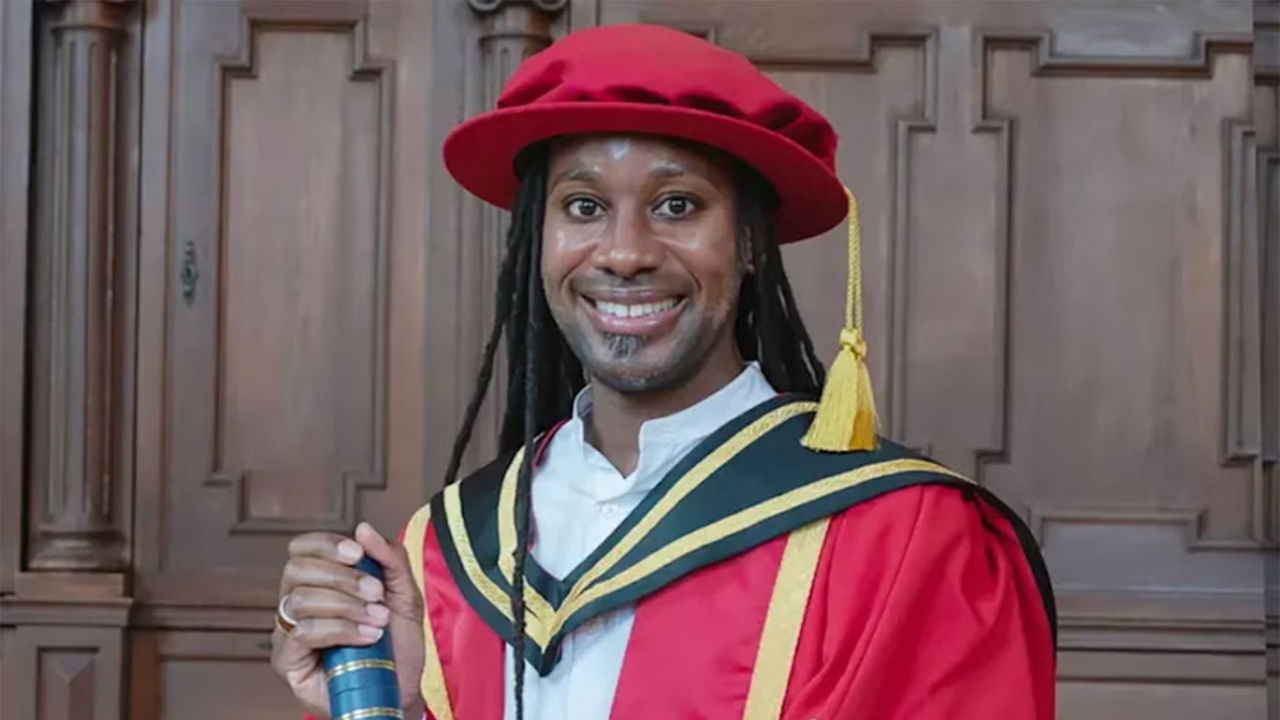
The headlines hit fast. Jason Arday, the University of Cambridge's star sociology professor who captured global attention as the youngest Black professor ever appointed at the institution, abruptly stepped down. Behind this exit lies a messy collision of academic scrutiny, contested credentials, and a pressure cooker of public exposure that ultimately broke an academic career.
If you only read the surface-level news snippets, you might think this is a straightforward case of caught-in-the-act academic dishonesty. The reality is far messier. It involves overlapping institutional investigations, intense cultural wars, and questions about personal background claims that stretched far beyond standard peer review. Let's look at what actually happened and why this story matters right now.
The Rise of Jason Arday
To understand why Jason Arday's resignation sent shockwaves through British higher education, you have to look at his origin story. Appointed as Professor of Sociology of Education at Cambridge in 2023 at the age of 37, Arday's personal journey was treated as an inspiring triumph against the odds.
He spoke openly about being diagnosed with autism as a child, remaining non-verbal until he turned eleven, and not learning to read or write until he was eighteen. He clawed his way through academia, earning his PhD in 2015 from Liverpool John Moores University and holding posts at Leeds Beckett, Roehampton, Durham, Warwick, and Glasgow before landing at Cambridge. That narrative made him an icon of perseverance. Thousands celebrated his appointment not just as an individual milestone, but as proof that talent could break down institutional barriers.
When the Scrutiny Began
Cracks in that narrative started showing up publicly when critics, including former Cambridge philosophy researcher Nathan Cofnas, began digging into Arday's public background claims and written record. On July 24, The Times published an analysis of Arday's 2015 doctoral thesis. The investigation pointed out multiple passages that matched or closely mirrored an earlier paper written by another researcher.
Simultaneously, skepticism spread regarding some of Arday's athletic and philanthropic claims. He had previously stated he completed 30 marathons in 35 days, ran 600 miles in six days, and helped raise millions for charity. When pressed for details, those claims shifted. Arday later explained that the fundraising efforts involved a group whose members he could not name due to legal agreements.
The Institutional Response
For months, the defenses held. Liverpool John Moores University, which reviewed the thesis plagiarism allegations previously, concluded that any textual overlaps were likely the result of honest errors rather than intentional cheating. Cambridge initially stood by its professor, pointing to those prior institutional clearances.
Things changed rapidly when fresh information surfaced. Cambridge announced a new, broader inquiry focusing not just on the research misconduct allegations, but on Arday's academic qualifications and honorary appointments. Facing an escalating storm of scrutiny, Arday submitted his immediate resignation from Cambridge and Jesus College, releasing a statement through the Good Law Project.
"The relentless accusations, speculation and public commentary have taken a profound toll on me and on those I love," Arday wrote, stating that stepping away was the only way to protect his family's wellbeing and bring the ordeal to an end.
Why This Case Divides Academia
The fallout exposes deep fault lines in modern academia. Supporters argue that high-profile minority academics face hyper-scrutiny and coordinated smear campaigns designed to delegitimize their presence in elite spaces. An open letter signed by various academics and politicians framed the attacks as a targeted effort to undermine scholars holding positions of cultural influence.
On the other side, critics and investigative journalists maintain that institutional standards must apply equally to everyone, regardless of their inspirational backstory. When a professor at a top-tier global university faces verified textual overlaps in a doctoral thesis alongside questionable public biographical claims, accountability has to follow.
Cambridge's internal investigations are continuing despite the resignation, meaning the final chapter on Arday's credentials has not yet been written.
Take a close look at how institutional oversight operates. Elite universities are facing mounting pressure to verify every credential and citation before handing out lifetime appointments. If you are tracking changes in academic integrity policies, watch how Cambridge handles the fallout from this inquiry in the coming months.