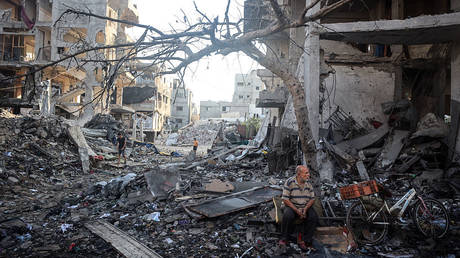
Paper agreements don't stop bullets. When international diplomats step in front of cameras to announce a breakthrough, the reality on the ground in Gaza usually looks entirely different. You read the headlines about U.S.-brokered ceasefires, then hours later, smoke rises over Deir al-Balah or Gaza City. It's frustrating, messy, and deeply predictable. Why does the bombing continue even when peace deals are signed?
The answer doesn't live in diplomatic talking points. It lives in the fundamental mismatch between what Washington wants to project and what Israeli and Hamas leadership actually demand for their own political survival.
The Disarmament Stalemate
At the heart of the ongoing strikes is a massive paradox over sequencing. International frameworks—including phased roadmaps pushed by the United States and various mediators—stipulate that Hamas must eventually surrender its weapons, dismantle its remaining tunnels, and hand governance over to a technocratic committee.
Sounds clean on paper. In practice, it's a non-starter.
Israel insists it will not pull its military forces back from the roughly 60 percent of the Gaza Strip it controls until complete, verifiable demilitarization happens. Meanwhile, Hamas maintains that it will only store or surrender weapons after a total Israeli withdrawal. Neither side trusts the other to move first.
When a militant cell fires on Israeli troops in places like Rafah, or when intelligence reports indicate tunnel reconstruction, the Israeli Defense Forces respond immediately with heavy airstrikes. Prime Minister Benjamin Netanyahu's government treats any perceived infraction as proof that the agreement is already dead, using retaliatory force to signal strength to a domestic electorate that remains deeply scarred by the October 7, 2023 attacks.
Domestic Politics Outweigh Diplomatic Pressure
You have to look at the political incentives driving the violence. Netanyahu is walking a political tightrope. His far-right coalition partners openly reject compromises, demanding continuous military pressure until Hamas is completely eradicated. Halting operations entirely risks collapsing his government.
On the other side, Hamas views its remaining military capability and hostage leverage as its only insurance policy against total annihilation. When talks stall over hostage exchanges or the release of bodies, the gloves come off instantly. Both factions benefit domestically from projecting defiance. Peace is a hard sell when political survival depends on looking uncompromising.
The Illusion of Enforced Compliance
International guarantors like the U.S., Egypt, Qatar, and Turkey love to announce grand frameworks. They talk about international stabilization forces and technocratic committees taking charge. But these entities often exist only in press releases. The National Committee for the Administration of Gaza has struggled to deploy effectively, leaving a vacuum where local skirmishes easily escalate back into full-scale bombardment.
Ceasefires fail because they attempt to freeze a dynamic conflict without resolving the core existential fears of the combatants. Until enforcement mechanisms have actual teeth—or until political costs for breaking truces outweigh the benefits—strikes will continue to punctuate every single diplomatic breakthrough.
Stop expecting a piece of paper to overwrite a war zone. Track the movement of troops on the ground, watch the domestic poll numbers in Tel Aviv, and ignore the optimistic press conferences coming out of Washington. That is where the truth actually lies.