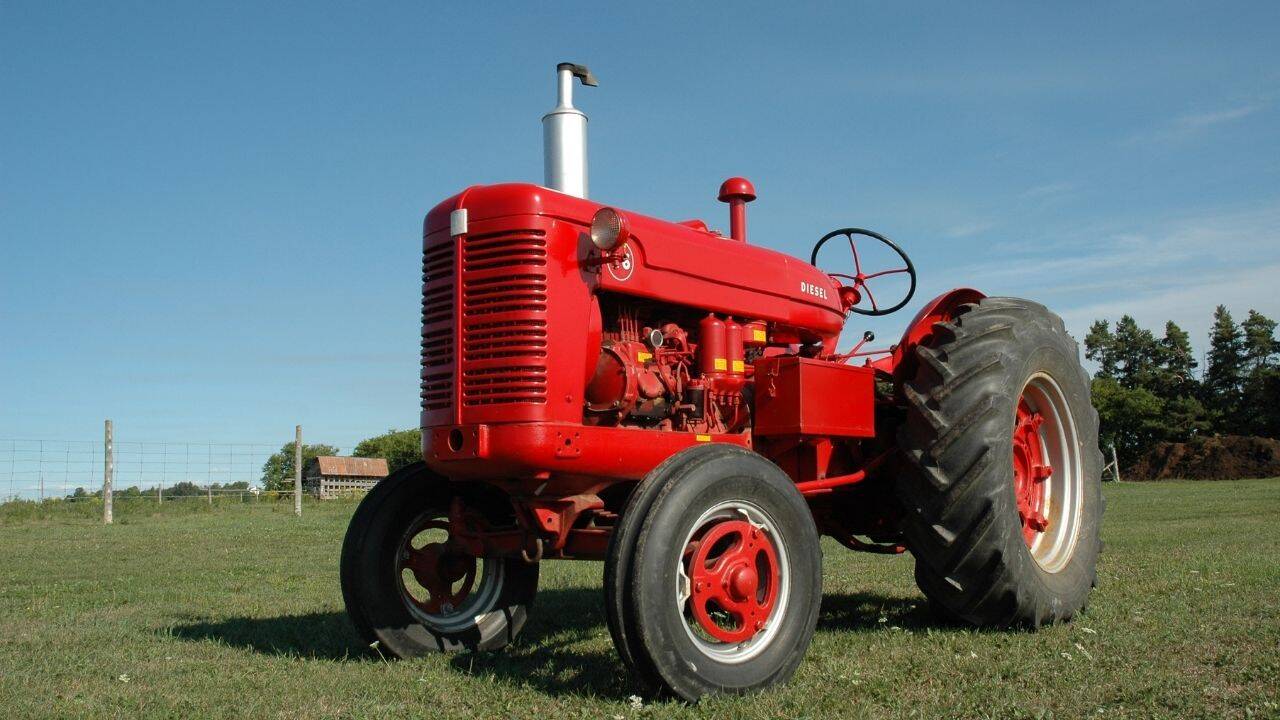
Old iron tells a story. When Robert Klahn walked into Hanley Implement Co. in Brooklyn, Wisconsin, back in 1953, he laid down $2,200 for a brand-new Allis-Chalmers WD tractor. That chunk of change bought a machine that would anchor Klondike Farms for decades, hauling wagons of tobacco crews, pulling plows through stubborn soil, and sharing the workload with a Farmall M and a Ford 9N.
Fast forward through generations of sweat, muddy boots, and shifting farm economies. That specific tractor eventually left the family. Yet for Robert’s grandson, Kevin Klahn, the machine remained a ghost worth chasing. Tracking down a decades-old piece of working farm equipment isn't just about scouring online listings or making casual phone calls. It takes an obsessive kind of patience. Kevin spent years digging through local networks, chasing leads, and verifying serial numbers until he found the exact unit his grandfather bought off the showroom floor.
In 2015, exactly 62 years after its initial purchase, Kevin bought that weathered Allis-Chalmers back for $2,000. It was rough around the edges, battered by decades of hard labor under different owners. But to Kevin, it wasn't scrap metal. It was a time machine.
The Reality of Restoring a 1950s Workhorse
Reviving a tractor that has spent over half a century working for a living is brutal, satisfying work. If you think vintage restoration is just spraying a coat of orange paint and turning a key, you've never spun a wrench on a mid-century utility tractor.
The machine needed serious triage. Kevin faced oil leaks, a tired fuel system, worn-out tires, a mangled radiator grill, and a beat-up operator seat. Tackling these issues required a methodical teardown. Over a twelve-month stretch, Kevin poured $4,500 into parts, replacing the fuel tank, upgrading components, and fixing mechanical failures.
The mechanical specs of the Allis-Chalmers WD make it a legendary piece of agricultural history. Built between 1953 and 1957 in West Allis, Wisconsin, the row-crop tractor featured a 3.7-liter, four-cylinder, liquid-cooled gasoline engine. It utilized a distinct snap-coupler hitch, live rear PTO, and four forward gears. Operating one meant standing or sitting on an open station, listening to a vertical I-head engine grunt under a heavy load.
Once Kevin finished the heavy mechanical overhaul, he handed the machine over to his friend Dale Martinson in Stoughton, Wisconsin, for the final coat of paint. Bringing back the signature Allis-Chalmers orange wasn't just about aesthetics; it was about reversing the decay of time.
Why Vintage Tractor Restoration Is Booming
You might wonder why anyone drops thousands of dollars and hundreds of hours resurrecting an old piece of machinery when modern tractors do the job with GPS guidance and climate-controlled cabs.
The appeal goes way beyond nostalgia. Modern farming has become hyper-digital, dominated by subscription software, proprietary sensors, and sealed electronic control units that owners cannot legally repair themselves. In contrast, a 1953 Allis-Chalmers WD can be torn down with basic hand tools and a workshop manual. It represents an era of mechanical autonomy.
Furthermore, tractors like the WD are physical links to family heritage. For Kevin Klahn, the tractor is tied to memories of his childhood. Once he grew tall enough to reach the pedals, that WD became his daily driver, hauling harvested tobacco plants while field crews loaded the trailers. When his grandfather passed away in 1985, the tractor stayed in the family with Uncle Ron for another thirty years, mostly used for raking hay before it slipped out of the family's hands.
Reclaiming that specific machine was a way to anchor a vanishing way of life. Small family farms are disappearing at an alarming rate, swallowed by corporate consolidation. Restoring old iron keeps the memory of those foundational years alive.
Practical Takeaways for Restoring Family Heirlooms
If you are thinking about tracking down a piece of your own family history—whether it's a vintage truck, a woodworking tool, or a farm tractor—keep a few ground rules in mind:
- Expect to pay a markup for emotion: Sellers often realize when a buyer has a personal connection to a machine, which can inflate the asking price. Be prepared to walk away if the price defies logic.
- Inspect the core components first: Sheet metal can be hammered straight and paint can be sprayed, but cracked engine blocks, frozen transmissions, and warped frames will drain your bank account.
- Lean on local expertise: Communities of vintage tractor clubs and independent mechanics possess deep institutional knowledge that you won't find in any manual. Find local mentors who know these specific engines inside and out.
- Document the journey: Take photos before, during, and after the teardown. The mechanical transformation is only half the story; the documentation becomes part of the heirloom itself.
Bringing an old machine home takes more than money. It takes grit, late nights in a cold garage, and an unwillingness to let family history rust away in a forgotten field.