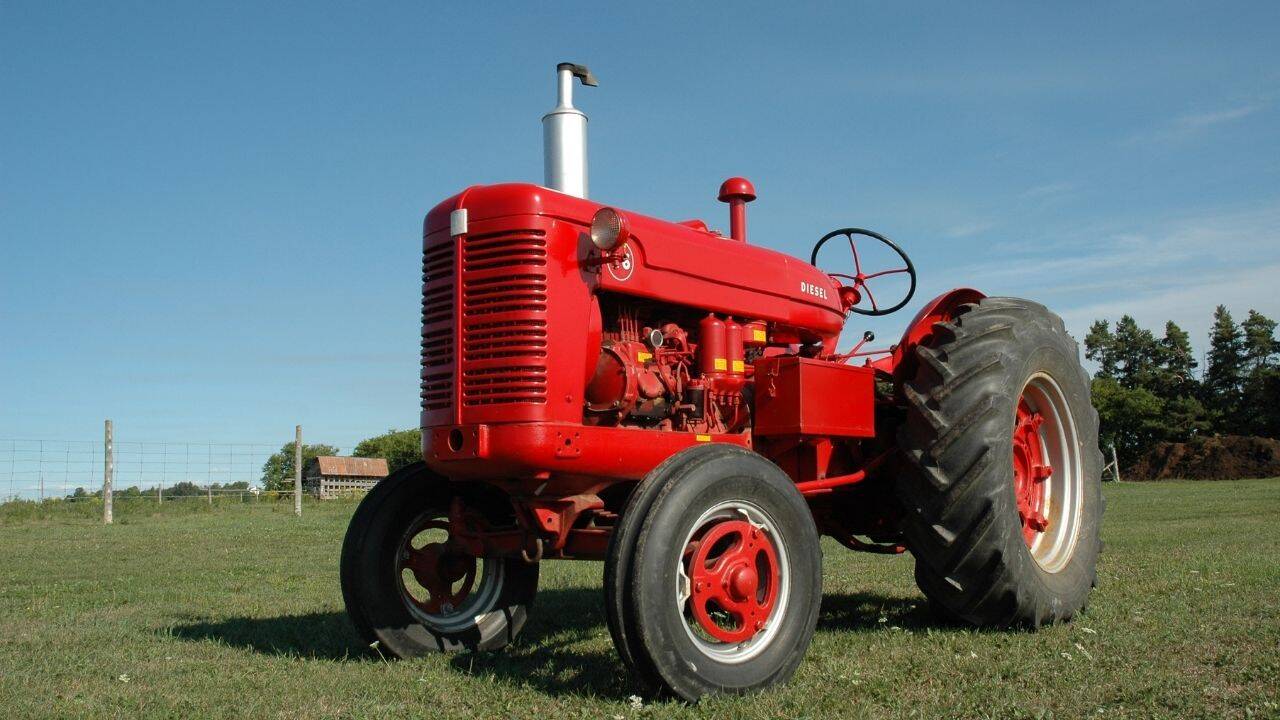
Some machines do more than pull plows. They anchor a family's history to the dirt.
Back in 1953, Robert Klahn drove down to Hanley Implement Co. and handed over $2,200 for a brand-new Allis-Chalmers WD tractor straight off the showroom floor. That iron horse didn't just sit in a shed. It hauled tobacco, raised corn, oats, and hay, and shared the workload with a Farmall M and a Ford 9N on their family farm near Brooklyn, Wisconsin.
Decades later, that exact machine was long gone, sold off as farming operations shifted. But Kevin Klahn never forgot it. Tracked down across years of searching, bought back 62 years after its original purchase in 2015, and completely restored, that 1953 Allis-Chalmers is back where it belongs.
Here's why this homecoming story hits home for anyone who values real heritage over modern disposable tech.
The Reality of Tracking Down Vintage Farm Iron
Finding a specific tractor from half a century ago sounds like a movie plot. In reality, it's a brutal mix of dead ends, serial number checks, and pure luck.
Farm equipment gets traded, painted over, cannibalized for parts, and abandoned in weeds. Most people give up after the first few phone calls. Kevin didn't. He knew the machine's specific lineage—the exact piece of equipment his grandfather relied on while managing 26 head of Holstein cows, pigs, and chickens alongside field crops.
When you start hunting for a vintage tractor tied to your bloodline, you have to look for specific markers:
- Original casting numbers and factory configurations.
- Bill of sale records or local dealership logs if they survived.
- Word-of-mouth chatter through regional tractor clubs and swap meets.
When Kevin finally located the WD, it had passed through multiple hands and showed its age. The metal was tired. The paint was dead. But the bones were intact.
What It Takes to Restore a 1950s Allis Chalmers WD
Restoring a mid-century tractor isn't about slapping a coat of Persian Orange paint on the fenders and calling it a day. It demands a deep understanding of mechanical restoration.
The Allis-Chalmers WD, introduced in the late 1940s and built through the mid-1950s, featured the iconic Power-Shift rear wheels and a four-cylinder wet-sleeve engine. Working on these machines requires patience. You're dealing with heavy cast iron, worn steering boxes, vintage electrical systems, and carburetors that haven't been tuned right since the Carter administration.
Kevin approached the restoration with total respect for the machine's history. Every bolt turned, every gasket replaced, and every panel straightened was done to bring the tractor back to its 1953 glory without stripping away its soul. It wasn't about building a trailer queen for a museum. It was about making a working piece of family history roar back to life.
Why Classic Tractors Matter Now More Than Ever
We live in an age of subscription software locks on modern farm combines and throwaway consumer goods. You buy something, it breaks, you replace it.
Old iron represents the exact opposite philosophy. These tractors were built to be repaired with a wrench, a welder, and some mechanical common sense. They were lifetime investments. When Robert Klahn spent $2,200 in 1953, he was buying a machine intended to outlive him.
That enduring durability is why vintage tractor collecting has exploded. People are tired of plastic housing and sealed computer units. Restoring a classic Allis-Chalmers or Farmall connects you to an era when things were built to last.
When you see Kevin Klahn's restored WD sitting in the sunlight today, you aren't just looking at restored metal. You're looking at proof that history doesn't have to stay in old photographs. Sometimes, with enough grit and a wrench in your hand, you can bring the past right back to the farm.