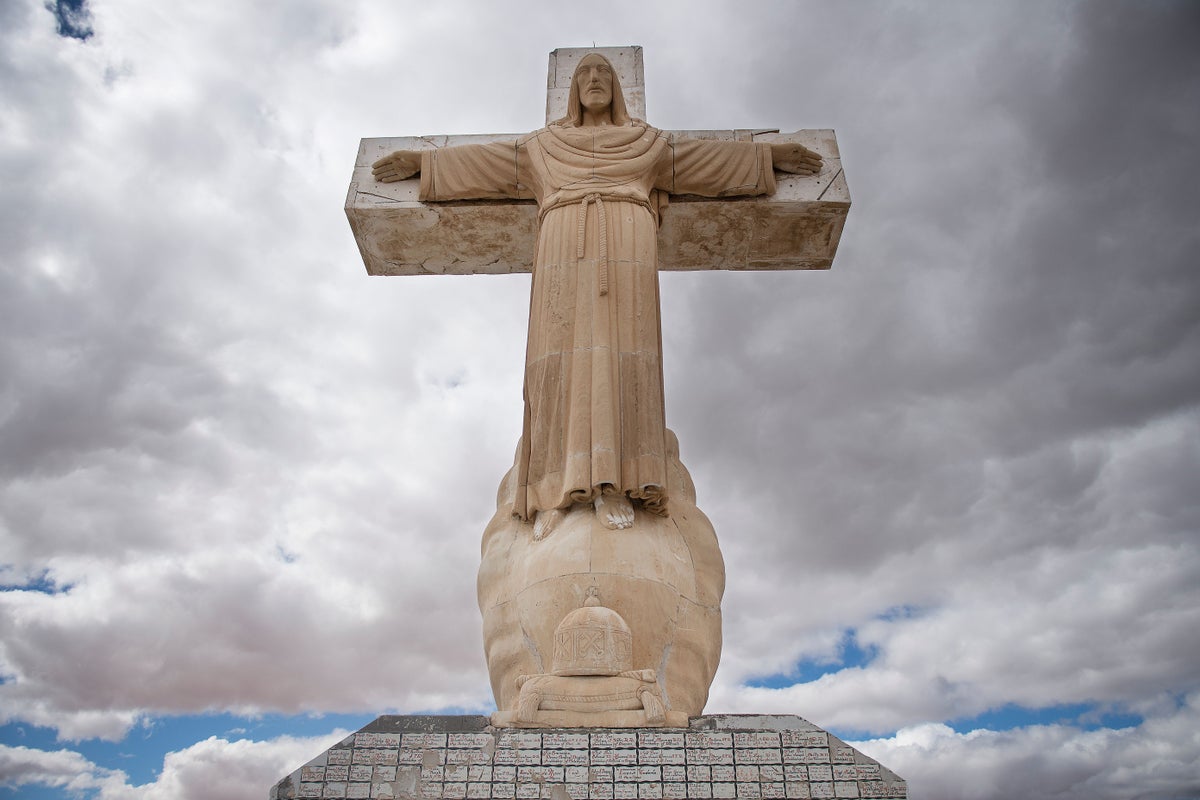
A 29-foot-tall limestone statue of Jesus Christ stands atop Mount Cristo Rey in southern New Mexico, watching over a jagged desert landscape that has suddenly turned into a battleground. For decades, the site has drawn thousands of pilgrims climbing the rocky slopes in prayer. Now, the federal government wants 14 acres of land at the base of the holy landmark to plug a gap in the southern border barrier.
The Trump administration's push to extend the wall has triggered an intense legal showdown with the Roman Catholic Diocese of Las Cruces. This case pits the sweeping authority of eminent domain against the First Amendment and the Religious Freedom Restoration Act. The government sees a security loophole. The church sees an affront to faith. Meanwhile, you can read related developments here: Why Andy Burnham Had No Choice On The Early Prison Release Crisis.
Why is this specific location causing such friction? The 1.4-mile stretch of unsealed terrain near the mountain has long acted as an entry point for undocumented migrants and a haven for criminal activity. Federal officials argue that closing this gap with a modern 30-foot steel bollard barrier is necessary for national security. Customs and Border Protection officials maintain that construction will stay well south of the shrine itself, insisting that religious access will remain intact.
Yet the Diocese of Las Cruces refuses to back down. Represented by attorneys from the Institute for Constitutional Advocacy and Protection at Georgetown Law, church leaders filed motions arguing that seizing church-owned footprint areas directly harms religious practice. They claim that transforming sacred grounds into an active construction site for a border barrier violates core Catholic values and infringes upon protected constitutional rights. To explore the full picture, we recommend the detailed analysis by TIME.
The legal arguments cut deep. The Department of Justice contends that religious freedom objections cannot block standard eminent domain proceedings under the Declaration of Taking Act. Essentially, the government claims its power to acquire land for public use overrides any localized religious defense. Church lawyers fire back that this logic implies the executive branch could theoretically bulldoze every cathedral in the country without legal recourse.
Local perspectives on the ground are surprisingly complex. While church leadership views the wall as a symbol of division, some local volunteers charged with protecting the monument point to practical realities. Vandals have repeatedly tagged the limestone statue with graffiti, broken pieces off the monument, and caused security concerns for visiting worshippers. Some volunteers argue that a physical barrier might actually curb the crime, robberies, and vehicle break-ins that have plagued the remote trails for years.
Even so, the ideological friction remains intense. Bishop Peter Baldacchino of Las Cruces has made it clear that preserving the sanctuary matters far beyond any political debate. Legal experts note that the core challenge for the diocese will be proving that losing this specific parcel of land creates a substantial legal burden on actual religious worship, rather than just a property dispute.
Federal courts in New Mexico are now left weighing whether federal infrastructure mandates can bypass constitutional protections for sacred spaces. As heavy machinery and construction crews move closer to the mountain base, the conflict at Mount Cristo Rey highlights the messy reality of trying to secure a border that runs directly through deeply cherished cultural terrain.
Evaluate the legal filings yourself. Track how lower courts handle the intersection of federal land seizure and the First Amendment as this litigation moves forward.