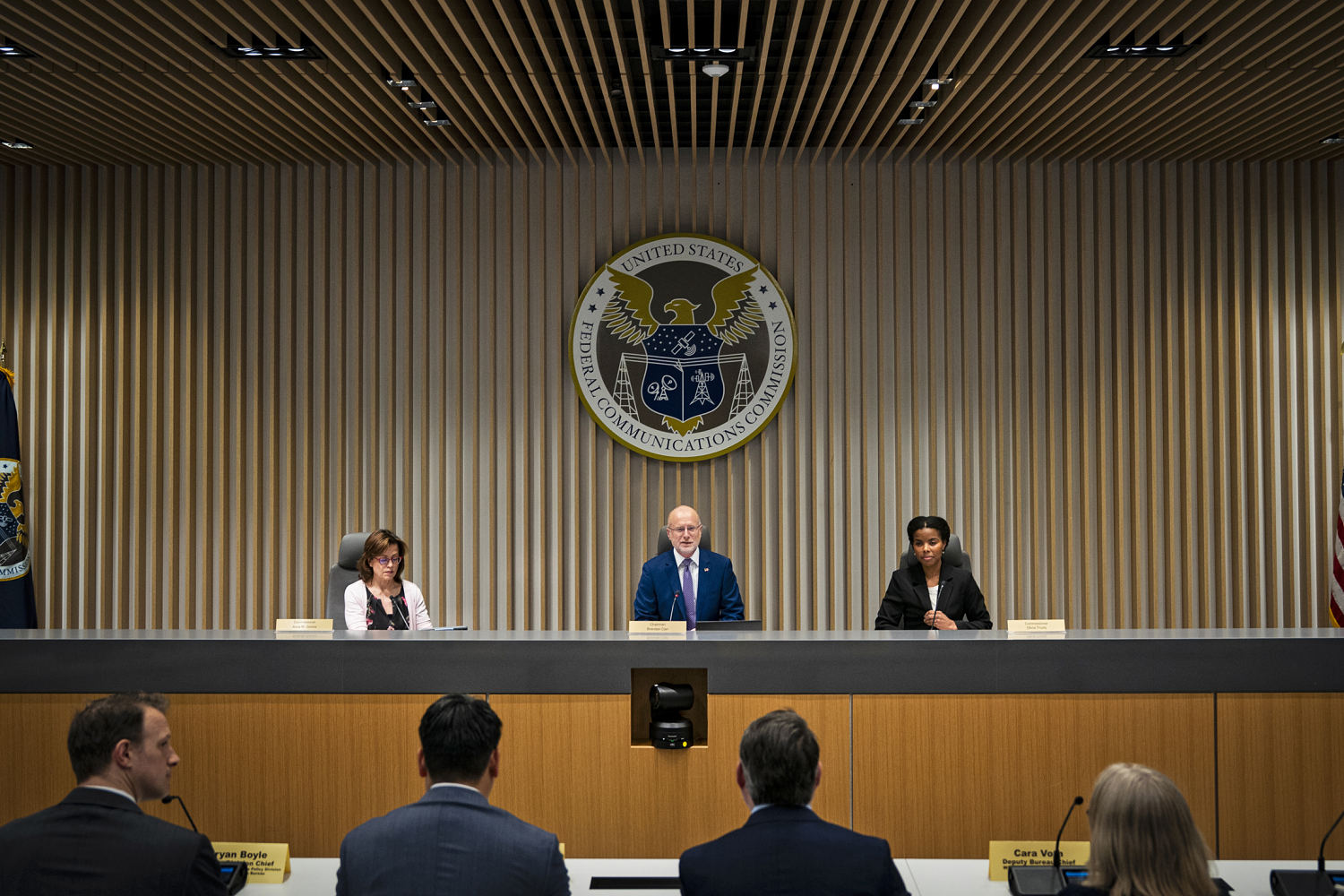
The rules governing television are rewriting themselves in real-time. The Federal Communications Commission just voted 2-1 to throw out the long-standing national broadcast ownership cap. For decades, a single company couldn't own TV stations reaching more than 39% of American households. That hard ceiling is gone.
FCC Chairman Brendan Carr pushed through the repeal, arguing that local broadcasters face an existential threat from unconstrained tech platforms and streaming giants. Instead of a fixed percentage, the agency will evaluate station consolidation on a case-by-case basis. If you think this is just boring bureaucratic housekeeping, look at stock prices. Shares for major station groups like Sinclair, E.W. Scripps, and Gray Media popped immediately following the announcement.
What Actually Changes for Media Giants
For years, major station owners felt trapped by the 39% rule. Streaming services and cable networks broadcast nationwide without national audience caps, while local traditional broadcasters ran into a brick wall the moment they tried to scale.
Take Nexstar Media Group. Their massive $6.2 billion acquisition of Tegna ran straight into regulatory roadblocks because the combined footprint would have ballooned past 80% of U.S. households. While that specific deal has been tied up in federal court fights brought by states and corporate competitors like DirecTV, this new regulatory shift opens a wide-open highway for future mega-deals.
Broadcasters argue they need this scale to negotiate fairly with advertisers and fund actual journalism. Critics see a completely different movie.
The Legal and Political Firestorm
You didn't think a change this massive would happen quietly, did you?
The lone Democratic commissioner, Anna Gomez, called the vote unlawful on its face during the heated hearing. Public interest groups and public policy advocates are already queuing up lawsuits. The core argument against the FCC isn't just about media concentration—it is about raw legal authority.
Congress codified the 39% cap back in 2004. Critics, including unexpected voices from across the political spectrum, point out that administrative agencies shouldn't rewrite laws passed by the legislative branch. Even some conservative architects of the original legislation argue that if the cap needs to go, Congress has to do the heavy lifting—not an FCC chairman via a split vote.
Expect federal courts to become the primary battleground over the next year.
The Real Impact on Local News
Will massive corporate consolidation save local journalism or crush it?
Chairman Carr claims the alternative to consolidation is total collapse, pointing out that local broadcasting could easily go the way of local newspapers, where over 80% of reporting jobs have evaporated. Scale allows stations to share resources, keep production afloat, and stay competitive against digital giants.
On the flip side, watchdog groups warn that fewer corporate owners mean centralized control. When distant corporate headquarters manage dozens of local stations, newsrooms often face staff cuts, and local reporting gets replaced by syndicated feeds.
Watch how these media giants structure their next moves. Keep a close eye on the ongoing federal courtroom battles over pending mega-mergers, because the final word on broadcast ownership hasn't been written yet.