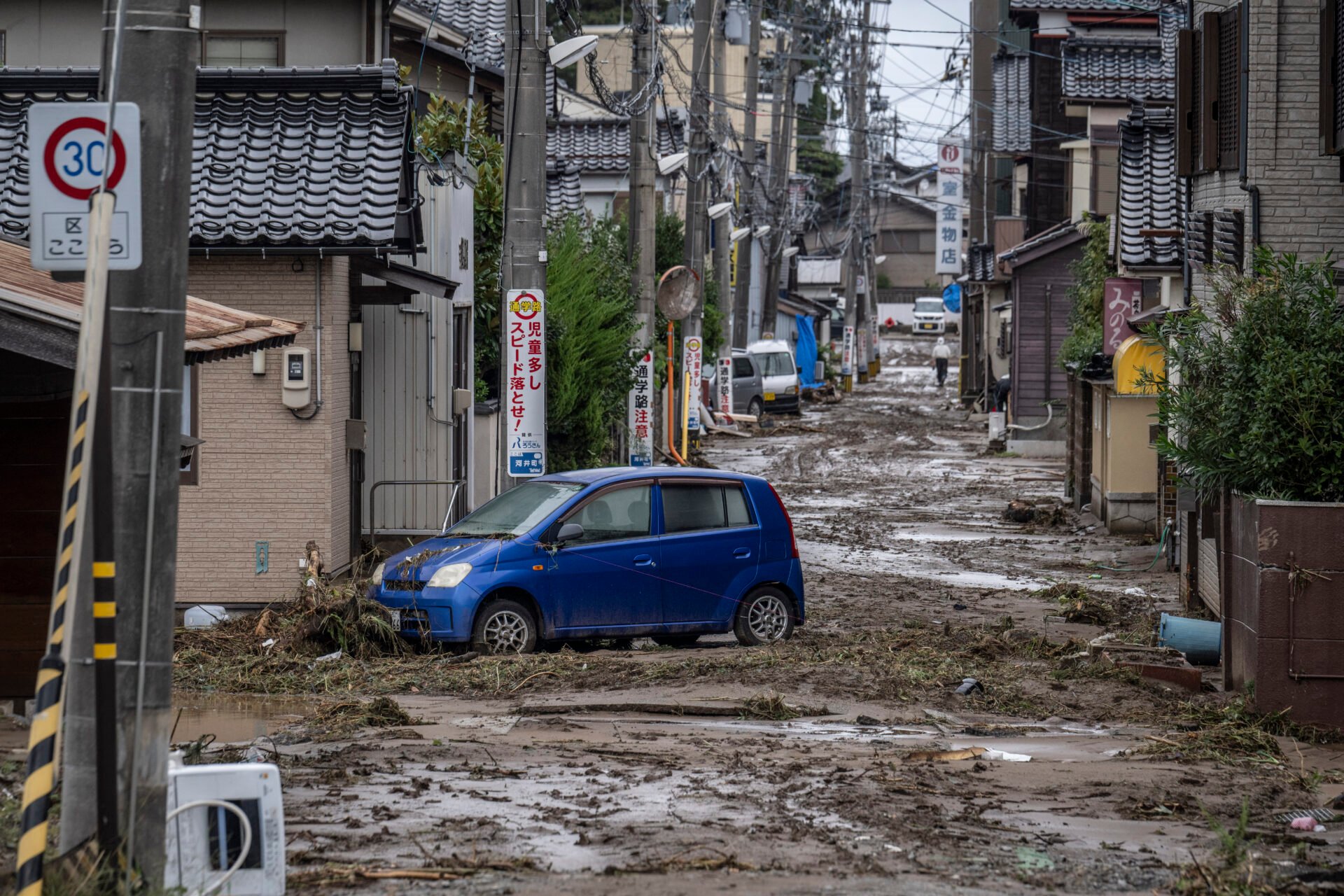
When the sky opens up with such intensity that roads turn into rivers and emergency alerts become a constant soundtrack to your life, you know something has fundamentally shifted. Japan and South Korea have spent the last few weeks reeling from a series of deluges that didn't just break records—they shattered expectations of what "normal" summer weather looks like.
For those of us watching the data, it’s clear this wasn't just a heavy rain season. It was a violent collision of atmospheric systems that left thousands stranded, hundreds of thousands scrambling for safety, and tragically, claimed over a dozen lives in Japan alone.
The Reality of Record-Breaking Deluges
You’ve likely seen the headlines, but the numbers tell a more harrowing story. In Japan’s Chiba prefecture, we saw 115mm of rain in a single hour. To put that in perspective, that’s an entire month’s worth of typical August rain falling while you might be trying to finish a dinner or get some sleep. The Japan Meteorological Agency didn't mince words, labeling this an "unprecedented" event. It was the first time they triggered a level 5 emergency warning since the system was created earlier this year.
South Korea didn't fare much better. In Geoje, residents faced an onslaught where 124.5mm fell within one hour. Many of these areas had just come off the back of brutal, weeks-long heatwaves that pushed temperatures past 40 degrees Celsius. The ground, baked hard and dry, couldn't absorb the water. When you combine soil that acts like concrete with an absolute wall of water, the result is predictable: flash floods, landslides, and infrastructure that simply gives way.
Why This Matters More Than Just Statistics
It’s easy to look at these events as isolated weather updates, but they hit people where they live. The timing in Japan couldn't have been worse, coinciding with the Obon festival—a time when families travel across the country to honor their ancestors. Thousands found themselves stuck at Narita airport or trapped in stalled vehicles on flooded highways.
In South Korea, the narrative shifted from coping with record heat to surviving sudden, violent landslides. When a city like Geoje records 851mm of rain in just over 48 hours, it's not just a wet week. It's a catastrophe. One resident described the terror of receiving back-to-back emergency alerts on their phone through the night, a psychological toll that persists long after the water recedes.
Looking at the Bigger Picture
We need to stop thinking about these weather events as "freak occurrences." The underlying mechanism—warm, moist air from the north Pacific colliding with cooler air masses—is well-understood. But the frequency and the intensity are changing. We are seeing a pattern where extreme heat often precedes extreme rain. The heat creates a high-pressure trap, and when that breaks, the resulting vacuum pulls in moisture-laden air that drops everything it's carrying all at once.
If you are living in or planning to travel to these regions, here is what you need to consider:
- Emergency Alerts are Non-Negotiable: If you hear an alert, move. Don't wait to see if it's "that bad." The speed of modern flooding in urban areas leaves almost no margin for error.
- Avoid Low-Lying Areas: Especially if you are in a vehicle. A significant number of fatalities occurred because people were caught in their cars. If the road is flooding, turn around immediately.
- Landslide Awareness: If you are near hillsides or mountains during intense monsoon-like rain, get to higher, sturdier ground. The soil saturation levels right now are dangerously high.
This isn't just about meteorology. It’s about adapting to an environment where the "historical average" is becoming a useless metric for planning your day. We’ve entered a period where the climate doesn't follow the rules we learned in school. The systems are more volatile, and the only way to navigate this is to expect the unexpected and prioritize safety over convenience.
The recovery efforts are ongoing, and the focus remains on clearing debris and restoring power to the thousands still in the dark. But once the water is gone, the real conversation needs to happen: how do we build infrastructure that can handle this volume of water? Current drainage and alert systems were designed for a world that doesn't exist anymore. Until we reckon with that, we are just waiting for the next deluge.
Record rainfall and flooding impact in Japan and South Korea
This video provides a detailed look at the scale of the rainfall and the resulting landslides that devastated communities in South Korea.