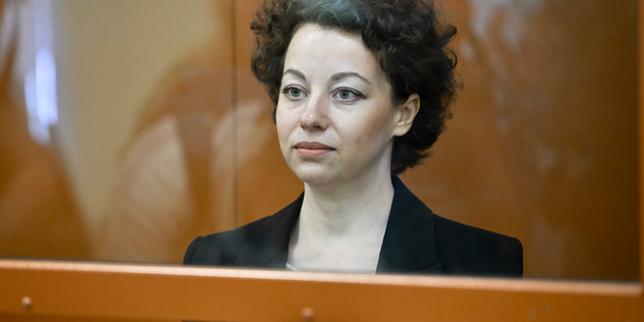
Words carry weight, but in an authoritarian state, poetry can become an existential threat. When Russian theater director and poet Evgenia Berkovich was handed a six-year prison sentence alongside playwright Svetlana Petriychuk, the message from Vladimir Putin's regime was loud and clear. Art that refuses to bend will be crushed. Yet behind iron bars, Berkovich hasn't stopped writing. Her verse continues to smuggle truth out of the penal system, exposing the raw machinery of state violence with an unflinching clarity that leaves authorities scrambling.
If you've followed independent Russian culture over the last few years, you already know that the crackdown on artists isn't just about suppressing dissent. It's about eradicating imagination itself. Totalitarian regimes survive on a single, rigid narrative. Berkovich's poetry shatters that narrative into pieces. Every line she composes from captivity serves as a public reminder that human dignity cannot be locked away in a cell, no matter how harsh the conditions get. Also making headlines in related news: Why Syria Just Slammed Netanyahu Over That Mount Hermon Visit.
The Cost of Telling the Truth on Stage and Page
The trouble started long before the courtroom doors slammed shut. Berkovich earned the ire of state censors through her bold theatrical work, notably her award-winning play Finist the Brave Falcon, which explored women who left Russia to marry Islamist fighters in Syria. Ironically, despite initial critical acclaim and state-backed cultural grants, the political climate shifted sharply. Officials weaponized absurd charges of "justifying terrorism" against her and Petriychuk.
It’s a classic playbook move. When you cannot defeat an artist intellectually, you invent criminal pretexts. Further insights on this are detailed by BBC News.
What makes Berkovich's imprisonment uniquely tragic—and inspiring—is how she uses poetry as an act of fierce resistance. Writers like Anna Narinskaya have highlighted how these prison poems function as a lifeline. They do not whine or plead for mercy. Instead, they dissect the absurdity, cruelty, and moral bankruptcy of the system with sharp wit and heartbreaking emotional precision.
Why Poetry Terrifies Autocrats
Autocrats love tanks, parades, and boilerplate propaganda. They hate nuance, irony, and verse. Why? Because poetry bypasses ideological conditioning. It hits you directly in the chest.
When Berkovich writes from her cell, she exposes the naked hypocrisy of a regime that poses as a protector of traditional values while locking up mothers, artists, and thinkers. Her verses strip away the polished veneer of state television and reveal the bleak, paranoid reality underneath.
- The Myth of Compliance: Totalitarian systems demand total silence or enthusiastic applause. Berkovich offers neither.
- The Power of the Individual Voice: A single poem can travel farther and stick longer in the public consciousness than thousands of hours of state broadcasts.
- Resilience as Defiance: Continuing to create art under the threat of extended isolation is the ultimate rejection of state intimidation.
What the Global Cultural Community Misses
Most international coverage treats imprisoned dissidents as passive victims. That framing misses the point entirely. Berkovich is not merely a victim of political persecution; she remains an active, dangerous combatant in the war of ideas.
When supporters translate and circulate her prison poetry across Europe and the Americas, they are keeping a vital channel of truth open. Ignoring these voices or reducing them to footnotes in a geopolitical news cycle plays right into the hands of censors who want nothing more than for dissidents to fade into quiet obscurity.
We have to look past the headlines about sentencing guidelines and military courtrooms. The real story is happening on the page. Berkovich is documenting an era of fear so that future generations won't have to guess what it felt like to live through the collapse of civic freedom in Russia.
Read her words. Share them. Understand that tyranny fears nothing more than a mind it cannot break.