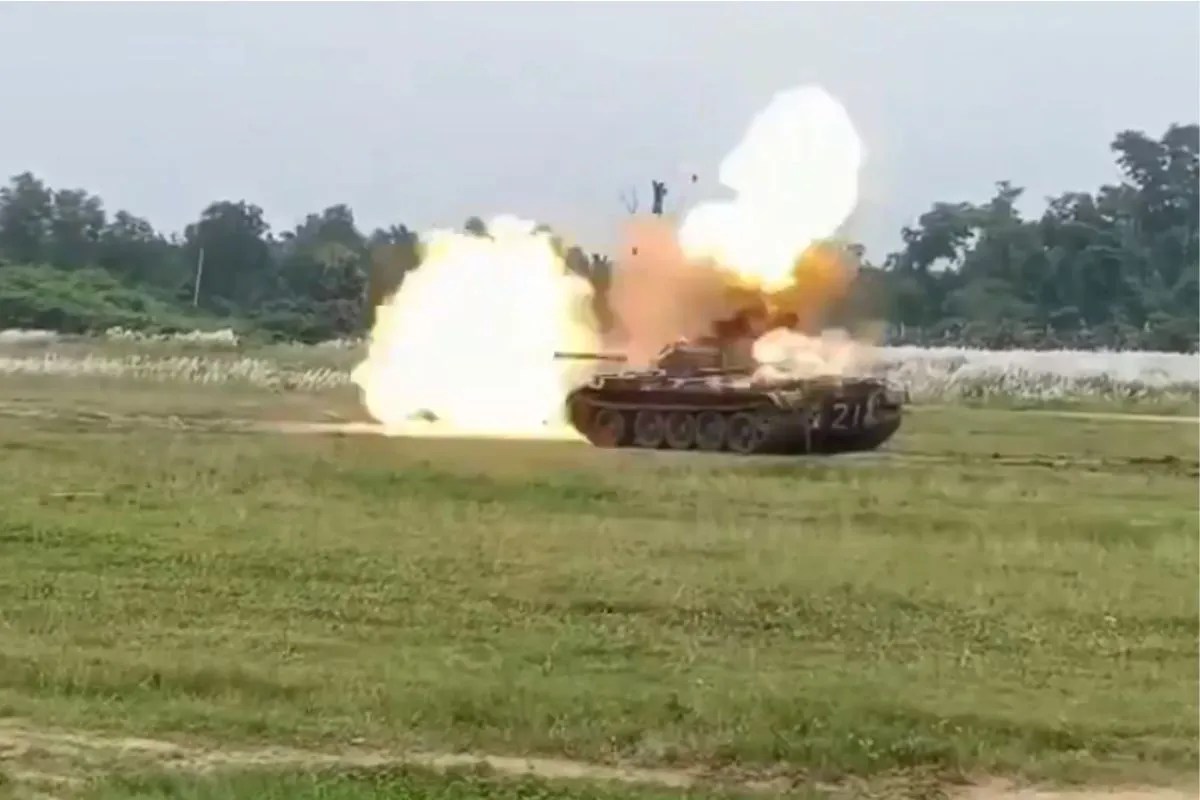
Military hardware failures rarely happen quietly. When a tank explodes during a standard field exercise, it leaves behind more than just charred wreckage—it exposes deep vulnerabilities in aging defense logistics and equipment management.
Two Bangladesh Army soldiers lost their lives and a captain suffered severe injuries when a Chinese-origin Type 59 tank detonated during a live-fire drill at the Hathazari Field Firing Range in Chattogram. The incident instantly drew global attention, not just because of the tragic loss of life, but because it dragged old regional anxieties and equipment reliability debates back into the spotlight.
Let's look at what actually happened and why this aging armored platform remains a ticking clock.
What is the Type 59 Tank and Why Is It Still in Service
If you look at the origins of the Type 59, you are looking back to the Cold War. Developed between 1958 and 1985, this armored vehicle is essentially a Chinese-licensed variant of the Soviet T-54A main battle tank. It's old. Really old.
Yet, dozens of militaries across Asia and Africa kept it in their active inventories for decades because it was cheap, mechanically simple, and easy to service. Bangladesh is no exception. Its armor corps relies heavily on Chinese-origin platforms, balancing affordability against modern capability.
When you push a 1960s-era hull and ammunition delivery system through modern high-stress military drills, things break. Metal fatigue, degraded internal seals, and outdated fire control systems create a dangerous environment for any crew trapped inside.
The Blame Game Over the Chattogram Blast
Official statements from the Inter-Services Public Relations Directorate (ISPR) in Bangladesh confirmed the tragedy and stated that an investigation is underway to determine the exact cause. However, official restraint hasn't stopped online military analysts from pointing fingers.
Almost immediately after the disaster, Chinese defense commentators on platforms like Weibo started shifting blame away from the tank itself. Their argument? The vehicle might be Chinese, but the ammunition might be Pakistani.
Observers pointed toward high-explosive anti-tank (HEAT) rounds manufactured by the Pakistan Ordnance Factories (POF). Some bloggers even referenced a similar incident in 2024 at the exact same firing range, where a tank blast killed a soldier and investigators allegedly flagged substandard ammunition.
Of course, none of these social media claims have been officially verified by Dhaka. It's a classic geopolitical blame game where suppliers try to protect their export reputations while local authorities sift through the physical remains of the disaster.
The Real Issue Facing Modernizing Militaries
You can't buy modern security with obsolete machinery. That's the hard lesson emerging from Chattogram.
Many developing nations try to stretch the lifespan of legacy platforms through upgrades, refurbs, and third-party ammunition sourcing. But mixing old hulls with varying batches of ammunition creates a hazardous cocktail. If ammunition tolerances are even slightly off, or if an aging barrel develops microscopic stress fractures, a routine training exercise turns catastrophic in milliseconds.
Soldiers shouldn't have to worry about whether their own equipment will hold together when they pull the trigger.
Moving forward, defense planners need to address the hard cutoff date for legacy systems. Patching up decades-old armor saves money on paper, but it costs lives in the field. Equipment retirement isn't just about tactical edge; it's about basic crew safety.