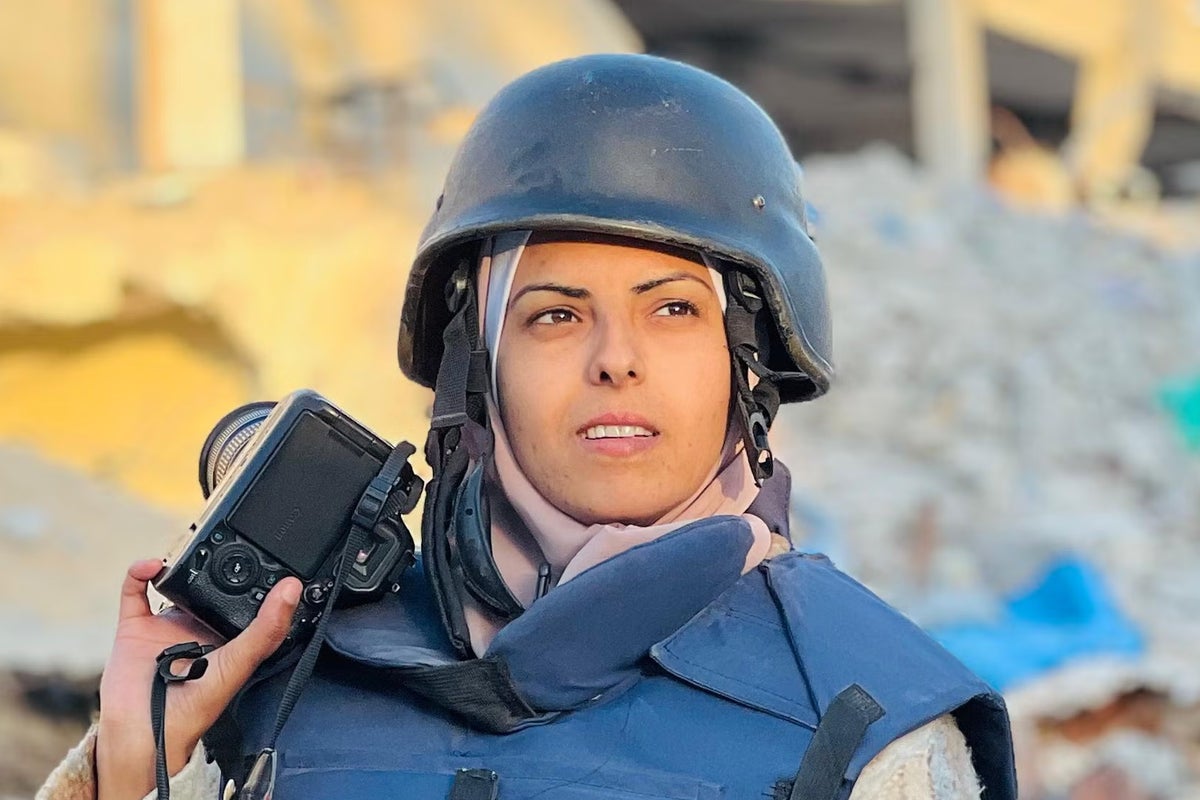
The double-tap strike on Nasser Hospital in Khan Yunis didn't just shatter concrete; it obliterated any remaining illusion that medical facilities or press insignia offer protection in modern conflict. When visual journalist Mariam Abu Dagga rushed toward the exterior stairwell of the hospital on August 25, 2025, she was doing what she had done for nearly two years: bearing witness. Minutes earlier, a first explosion had hit the upper floors. Like emergency responders and fellow reporters, she ran to help. That split-second impulse proved fatal. A second missile slammed into the staircase.
Let us look at what actually happened during those final minutes, why international humanitarian law failed to shield her, and what this event signals for the future of war reporting.
The Anatomy of a Double Tap at Nasser Hospital
The military tactic known as a double-tap strike involves an initial explosion followed quickly by a second strike on the exact same location. Historically, this method targets first responders, medics, and journalists arriving to aid the wounded.
At Nasser Hospital, the sequence unfolded with terrifying speed. Reuters cameras had been broadcasting a live feed from the complex when the transmission abruptly cut out. The first projectile had struck. Pandemonium ensued. As doctors, civil defense workers, and journalists wearing press vests scrambled up the external concrete stairwell to document the damage and rescue survivors, the second blast hit.
Mariam Abu Dagga, freelancing for the Associated Press and Independent Arabia, was killed instantly alongside fellow journalists Hussam al-Masri, Mohammed Salama, and Moaz Abu Taha. In total, the dual strikes killed roughly 20 people.
The Israeli military later stated that troops targeted a supposed camera position on the roof. Yet human rights investigators and press freedom organizations point out a glaring contradiction. Hospitals enjoy explicit protection under the Geneva Conventions. Turning a functioning medical complex into a military target requires meeting strict thresholds of evidence regarding active combatant use—thresholds that legal experts argue were never publicly demonstrated.
Living the Story You Cover
You cannot understand Mariam's final work without understanding her life inside besieged Gaza. She wasn't an outside correspondent parachuting in for a two-week rotation. She was a 33-year-old mother whose 13-year-old son, Ghaith, had been evacuated to the United Arab Emirates earlier in the conflict. She spent months separated from him, living out of tents and displacement shelters, facing the exact same chronic food shortages and lack of clean water as her subjects.
Her photography focused heavily on the quiet, crushing indignities of the siege. Weeks before her death, she documented the arrival of severely malnourished children at Nasser Hospital. One of her most haunting images showed the body of a five-year-old boy wrapped gently in a shroud, placed on bricks so his small frame wouldn't touch the bare ground.
Her colleagues remember her fearlessness, but also her premonitions. Like many journalists operating in high-risk zones, she kept a set of personal instructions handy. She asked her peers not to cry at her funeral, urging them instead to spend time with her physical body and keep telling the truth.
The Legal and Ethical Fallout
The Committee to Protect Journalists has labeled this conflict the deadliest in modern history for media workers, with well over 180 reporters killed. Independent investigations repeatedly emphasize a disturbing pattern: many of these deaths occurred not from stray shrapnel during chaotic crossfire, but from precision munitions striking identifiable press vehicles, homes, or protected zones.
International bodies define attacking protected persons and civilian infrastructure as potential war crimes. However, accountability remains rare. When news organizations like the Associated Press and Reuters issue joint demands for independent investigations, the responses from military authorities typically amount to expressions of regret and promises of internal reviews.
For independent observers, those internal reviews ring hollow. When a hospital stairwell crowded with identifiable press and rescue workers absorbs a secondary strike, it raises severe questions about targeting protocols and proportional force.
What Happens When the Witnesses Are Gone
The real cost of incidents like the Nasser Hospital strike extends far beyond the immediate loss of life. Every time a veteran photojournalist like Mariam Abu Dagga is killed, the window into a humanitarian crisis narrows just a bit more. Local reporters are the backbone of international news; without them, foreign bureaus rely entirely on remote statements and sanitized military press releases.
The international community continues to hand out posthumous honors, such as naming Mariam a World Press Freedom Hero. Medals and awards, however, offer little deterrence on the ground.
If you want to support accurate reporting from high-risk zones, stop consuming news blindly and pay attention to bylines. Support independent media networks that fund local freelancers on the front lines, demand transparency from governments supplying military hardware, and push press freedom organizations to pursue active legal prosecution through international courts rather than issuing passive statements of concern. The truth doesn't survive on its own. It requires people willing to carry heavy cameras into dangerous places, and it requires a world that refuses to look away when those cameras go dark.