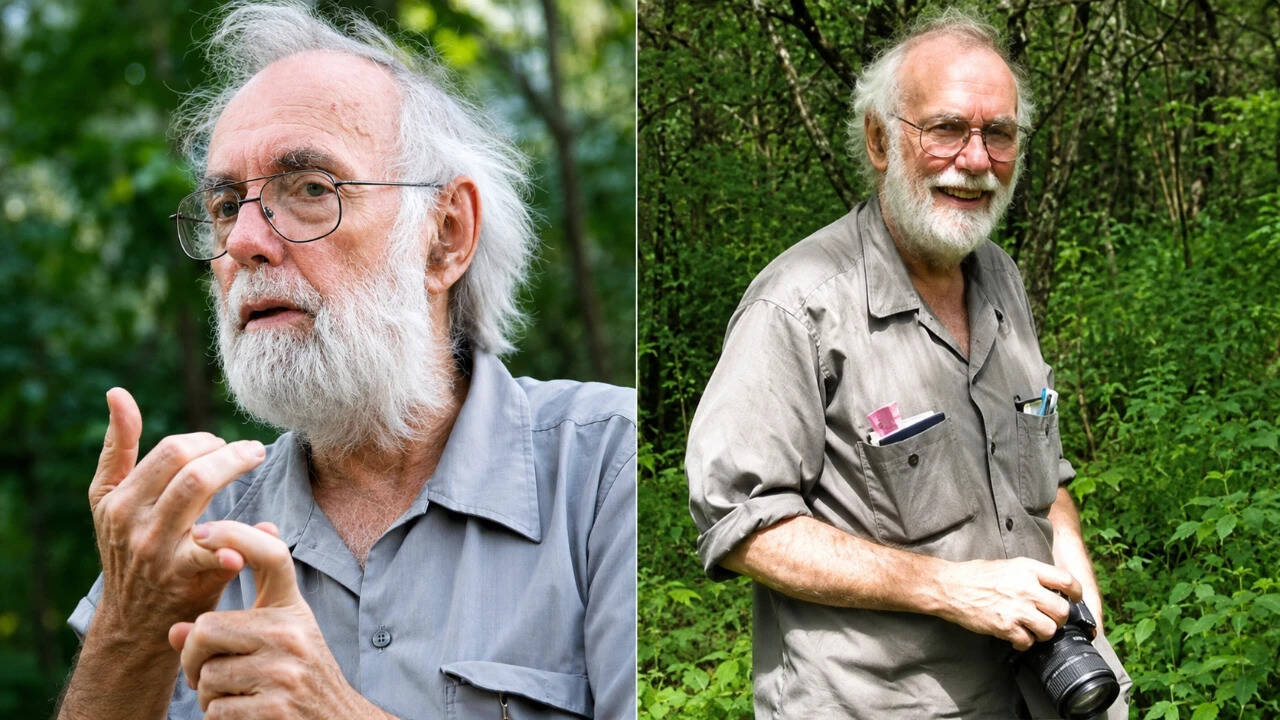
Everybody loves a simple hero story. The media paints American ecologist Daniel Janzen as a lone ranger who single-handedly dragged 169,000 hectares of dead Costa Rican cattle ranch back to lush life. It is a great narrative. It is also completely misleading.
If you look at the Área de Conservación Guanacaste (ACG) in northwestern Costa Rica today, you see a massive, thriving biological corridor stretching from marine beaches up to volcanic cloud forests. You see roughly four percent of the planet's terrestrial biodiversity packed into a single managed space. But giving all the credit to one man ignores how large-scale ecological restoration actually survives the real world.
The Myth of the Lone Ecologist
Janzen himself will tell you he didn't do it alone. Alongside his biologist partner Winnie Hallwachs, he spent decades embedding conservation directly into Costa Rican society rather than locking fences around nature. That distinction matters. Traditional conservation often treats local communities like trespassers. Janzen and Hallwachs did the exact opposite.
They hired former cattle ranchers, hunters, and local residents to become parataxonomists. These locals learned to rear caterpillars, track GPS coordinates, collect plant data, and sequence DNA. When local people run the biodiversity inventory, conservation stops being an elite academic project. It becomes a local livelihood.
Why Tropical Dry Forests Were Written Off
In the 1980s, tropical dry forests were considered a lost cause. Everyone obsessed over rainforests while dry forests were quietly clear-cut for cattle pasture and timber. Janzen recognized that dry forests could regenerate aggressively if you stopped two things: intentional fires and relentless cattle grazing.
The strategy wasn't about planting millions of saplings by hand. It was about letting nature do the heavy lifting once the baseline threats were removed. Degraded pastures snapped back into dense woodlands because the roots and seed banks were waiting for a chance.
Yet protection on paper means nothing when fires can sweep across dry brush. Janzen understood that parks need financial endowments and political armor. Using prize money and international donations, they built the Guanacaste Dry Forest Conservation Fund to secure long-term operational cash. Without a permanent budget, a national park is just an invitation for illegal logging and poaching.
Reading the Forest Through DNA
Modern conservation is moving past simple acreage counts. Janzen championed the use of DNA barcoding to map millions of insect and plant interactions. When you realize that a single caterpillar species is actually ten distinct cryptic species hiding under identical physical traits, your approach to protecting that habitat has to change.
Apathy kills ecosystems faster than chainsaws. When a landscape looks like an endless, boring wall of green, locals and politicians stop caring. When you give people the tools to identify thousands of specific organisms, the forest transforms from an obstacle into a library of living history.
What You Can Apply Today
You don't need a 169,000-hectare park to use these lessons. Whether you are managing a small municipal green space, a backyard native garden, or supporting global environmental policy, the blueprint remains identical.
- Stop treating neighbors as enemies of the environment. Involve them directly in monitoring and managing the land.
- Focus on stopping destructive pressures like chronic fires or overgrazing before you waste money on artificial replanting.
- Fund the maintenance, not just the initial land purchase. Parks fail because the second-decade budget is zero.
Restoring the planet isn't about grand cinematic gestures. It is about showing up for forty years, paying salaries on time, and trusting local people to guard their own backyard.