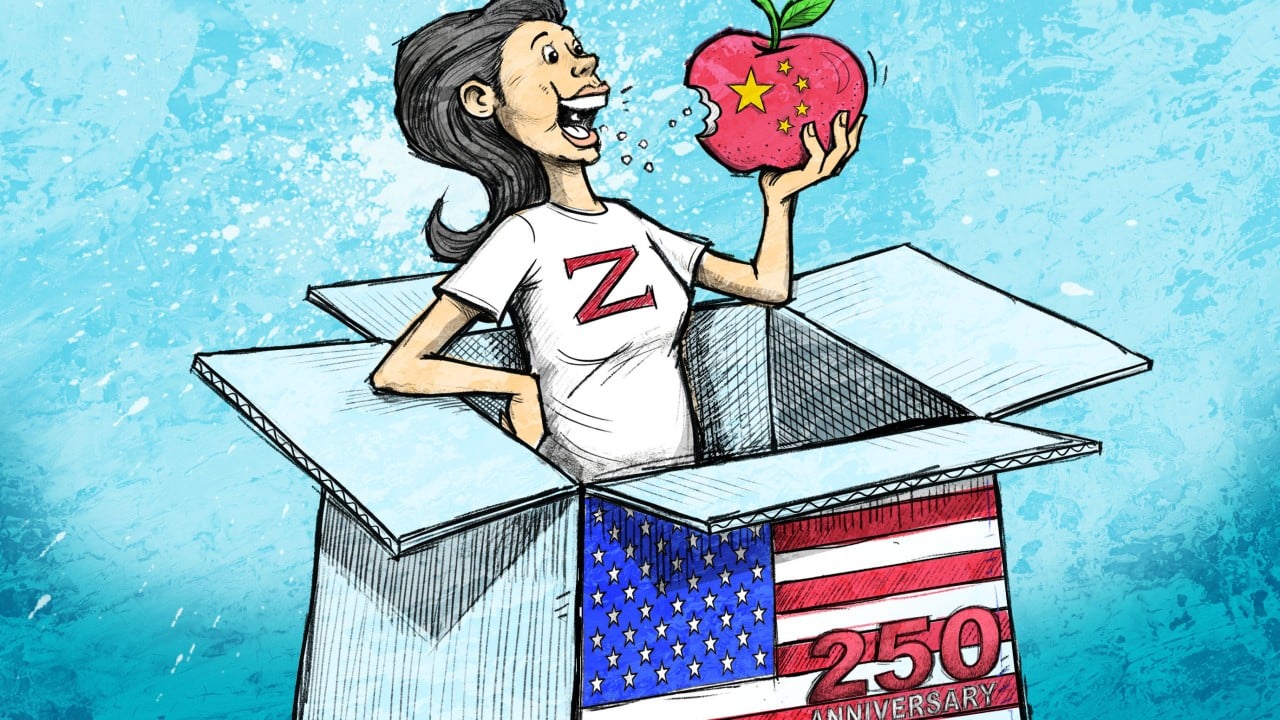
The fireworks lighting up the National Mall this July 4, 2026, hit differently if you're Gen Z or a millennial with roots in Asia. As the United States marks its semiquincentennial—a massive 250-year milestone of the American experiment—the speeches talk about freedom, democracy, and a shared melting pot. But outside the official parade lines, young Asian Americans are navigating a reality that feels increasingly fragile.
You don't have to look far to see why. The ongoing geopolitical cage match between Washington and Beijing has spilled directly onto American streets. For a generation raised on the promise of multiculturalism, the current climate feels like a bait-and-switch. They're watching state laws restrict property ownership for Chinese nationals, witnessing the fallout of the FBI's controversial China Initiative, and facing a broader societal gaze that frequently treats them as perpetual foreigners.
The real question driving this generation isn't just "Who am I?" It's "Will this country ever actually let me be just American?" As the nation celebrates its history, a distinct identity shifts under the weight of rising nationalism and systemic suspicion.
The Geopolitical Target on the Diaspora
Living with a hyphenated identity in 2026 means realizing that foreign policy dictates your domestic safety. When Washington catches a cold, the Asian American community sneezes. The relentless political rhetoric painting East Asia, particularly China, as an existential threat has created a toxic spillover effect that doesn't care about the nuances of your passport.
Data from the Asian American Foundation reveals a staggering trend. A large majority of young Asian Americans report changing their daily behaviors—avoiding certain neighborhoods, staying quiet in public spaces, or keeping a low profile online—to escape harassment. This isn't paranoia. It's a survival mechanism adapted to a society where a shifting political climate instantly triggers old prejudices.
The biggest mistake people make is assuming this suspicion applies only to recent immigrants. Third- and fourth-generation citizens face the exact same "where are you really from" interrogations. The historical echo is deafening. From the 1882 Chinese Exclusion Act to the forced incarceration of Japanese Americans during World War II, the American government has a long track record of turning its own citizens into scapegoats during global tensions. For today's youth, that history isn't just a textbook chapter. It's a blueprint for their current anxieties.
Beyond the Model Minority Myth
For decades, the "model minority" stereotype was used as a tool to keep the community quiet. The bargain was simple: work hard, get your degree, don't rock the boat, and you'll get a pass into the American middle class.
Gen Z completely rejects this contract.
They've realized that the model minority myth is a trap. It offers conditional acceptance that can be revoked the moment global supply chains freeze or a political candidate needs a scapegoat. The recent battles over affirmative action, state-level bans on land ownership, and shifting university policies have shown young professionals that their hard work is frequently viewed as "unfair competition" rather than a contribution to the nation's progress.
Instead of trying to fit into a mold that doesn't protect them, young activists are building new networks. They're moving away from the quiet, apolitical stance of their parents—many of whom fled authoritarian regimes or immigration hardships and preferred to stay under the radar. The new generation understands that silence doesn't buy safety.
Redefining What It Means to Be American
So how do you celebrate a 250th birthday when the guest of honor keeps eyeing you suspiciously? You rewrite the invitation.
Young Asian Americans are shifting from seeking approval to demanding ownership of the American narrative. They aren't trying to assimilate into an existing mold anymore. They're pointing out that the transcontinental railroads, the agricultural engines of the West Coast, and the backbone of the tech sector were built by immigrant labor that was legally excluded from citizenship for generations.
Belonging in 2026 isn't about flags or blind patriotism. It's about a stubborn commitment to making the country live up to its founding promises. It's an active, sometimes adversarial love for a nation that forces you to fight for the rights you were promised at birth.
If you want to navigate this shifting landscape effectively, stop waiting for institutional validation. Focus on building local community security networks, document and report instances of discrimination directly through organizations like Stop AAPI Hate, and actively support political candidates who reject xenophobic policy frameworks. The next 250 years of the American story won't be defined by top-down declarations, but by the communities refusing to let their identity be weaponized against them.