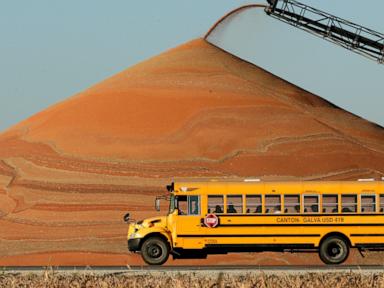
You probably grew up with the familiar squeak of hydraulic doors and that unmistakable glossy "school bus yellow" paint job. For generations, the yellow school bus was a constant. It was the backbone of public education, a mobile classroom where kids navigated the social hierarchy before they even set foot in the building. But today, the icon is struggling to survive.
If you’re a parent in 2026, you’ve likely noticed the cracks in the system. Maybe your district slashed routes to save money. Perhaps you’re stuck in a parent pickup line that snakes for miles because there simply isn’t a bus driver to take your kid to school. This isn't just a temporary glitch; it's a structural breakdown.
The Reality Behind the Driver Shortage
The most common narrative claims that we’re just short on drivers. While true, that’s just the surface. According to recent data from the Economic Policy Institute, we’re still looking at thousands of fewer drivers compared to pre-pandemic levels. Districts have thrown money at the problem—offering signing bonuses and pay bumps—but the needle barely moves.
Why? Because the job is fundamentally broken. Most bus driving positions are built around "split shifts." You work a few hours in the morning, sit idle for six hours, then work a few more in the afternoon. You’re trapped by a Commercial Driver’s License (CDL) requirement that demands time and money to maintain, all for a position that struggles to compete with the flexibility of warehouse or delivery work. If you’re a parent or retiree, the lack of full-time hours makes this work untenable.
Districts Are Moving Beyond the Bus
Many districts have stopped waiting for the labor market to fix itself. Instead, they are rethinking how transportation functions entirely. Some are consolidating routes, which means longer ride times for students. Others are pushing the burden back onto parents, essentially privatizing the "last mile" of the school commute.
This shift has consequences that go beyond convenience. When districts cut bus services, it hits low-income families the hardest. If you don't have a reliable vehicle or the flexibility to drive your child to school, your student’s attendance and academic performance are the ones that suffer. We’re effectively creating a two-tier system where transportation access determines educational quality.
Technology Is Not a Magic Bullet
You’ll hear consultants talk about "route optimization" software and "smart dispatching." It sounds great in a boardroom. I’ve seen districts implement these systems to shave off redundant routes and save thousands in labor costs. Does it help? Sure. It makes the existing fleet more efficient. But software can’t drive a bus.
Data-driven scheduling is a tool, not a solution for a missing human. If you have ten buses and twelve routes, no algorithm is going to bridge that gap. The most successful districts I’ve observed aren't just buying expensive GPS platforms; they are getting creative with their existing staff—using substitute rosters more effectively and communicating with parents in real-time to prevent the "where is the bus?" chaos that drives people out of the system.
The Financial Squeeze
Budget constraints are the other side of this coin. With 73% of districts reporting that their transportation operations are impacted by budget shortages, the yellow bus is often the first item on the chopping block. It’s an expensive, aging, and labor-intensive operation.
Some districts are looking toward electric vehicles (EVs) to lower fuel and maintenance costs in the long run. While the upfront investment is massive, the goal is to stabilize the long-term bottom line. However, for a district currently bleeding money, that long-term vision is a hard sell.
What Can You Actually Do
If you’re fed up with the transportation instability in your local district, stop waiting for the state to swoop in with a fix. Here are the steps that actually move the needle:
- Demand transparency in board meetings. Ask specifically about the driver retention rate, not just the hiring rate. If they’re hiring five drivers but losing six, they’re failing.
- Support flexible scheduling. If your district is open to it, push for "hub stops" rather than door-to-door service if it means keeping the routes running consistently. It’s less convenient, but it’s more reliable than a bus that never shows up.
- Advocate for split-shift solutions. Look for districts that offer benefits or "bridge" work—like cafeteria or administrative tasks—during those idle mid-day hours. It turns a part-time struggle into a stable, full-time career for the driver.
- Organize carpools. It’s old school, but it’s the only way to insulate your family from district-level instability.
The yellow bus isn't going to disappear tomorrow, but the era of it being an automatic right is over. We’re in a transition period where the responsibility is shifting from the institution to the individual. Stop expecting the system to work like it did in 1990. It’s time to plan for a reality where you are your own primary transportation coordinator.