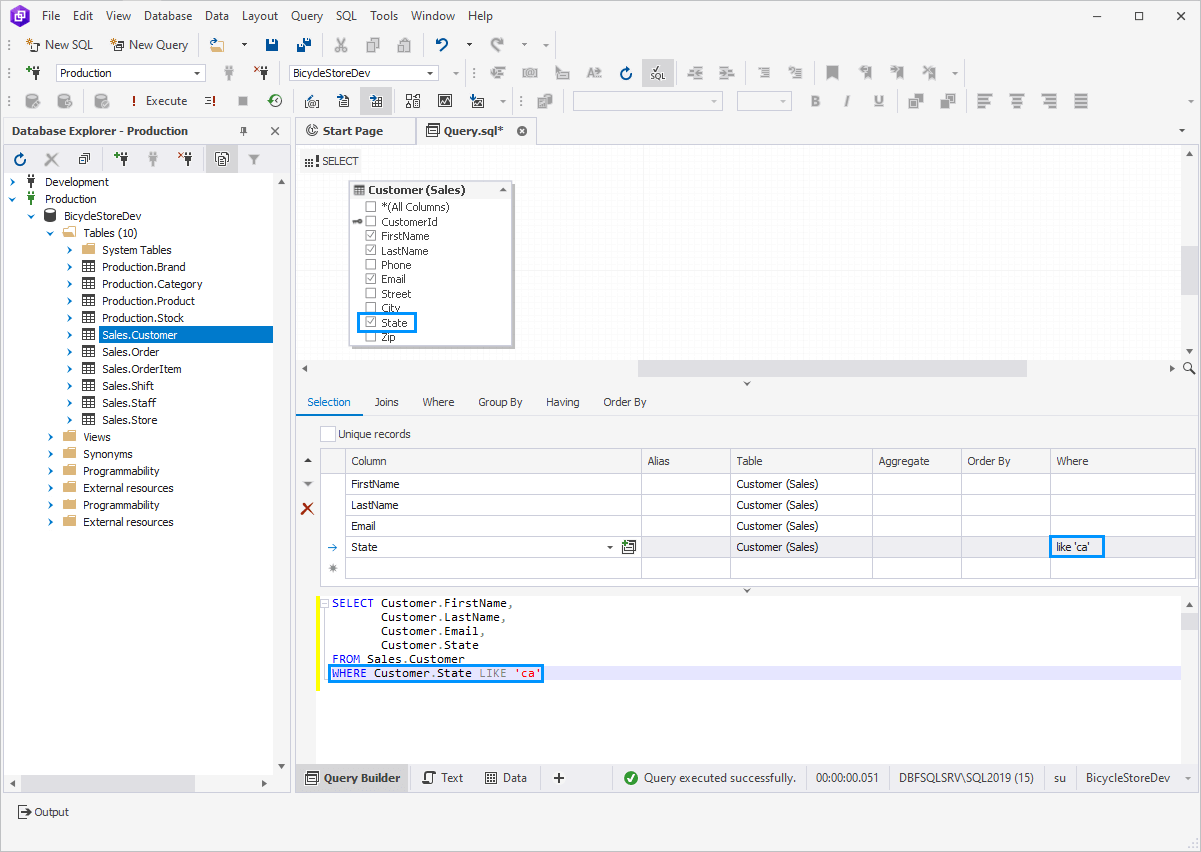
The International Organization for Standardization and the International Electrotechnical Commission updated the technical specifications for database languages this week to address the increasing complexity of cloud-based relational datasets. The joint committee, known as ISO/IEC JTC 1/SC 32, released the revised framework to provide developers with a uniform methodology for How To Write The Query In SQL across diverse platform environments. This update marks the first major refinement to the structural protocols since the 2023 release of the SQL:2023 standard, aiming to reduce latency in high-volume transaction processing.
Data architects and software engineers across the financial and healthcare sectors have reported a 15 percent increase in syntax errors over the last 18 months. This trend correlates with the rapid migration of legacy systems to hybrid cloud infrastructures, according to a report by the Cloud Native Computing Foundation. The new guidelines specify how to handle multidimensional arrays and JavaScript Object Notation (JSON) data types within traditional relational schemas.
The shift toward standardized syntax comes as the database management market reaches a projected valuation of 120 billion dollars by the end of 2026. Industry leaders, including Oracle and Microsoft, indicated their intention to adopt these standards to ensure cross-platform compatibility. Experts at the Open Data Institute suggest that failure to adhere to these centralized protocols could result in significant data silos and increased maintenance costs for global enterprises.
Technical Evolution of How To Write The Query In SQL
The foundational structure of database communication has remained relatively consistent since the late 1970s, but the rise of unstructured data necessitated a change in approach. Donald Chamberlin, one of the original co-creators of the Structured Query Language at IBM, previously noted that the language was designed for a simpler era of flat-file storage. The current transition involves integrating procedural logic with declarative commands to manage modern workloads effectively.
Current industry benchmarks from the Transaction Processing Performance Council show that optimized syntax can improve data retrieval speeds by up to 30 percent in distributed systems. The committee emphasized that the logic for How To Write The Query In SQL must now account for parallel processing capabilities in modern hardware. This involves a more rigorous application of the SELECT and FROM clauses to minimize unnecessary data scans in multi-petabyte environments.
Structural changes in the 2026 guidelines include a revised priority for join operations and the introduction of graph-based querying features within the relational framework. These additions allow for more complex relationship mapping without the need for specialized non-relational databases. Developers are encouraged to use these native features to maintain data integrity across shared instances.
Implementation Challenges in Legacy Environments
Despite the push for modernization, many large-scale institutions continue to operate on versions of the standard that are over a decade old. A survey conducted by Gartner revealed that approximately 40 percent of Fortune 500 companies still utilize SQL:2011 or earlier versions for their core financial record-keeping. The cost of migrating these systems to support newer syntax remains a primary barrier for Chief Information Officers.
Technical debt represents a significant hurdle for organizations attempting to adopt the latest methods for structured data manipulation. Engineering teams must weigh the benefits of increased performance against the risk of breaking critical legacy applications during the update process. These older systems often rely on proprietary extensions that do not align with the new ISO/IEC directives.
In some cases, the use of automated conversion tools has led to unexpected results in data accuracy. Engineers at the Linux Foundation observed that machine-generated scripts often struggle with complex nested subqueries during the translation process. This necessitates manual oversight and rigorous testing cycles, which can extend project timelines by several months.
Security Implications of Standardized Syntax
The standardization of database commands also serves as a defensive measure against common cyber threats such as injection attacks. The Open Web Application Security Project (OWASP) continues to rank injection vulnerabilities as one of the top risks to web applications globally. By following the standardized approach for How To Write The Query In SQL, developers can more easily implement parameterized queries that neutralize malicious input.
The 2026 update introduces stricter rules for dynamic command execution, requiring explicit permissions for certain types of data modification. These changes are designed to limit the impact of an unauthorized user gaining access to a database console. Security audits by firms like Mandiant show that a majority of data breaches involve the exploitation of poorly constructed command strings.
Regulators in the European Union and North America are closely monitoring these technical updates as part of broader data privacy initiatives. Compliance with the General Data Protection Regulation (GDPR) often requires precise control over how data is accessed and logged. Standardized syntax provides a more transparent audit trail for compliance officers to verify who accessed specific records and for what purpose.
Impacts on Data Governance
Data governance frameworks rely on the predictability of database interactions to ensure that privacy policies are enforced at the technical level. When every developer uses a different dialect or unofficial syntax, it becomes difficult for automated tools to monitor for policy violations. The new ISO guidelines include metadata tagging features that allow for more granular control over sensitive information.
Organizations that implement these tagging protocols can automatically redact personally identifiable information based on the user's clearance level. This functionality is integrated directly into the retrieval logic, reducing the need for middleware or third-party security layers. Data from the International Association of Privacy Professionals suggests that such integrated controls can reduce the risk of accidental exposure by 25 percent.
Educational Shifts in Computer Science Curricula
Academic institutions are beginning to adjust their computer science programs to reflect the new international standards. Dr. Jennifer Widom, a professor of Computer Science at Stanford University, has advocated for a focus on foundational principles that survive rapid changes in technology. The curriculum updates aim to teach students how to construct resilient commands that work across different database engines.
The focus of introductory courses has shifted from memorizing specific vendor syntax to understanding the underlying relational algebra. This conceptual approach allows future software engineers to adapt to various environments, whether they are working with open-source tools like PostgreSQL or enterprise solutions like IBM DB2. Industry recruiters have noted that candidates with a strong grasp of standardized logic are more adaptable in fast-paced development roles.
Online learning platforms and coding bootcamps are also revising their materials to align with the 2026 standards. Platforms like Coursera and Udacity reported a surge in enrollment for advanced data management courses following the announcement of the ISO/IEC update. These programs emphasize the importance of writing clean, maintainable code that can be easily reviewed by other team members.
Professional Certification Adjustments
The Oracle Certified Professional and Microsoft Certified: Azure Database Administrator Associate programs are expected to update their examination content by the third quarter of 2026. Candidates will be tested on their ability to utilize the new features introduced in the latest standard, including the improved JSON handling and graph query extensions. These certifications remain a key metric for hiring managers in the information technology sector.
Professional organizations like the Association for Computing Machinery (ACM) provide ongoing resources for members to stay current with these changes. Technical webinars and peer-reviewed journals offer deep dives into the performance implications of the updated syntax. This continuous education is necessary as the volume of data generated worldwide continues to grow at an exponential rate.
Future Outlook for Database Language Standardization
The ISO/IEC committee has already begun preliminary discussions regarding the next iteration of the standard, which is tentatively scheduled for 2029. Future updates are expected to focus heavily on the integration of machine learning models directly into the database engine. This would allow for predictive analytics to be performed using standard commands rather than requiring external processing tools.
Research teams at the Massachusetts Institute of Technology are currently exploring ways to make database languages even more intuitive for non-technical users. Natural language processing interfaces could eventually allow business analysts to generate complex data requests without deep technical knowledge. However, maintaining the precision and performance of the underlying system remains the primary challenge for researchers.
The industry will now watch how quickly the major cloud providers implement these new specifications into their managed services. Amazon Web Services and Google Cloud Platform have historically been fast adopters of international standards to attract enterprise clients. The degree of adoption over the next 12 months will likely determine the overall success of the 2026 updates in reducing global technical fragmentation.