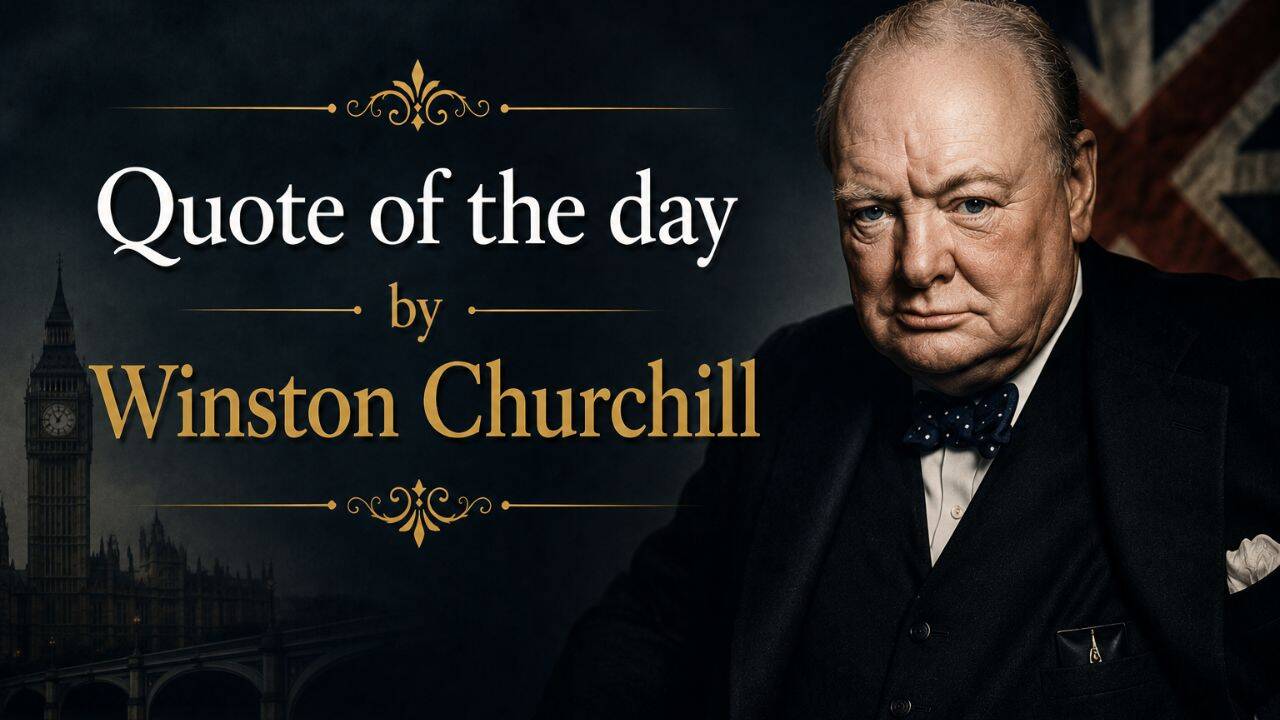
Most people approach the end of life with a sudden burst of quiet humility. They look back, think about their mistakes, and maybe offer a silent prayer to whatever deity they think is waiting for them.
Winston Churchill did the exact opposite. For a closer look into this area, we suggest: this related article.
On the eve of his 75th birthday in late November 1949, the former British Prime Minister was asked about facing his own mortality. He didn't blink. Instead, he dropped a line that has outlived him by decades.
"I am prepared to meet my Maker. Whether my Maker is prepared for the great ordeal of meeting me is another matter." To get more background on the matter, comprehensive reporting can be read on NBC News.
It is a masterful bit of writing. In a single stroke, Churchill took the most terrifying, unavoidable truth of human existence and turned it into a cosmic punchline at his own expense. But he didn't just make a joke. He flipped the entire traditional power dynamic of heaven and earth on its head.
If you look beneath the surface of that quick wit, you find something much deeper than mere arrogance. It shows an entire philosophy on life, aging, and what it actually means to face the end without letting fear dictate your final chapters.
The True Story Behind the Birthday Wit
A lot of history blogs get the context of this quote completely wrong. Some claim he said it on his deathbed. Others claim it was an unscripted response to a hostile journalist during a trip to Washington.
The real story belongs to November 30, 1949. Churchill was turning 75. He had already guided Britain through the darkest days of World War II, lost a shocking postwar election in 1945, and was currently serving as the Leader of the Opposition. He was an old man by the standards of the era, and his health was beginning to show the cracks of a lifetime fueled by champagne, heavy cigars, and immense stress.
When people asked him about death, they expected a solemn response. They expected him to act like a statesman entering his twilight years.
Instead, he gave them a reminder that he was still the same man who had spent his youth escaping Boer prison camps and charging on horseback at the Battle of Omdurman. He wasn't going to crawl quietly into old age. He viewed the afterlife not as a courtroom where he would be judged, but as an impending meeting between two formidable powers.
Flipping the Script on Judgment
Think about what the phrase "meeting your maker" usually implies. It carries an assumption of submission. You are the creation, standing before the creator, waiting to see if you measured up to expectations.
Churchill completely rejected that passive framing.
By calling his arrival an "ordeal" for God, he asserted his own agency. He was telling the world that he had lived a life so loud, so complicated, and so utterly uncompromising that even the Almighty would have his hands full dealing with him. It is an incredibly bold position to take, but it perfectly matched the persona he had spent decades building.
What Churchill Really Believed About God and the Afterlife
To understand why this joke works, you have to understand Churchill's actual views on religion. He wasn't a traditional, pious Christian. He wasn't an atheist either. He often described himself as a "flying buttress" of the church, meaning he supported it from the outside rather than from the inside.
During his early military career in India and Sudan, Churchill spent a lot of time reading philosophy and history. He found himself detached from the strict dogmas of his youth. In his autobiography, My Early Life, he admitted that he went through a phase of intense skepticism, questioning whether there was any divine plan at all.
He eventually settled into a comfortable, highly personalized relationship with the concept of a higher power. He believed in a vague concept of destiny. He felt that some grand intelligence was looking after things, or at the very least, looking after him. He survived multiple near-death experiences, from plane crashes to severe bouts of pneumonia, which only solidified his belief that he was being preserved for a specific purpose.
Because his faith wasn't tied to fear of eternal damnation, he didn't feel the need to grovel when discussing the end. He lived his life with the view that if you do your duty, stand by your friends, and fight for what you believe is right, the details of the afterlife will take care of themselves.
The Power of Tactical Humor in Dark Moments
This birthday quip wasn't an isolated event. Churchill used humor as a shield throughout his entire life, especially when things were grim.
- When a photographer told him in 1949 that he hoped to take his picture on his 100th birthday, Churchill replied, "I don't see why not, young man. You look reasonably fit and healthy."
- When Member of Parliament Bessie Braddock famously accused him of being disgustingly drunk, he delivered the ultimate retort about her appearance, knowing that sobriety would return to him the next morning while her flaws remained.
- Even during the Blitz, when bombs rained down on London, his private secretaries noted that he constantly cracked dry jokes to keep the staff from panicking.
Humor wasn't a distraction for Churchill. It was a tool for survival. When you laugh at something, you rob it of its power to terrify you. By turning his own mortality into a joke about God having to brace for his arrival, he took total control of his own narrative.
Why We Panic About Aging and How to Stop
It is easy to look at a historical figure and think their confidence doesn't apply to normal life. We live in a culture that is utterly terrified of aging. Billions of dollars are spent every year on creams, surgeries, and supplements designed to hide the passage of time. We treat the later years of life like a tragedy instead of a victory.
Churchill's attitude offers a radically different path. He didn't try to pretend he wasn't old. He didn't hide his vulnerabilities. He simply refused to let his spirit shrink just because his body was slowing down.
If you find yourself stressing about getting older or worrying about the future, you can adopt a few specific pieces of the Churchill mindset right now to change your perspective.
Focus on Your Legacy of Action
Churchill didn't fear death because he knew he had left absolutely everything on the field. He had written millions of words, led a nation, painted hundreds of canvases, and fought in multiple wars. When you fill your days with genuine action, the fear of running out of time naturally begins to fade.
Stop Seeking Absolute Approval
The core of the "Maker" quote is a total lack of people-pleasing behavior. Churchill wasn't worried about whether he had lived a perfectly clean, unblemished life that would win a gold star in heaven. He knew he was flawed. He knew he had made massive political blunders, like the Gallipoli campaign in World War I. He accepted his own complexity, and you should do the same with yours.
Keep Your Wit Sharp
The moment you lose your sense of humor about your own limitations is the moment old age wins. Treat the absurdities of getting older as material for comedy rather than causes for despair.
How to Apply the Churchill Mindset to Your Daily Life
You don't need to be a wartime Prime Minister to live with this kind of unshakeable confidence. You can start changing how you approach your own life and fears by taking these three concrete actions today.
- Audit your biggest worry. Write down the single thing about the future that scares you the most right now. Look at it clearly. Now, find a way to make a joke about it. Write down a ridiculous, exaggerated worst-case scenario that makes the fear look silly. Break its power over your mood.
- Stop apologizing for your personality. If you are loud, be loud. If you are stubborn, use that stubbornness to achieve something difficult. Churchill was a handful for everyone around him, but that exact intensity is what allowed him to survive when others quit. Stop shrinking yourself to make other people comfortable.
- Say what you actually mean. The next time someone asks you a standard, polite question about a serious topic, don't give a canned, safe answer. Give an honest, witty, or direct response. Own your perspective without filtering it through a layer of corporate politeness.
Churchill eventually passed away in January 1965 at the age of 90. He didn't leave behind a legacy of quiet compliance. He left an indelible mark on history by refusing to let anyone, including his own mortality, dictate the terms of his life. We should all be so bold.