Wind energy feels clean until you look down. When massive turbine blades reach the end of their operational lifespan, they don't just vanish. For years, the dirty secret of renewable energy has been what happens to these colossal structures once they stop spinning. You end up with mountains of composite materials sitting in landfills because separating glass fiber, carbon fiber, and tough epoxy resin is an absolute engineering nightmare.
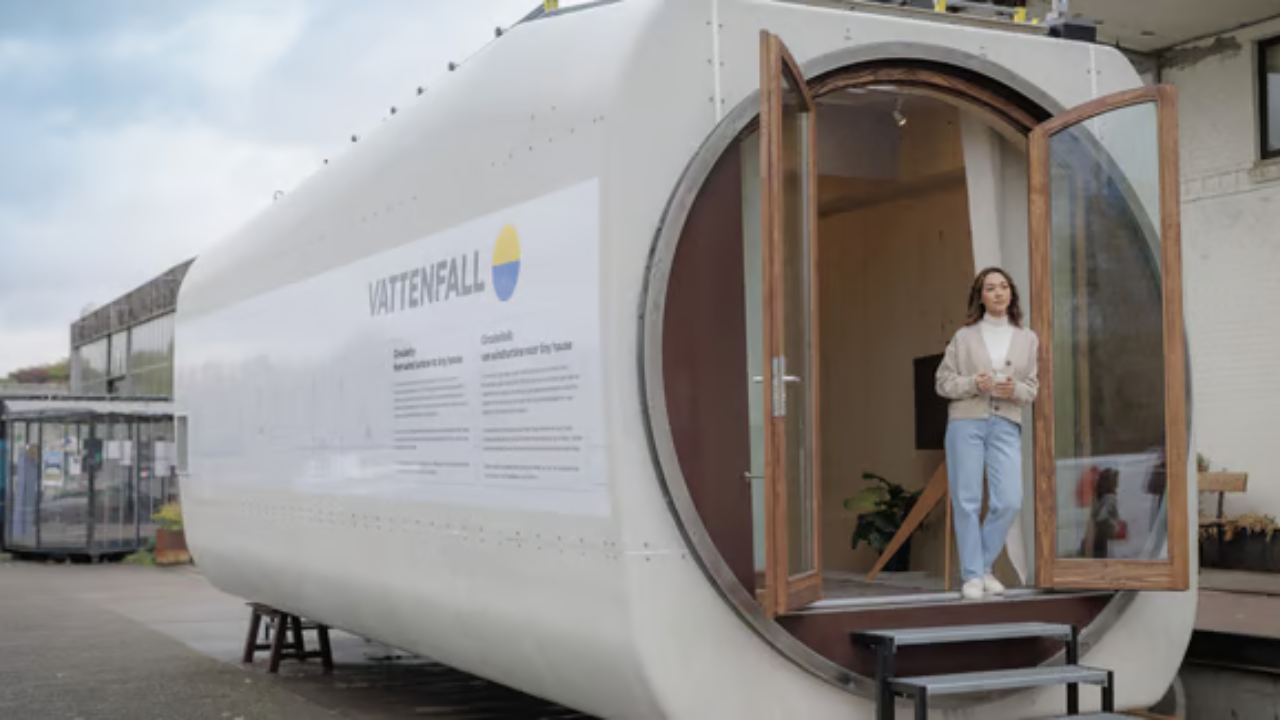
Right now, renewable pioneers are trying to fix that mess. A Swedish energy company called Vattenfall, working alongside design studios like Superuse, is turning discarded wind turbine parts into functional items like tiny solar-powered houses and alpine skis. It sounds like a quirky marketing stunt. Honestly, it's a necessary glimpse into how heavy industry must adapt as the first generation of major wind farms retires.
Let's break down why wind turbine recycling is so broken, how innovators are changing the math, and what it takes to build a truly circular wind economy.
The Composite Material Problem
Building a wind turbine blade requires extreme durability. These things span anywhere from 50 to 100 meters, facing brutal gales, freezing rain, and constant mechanical stress for up to 25 years.
To achieve that kind of resilience, manufacturers fuse glass fiber, carbon fiber, balsa wood, and heavy resins together into tightly packed layers. That design makes them great at generating electricity. It also makes them virtually impossible to melt down or dissolve like steel or copper.
While about 90 percent of a standard turbine's mass—things like steel towers, copper wiring, and concrete foundations—recycles easily, the blades remain a massive headache. Standard mechanical recycling reduces them into composite flakes or fillers for lower-grade products. High-temperature thermal processes like pyrolysis can recover some fibers, but they demand massive amounts of energy and often degrade the material's structural integrity.
Nobody wants to build a bridge or a high-stress machine part out of weak, recycled turbine fragments. So, designers have to get creative with what these blades can become without requiring energy-intensive chemical strip-downs.
From Nacelle Covers to Tiny Houses
Instead of melting down complex composites, why not use the existing shapes? That question drove Vattenfall and Superuse to take a retired turbine nacelle cover—the protective housing that sits right behind the blades and shelters the heavy mechanical gear—and convert it into a living space.
The resulting structure measures roughly four meters wide, ten meters long, and three meters high. It once sat atop an Austrian wind farm. Today, it functions as a fully functional tiny house equipped with a heat pump, solar panels, and a solar water heater. It made waves at Dutch Design Week, showing that structural components can bypass heavy processing entirely through clever adaptive reuse.
Blades are getting the same treatment. Take the 57 decommissioned blades from the Nørre Økse Sø onshore wind farm in Denmark. Instead of burying them, builders turned them into structural facade elements for a multi-storey car park in Lund. Other European startups are shredding or shaping blade fragments into frames for solar panel arrays or even high-end alpine skis.
These projects don't solve the entire global waste crisis overnight. They're small batch experiments. They help engineers figure out what works, what fails under real-world conditions, and how to jump-start a secondary market for circular materials.
The Regulatory Pressure Point
Technology is only half the battle. Policy usually dictates whether companies do the right thing or the cheap thing.
Right now, Europe is scaling up wind capacity at a breakneck speed, installing gigawatts of new clean energy every year. But policy lags behind infrastructure. A complete European Union-wide ban on landfilling decommissioned blades still doesn't exist. Only a handful of countries—like Austria, Finland, Germany, and the Netherlands—enforce binding national bans.
Industry groups like WindEurope are actively lobbying Brussels to make landfill bans mandatory across all member states. When companies can legally dump multi-tonne fiberglass blades into a hole in the ground for a cheap tipping fee, they have very little financial incentive to invest in expensive recycling chains.
That needs to change. Experts point toward upcoming regulatory frameworks, such as the European Commission's anticipated Circular Economy Act, as crucial stepping stones to force the market's hand. If regulation makes landfilling financially punishing, waste management firms will rapidly scale up mechanical and thermal processing plants.
What Needs to Happen Next
If you want to track where the renewable energy sector is heading, stop looking at how many new turbines go up. Start looking at what happens to the ones coming down.
- Design for disassembly: Manufacturers must stop relying on unrecyclable epoxy resins and adopt thermoplastic resins that can be melted down and remolded easily at room temperature.
- Mandatory producer responsibility: Policy must hold energy developers accountable for the entire lifecycle of a turbine, from the first rotation to the final disposal.
- Regional processing hubs: Transporting 80-meter blades across continents for recycling eats up any carbon savings. Localized crushing and processing facilities are essential.
The clean energy transition cannot afford a massive waste hangover. Turning old turbines into tiny homes and skis proves we can imagine a better way, but scaling those quirky prototypes into standard industrial practice is the real test ahead.