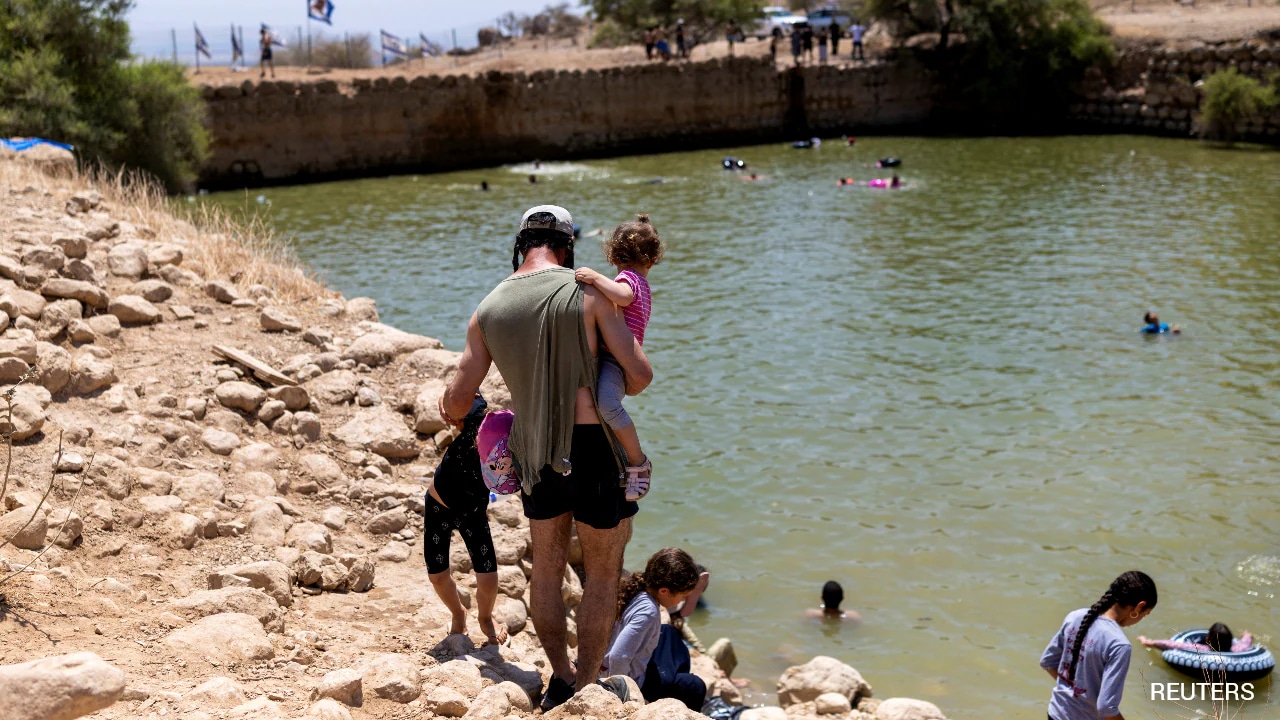
Water defines survival in the Jordan Valley. When Israeli settlers cut the irrigation pipelines feeding the Palestinian village of Fasayil earlier this summer, they didn't just disrupt a local supply line. They turned a vital agricultural lifeline into a private recreational amenity known locally as Herod's Pool.
For generations, families in Fasayil relied on local freshwater springs to cultivate crops like eggplant, zucchini, and watermelon. Today, those fields and greenhouses sit completely barren. Local farmer Saad Nemer holds official paperwork from Israeli authorities confirming his land ownership, yet he cannot plant a single seed. The irrigation pipes were severed, redirecting the spring water into an ancient archaeological site that has now been repurposed into an exclusive tourist swimming spot for Israelis.
The Real Cost of Rural Water Diversion
This situation isn't an isolated dispute. Palestinian water authorities and human rights researchers characterize the gradual takeover of natural springs as a quiet, systemic strategy. In fertile pockets of the occupied West Bank, water scarcity is weaponized.
When access drops, livelihoods disappear almost overnight. Families who spent decades tending to citrus groves and vegetable patches find themselves entirely dependent on expensive trucked-in water—if they can afford it at all. Meanwhile, promotional signage near the newly minted tourist pool proudly displays political backing, including financial support from far-right Israeli figures like Finance Minister Bezalel Smotrich.
Settlers frequenting the site openly admit that the influx of bathers serves as an effective deterrent. Palestinians steer clear of the area, intimidated by large groups claiming territorial dominance over resources that once sustained entire communities.
Legal Realities and Ground-Level Frustrations
Under international law, seizing civilian water infrastructure in occupied territory violates basic humanitarian protections. Yet, enforcement remains non-existent on the ground. Local landowners note that even if they manage to repair a broken pipe, armed settlers or subsequent patrols quickly reverse the fix.
The double standard is glaring. Palestinian residents point out that attempts by locals to clear or develop similar historic water pools a decade ago were met with swift crackdowns by the Israeli military, who labeled unauthorized work criminal and threatened immediate arrests. Today, backing flows freely for projects that transform indigenous water sources into leisure attractions for settlers while local agriculture starves.
As summer temperatures peak in the Jordan Valley, the disparity widens. Fields turn to dust while nearby visitors cool off in stolen springwater, cementing a new baseline of control over the West Bank's most precious resource.

:max_bytes(150000):strip_icc()/Untitled_Panorama13-bd44b39ffc06438f8d5490caeab65fcb.jpg)

