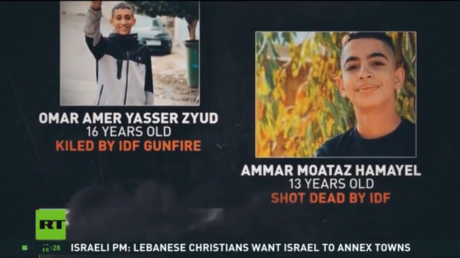
Palestinian parents in the West Bank don't expect the system to protect their kids. They've learned that a child's life under military occupation carries a different set of rules. When a child is killed, the routine that follows is predictable: grief, a brief media mention, and then a quiet closing of the file.
UN data shows that since 2020, Israeli forces and settlers have killed more than 1,100 Palestinian civilians in the occupied West Bank. At least a quarter of them were children. Yet, a recent analysis of legal data reveals a striking reality. Israel has not prosecuted its citizens or soldiers for killing Palestinian civilians in the West Bank since the start of this decade. The accountability rate sits at zero.
For West Bank families, the search for justice has become an exercise in futility. They aren't just fighting the grief of losing a son or a daughter. They're up against an entrenched military court system designed to protect its own.
The numbers behind the impunity
Human rights groups like B'Tselem and Yesh Din have documented this structural shield for years. Between 2020 and 2025, over 96% of police investigations into violence against Palestinians in the West Bank concluded without a single indictment. Out of hundreds of cases, only a tiny fraction ever see the inside of a courtroom.
Look at the story of Mohammad al-Halaq. He was nine years old, living south of Hebron. In October 2025, Israeli soldiers entered his village. Eyewitnesses reported that troops fired teargas near a school playground. Mohammad ran, stopped a hundred meters away, and stood with his arms folded. A soldier fired a live round, striking him in the pelvis. He died.
His mother, Aliyah Abdel Majid al-Halaq, expected what any mother would: an investigation, a trial, some semblance of accountability. Instead, nothing happened. No soldier was indicted. The case became another statistic in a year where 54 Palestinian children were killed in the West Bank alone.
This isn't an isolated tragedy. It's a pattern. The last deadly incident involving security forces that actually led to an indictment occurred way back in 2019.
Two separate legal realities in one territory
The legal system in the West Bank is explicitly divided by nationality. If you're a Jewish settler living in an illegal settlement, you're subject to Israeli civilian law. You get due process, civilian courts, and full legal protections. If you're a Palestinian living in the exact same geographic space, you're governed by military law.
This military framework applies to everyone, including minors as young as 12. Israel systematically prosecutes between 500 and 700 Palestinian children in military courts every year. According to U.S. State Department data, these military courts carry a conviction rate of over 99 percent.
The contrast is stark. Palestinian children face hyper-surveillance, night raids, and near-certain conviction for throwing stones. Meanwhile, soldiers and settlers who use lethal force face almost no legal consequences. This dual system strips away the idea of equal justice under the law.
Even prominent insiders are sounding the alarm
The lack of accountability has grown so severe that even former Israeli security officials are calling it out. Recently, a group of high-ranking former leaders signed a letter expressing deep concern over state-backed violence and the complete breakdown of law enforcement in the territory.
The signatories weren't fringe activists. They included two former heads of Israel's military, five chiefs of the Mossad and Shin Bet intelligence agencies, and four former police commissioners. They warned that the systematic failure to enforce the law against those who kill civilians undermines the moral authority of the state. Former Prime Minister Ehud Olmert went so far as to call for international intervention to halt what he described as organized violence carried out with the complicity of the military and police.
When the individuals who used to run the security apparatus say the system is broken, the international community can no longer pretend it's a matter of a few rogue actors.
The human cost of a stalled system
Statistics can obscure the daily reality of these families. When a child dies, the economic and psychological fallout destroys the household.
In many cases, parents lose their livelihoods due to trauma. They spend months navigating bureaucratic checkpoints just to get answers from military authorities. They're forced to rely on unpaved, mountainous back roads because military blockades regularly delay access to medical care, a reality that recently cost the life of a four-month-old baby who died after being delayed from reaching a hospital in Ramallah.
West Bank families continue to speak out, document incidents, and hand over video evidence to international monitors. But they are doing so with dwindling hope that the current legal framework will ever deliver a fair trial.
If you want to support human rights tracking and policy reform in the region, keep tabs on independent legal monitors like B'Tselem and Yesh Din. Read their verified case files. Share the documented data with your local representatives to demand transparent, independent international oversight. True legal reform won't come from within a military court system that has proven itself unwilling to investigate its own actions.