When Vladimir Putin decided to set foot on the disputed Kuril Islands, he knew exactly what reaction he would trigger in Tokyo. The move wasn't just a routine presidential inspection; it was a deliberate provocation right on Japan's eastern doorstep.
Washington didn't wait long to respond. The United States quickly stepped into the ring, openly backing Japanese sovereignty over the territory and making sure Moscow got the message loud and clear.
The Visit That Triggered Tokyo
Let's look at what actually happened. Vladimir Putin traveled to Iturup, one of the four southernmost islands of the Kuril archipelago known in Japan as the Northern Territories. Russian state media broadcast clips of him touring a fish processing plant and chatting in a local school. It marked a rare presidential visit to the region, echoing the provocative trips made by former Russian leaders over the years.
Tokyo's reaction was swift and furious. Prime Minister Sanae Takaichi called the visit completely unacceptable, stating that it directly wounds the feelings of the Japanese public. Foreign Minister Toshimitsu Motegi didn't just issue a stern diplomatic note—he summoned Russian Ambassador Nikolaï Nozdrev straight to his office to deliver a sharp reprimand.
The Japanese stance remains rock solid: these islands are an inherent part of the nation's territory, seized by Soviet forces back in 1945 during the closing weeks of the Second World War. Ever since, the territorial dispute has blocked the two countries from signing a formal peace treaty.
Washington Steps Up Its Support
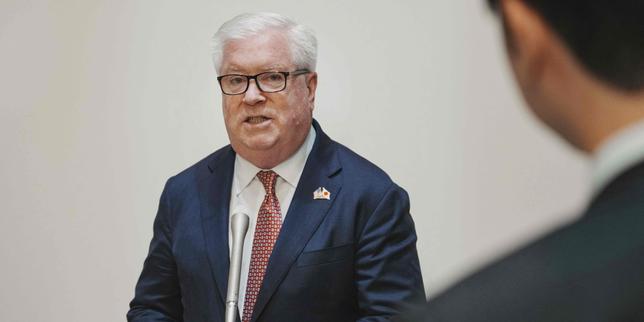
The response from the United States came through loud and clear via official diplomatic channels. George Glass, the U.S. ambassador to Tokyo, took to social media to declare unshakeable American support for Japan. He explicitly reaffirmed Washington's recognition of Japanese sovereignty over the disputed archipelago.
Why does this matter right now? Because the geopolitical chess board is getting crowded. The U.S. and Japan view their alliance as the anchor of regional stability in the Indo-Pacific. By explicitly backing Tokyo while Moscow tries to cement its administrative control over the 20,000 Russian residents living across the chain, Washington is drawing a hard line.
The Strategic Value of the Rocks
These islands aren't just empty landmasses covered in harsh weather. They hold immense strategic value. Beyond rich fishing grounds and valuable deposits of gold and silver, the archipelago acts as a vital choke point for naval movements in the Pacific. During the Cold War, the Soviet Union used these exact islands as military strongholds. Today, they remain a constant flashpoint where regional security meets historical grievances.
Russia's ongoing war in Ukraine has already frozen any real diplomatic thaw between Moscow and Tokyo. Japan joined Western sanctions early on, cutting off high hopes for joint economic projects on the islands. Putin's recent inspection tour simply nails the coffin shut on any near-term reconciliation.
You're watching a classic display of great power politics playing out in real time. Moscow wants to project strength in its Far Eastern borders while facing intense pressure in Europe. Tokyo wants to defend its territorial integrity without backing down an inch. And Washington is making sure its primary Asian ally knows it's got backup when things get tense.
Keep an eye on how Tokyo handles future Russian moves in the region. The diplomatic freeze is here to stay, and the Kuril Islands will remain one of the most volatile friction points on the global map.