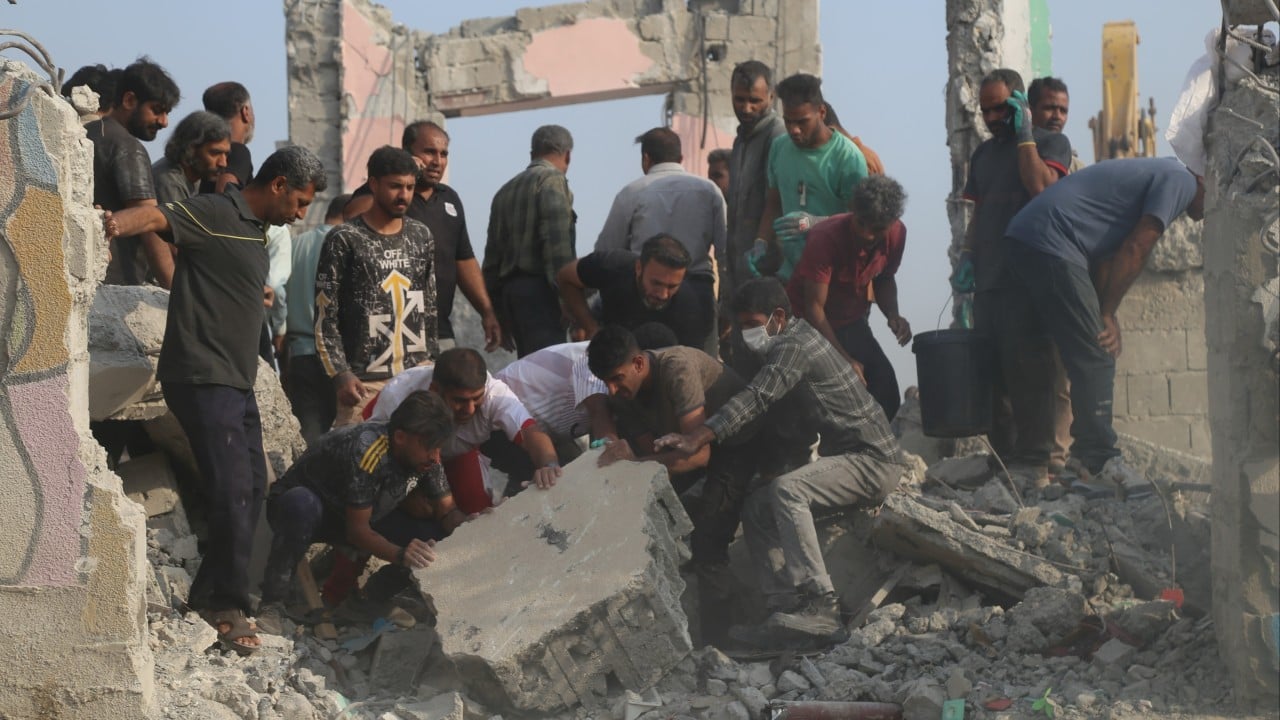
Four months have passed since a US missile killed Iranian schoolchildren in the city of Minab, and the silence from Washington is deafening. On February 28, 2026, the opening day of the air campaign against Iran, a series of American Tomahawk cruise missiles leveled the Shajareh Tayyebeh Elementary School in southern Hormozgan province. The strike wiped out 156 people. Among the dead were 120 young students, 26 female teachers, and several parents who had rushed to the scene to save their kids. It stands as the deadliest single civilian casualty incident involving the American military since the 1991 bombing of the Amiriyah shelter in Baghdad. Yet, instead of an honest accounting, the public is getting a masterclass in geopolitical gaslighting.
People want to know why a state-of-the-art military with a multi-billion-dollar intelligence network targeted a primary school. They want to know who signed off on the coordinates and why nobody has faced any consequences. The reality behind this tragedy reveals a systemic failure in military intelligence, coupled with a deliberate political effort to shield senior officials from accountability.
The day a US missile killed Iranian schoolchildren
The morning of February 28 was bright and clear in Minab, a city tucked away near the economically vital Strait of Hormuz. It was Saturday, the start of the Iranian workweek. It was also Ramadan. Kids were in their classrooms at the Shajareh Tayyebeh school, where boys and girls studied on separate floors of a brightly decorated building covered in murals of crayons and apples.
When the wider conflict erupted around 10:00 a.m., school administrators moved quickly. Recognizing the danger, the principal began organizing an evacuation and told parents to pick up their children. Many did. But before the schoolyard could clear, the first missile struck.
Survivors and local Red Crescent medics describe a nightmare that got progressively worse. After the initial blast, teachers and the principal scrambled to move surviving students into a central prayer room for protection. Then came what military analysts call a triple-tap strike. Two more missiles slammed into the exact same coordinates within minutes. The roof collapsed directly onto the packed prayer room. The structural debris crushed the children beneath it. The force of the precision-guided weapons left victims so badly mutilated that local medical personnel in Hormozgan struggled to identify individual remains.
Seven years of unverified data
The Pentagon knew within minutes that its forces had hit the site, but the internal narrative was vastly different from the reality on the ground. Military planners insisted they had successfully targeted a naval base belonging to the Islamic Revolutionary Guard Corps (IRGC).
To understand how this happened, you have to look at the history of the property. The school property had once been part of the neighboring Sayyid al-Shuhada military complex, which housed the IRGC Navy’s Asif Brigade. However, satellite records show that the school had been completely separated from the military base for a decade. By 2016, local authorities built distinct boundary walls and opened three separate civilian entrances. The building was a well-known public elementary school, populated largely by the local Sunni Baluch ethnic minority.
An internal Pentagon probe, which leaked to journalists in mid-June, confirmed a staggering intelligence breakdown. Target planners relied on satellite imagery that had not been updated in seven years. The old imagery still labeled the entire plot as an active military barracks. Despite at least one intelligence analyst raising concerns years prior that the building looked like a school, the coordinate database was never corrected.
The military went ahead with the strike anyway. They fired multiple Tomahawks at a target without checking if the physical structures had changed in nearly a decade.
Deflection and the fog of war excuse
Instead of addressing these confirmed failures, the political response has morphed into outright denial. During recent press briefings and international summits, the White House has repeatedly shifted its story.
At the G7 summit in France, President Donald Trump brushed off the event by saying nobody did it on purpose, adding that mistakes are made because war is nasty. Days later, the tone shifted from admitting a mistake to denying involvement altogether. Speaking to reporters in the Oval Office alongside NATO Secretary-General Mark Rutte, Trump reversed course, stating he had seen nothing to lead him to believe it was an American weapon. He suggested that because there were missiles flying all over the place, the blame might lie elsewhere. Defense Secretary Pete Hegseth stood nearby, deflecting further questions by stating the Pentagon would release its formal findings only at the appropriate time.
This rhetoric mimics the defensive plays used in past decades. When American forces bombed civilian sites in previous conflicts, officials routinely blamed adversaries for using human shields or pointed to the chaotic nature of combat. This time, the presence of actual tracking data, recovered Tomahawk missile fragments, and matching satellite timestamps verified by independent organizations make denial a tough sell.
The legal reality of the Minab strike
International human rights organizations aren't letting the matter drop. Human Rights Watch and Amnesty International have both labeled the attack a clear violation of international humanitarian law. Under Geneva Convention rules, military forces must take all feasible precautions to verify that targets are distinct military objectives.
Using seven-year-old data to launch high-explosive cruise missiles into a crowded municipal area fails that legal standard completely. If planners failed to verify the target, it constitutes criminal negligence. If they knew a civilian school sat right next to the IRGC compound and fired anyway without taking precautions, the action constitutes an indiscriminate attack. Either scenario opens up the personnel involved to accusations of war crimes.
Iranian Foreign Minister Abbas Araghchi took the issue to the UN Human Rights Council, calling the attack a crime against humanity. Meanwhile, the local families in Minab have been left to pick up the pieces alone. State media in Iran quickly co-opted the tragedy, burying the children in a grid of identical, unmarked graves while using the event for state propaganda. The families are caught in the middle, denied a transparent investigation by the perpetrators and denied personal closure by their own government.
True accountability requires more than just waiting for a heavily edited Pentagon report to surface whenever officials deem it convenient. Independent international inspectors need access to the complete targeting logs from the day of the attack. Lawmakers must demand the immediate release of the unredacted Central Command investigation. Until Washington moves past denials and addresses the systemic negligence that led to the strike, the tragedy in Minab will remain a stain on the record of modern military operations.