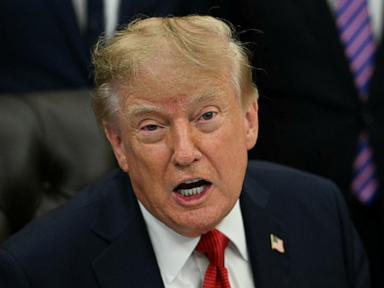
Foreign policy shifts rarely happen overnight, but next week's diplomatic schedule in New York is rewriting the rulebook on Washington's relationship with Caracas. President Donald Trump is set to sit down with Venezuela's acting president, Delcy Rodríguez, on the sidelines of the United Nations General Assembly. If you've been following how fast things changed after the U.S. military raid in January that captured Nicolás Maduro, this face-to-face interaction shouldn't come as a total shock, but the optics are still striking.
Let's look at the mechanics of this encounter. According to U.S. Ambassador to the UN Mike Waltz, the interaction will take the form of an informal "pull-aside" during a leaders' reception. It's not a grand, formal bilateral summit with hours of closed-door negotiations, but it marks the first time a sitting U.S. president and a Venezuelan head of state have met in over a decade. Diplomacy often runs on these quick, transactional conversations, and this one carries immense weight because of what happened late last month.
You see, the two nations recently announced an energy agreement giving the United States a strategic stake in Venezuela's massive oil reserves. Administration officials claim this pact unlocks access to more than 65 billion barrels, aiming to stabilize global markets and replenish American strategic reserves while helping modernize Venezuela's battered infrastructure. Rodríguez, who served as Maduro's vice president before stepping into the interim role, has framed the arrangement as a necessary lifeline for economic recovery. Critics and opposition figures watching from the sidelines have raised plenty of questions about what this means for long-term democratic reforms, but Washington's calculus remains heavily centered on energy security and practical control.
Beyond the headline-grabbing sit-down with Rodríguez, Trump's New York itinerary is packed with high-stakes diplomacy. He is slated to address the General Assembly on Tuesday, delivering a speech that aides say will highlight the administration's aggressive approach to resolving global conflicts. He will also hold bilateral meetings with newly minted UK Prime Minister Andy Burnham and Japanese Prime Minister Sanae Takaichi. Another critical item on his schedule involves chairing a multilateral session with leaders from the Gulf Cooperation Council—including Saudi Arabia, the UAE, Qatar, Oman, Kuwait, and Bahrain—to discuss regional stability and the ongoing fallout from the Iran war.
When you strip away the polished press releases, this UNGA trip highlights a straightforward reality about modern geopolitics. Power dynamics shift instantly when energy and security interests align. Whether this informal pull-aside leads to lasting democratic changes in Caracas or simply locks in long-term oil access remains to be seen. Keep an eye on how the administration handles sanctions relief and cartel crackdowns in the coming weeks, because this conversation in New York is just the opening chapter of a much larger realignment.
Trump to meet with Venezuela's interim president, other leaders during UN General Assembly: Official
This video provides additional context regarding the announcement of President Trump's upcoming meeting with Venezuela's interim president during the UN General Assembly.
http://googleusercontent.com/youtube_content/1


/268075-003-58b9ddfa5f9b58af5cb9f9ac.jpg)