The stock market just signaled that the future of robotics isn't limited to a laboratory. When Unitree Robotics made its debut in Shanghai, the reaction was not just excitement. It was a massive capital bet on a specific vision of hardware. Many observers are focused solely on the ticker symbol movement, but you need to look closer. This IPO isn't just about a single company going public. It represents a shift in how we manufacture and consume humanoid machines.
Most of the mainstream chatter treats this like a standard tech story. They look at the opening price, the percentage jump, and call it a day. That is lazy analysis. If you want to understand why investors are pouring money into Unitree, you have to look at the machines they are building. If you enjoyed this article, you might want to look at: this related article.
The Hardware Strategy That Actually Works
Boston Dynamics dominated the headlines for years with high-end, terrifyingly agile dogs and humanoids. They built marvels of engineering that cost as much as a luxury sports car. That approach makes for great viral videos, but it fails to build a sustainable business model.
Unitree took the opposite path. They built the "prosumer" version of robotics. For another angle on this story, check out the latest update from CNET.
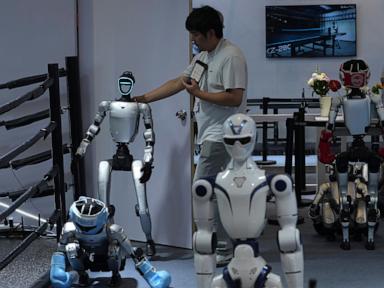
When they launched their quadruped units, the Go1 and later the Go2, they weren't trying to replace military operations or industrial disaster response teams. They targeted developers, universities, and hobbyists. They priced these units competitively—often significantly lower than Western counterparts. This strategy created a massive feedback loop. More units in the wild meant more data. More data meant better movement algorithms.
Now, they are taking that same philosophy to their humanoid line. The G1 and H1 models aren't trying to be the most expensive robots on earth. They are designed to be mass-produced. That is the secret sauce investors are chasing.
Why Shanghai Markets Care
You might wonder why a Shanghai debut carries so much weight. This isn't just about liquidity. There is an aggressive push within the Chinese domestic market for "new productive forces." The government wants—and needs—to reduce reliance on imported industrial tech.
When you see a company like Unitree hit the boards, you're seeing the result of years of concentrated effort in localizing supply chains. They aren't waiting for external chips or actuators. They are building them in-house. That control allows them to iterate faster than any company dependent on global, fragmented supply chains.
Investors realize that robotics is the next frontier of automation. We've optimized software. We've optimized digital advertising. Now, we are entering the era of physical labor automation. The stock surge is a vote of confidence in the idea that humanoid labor can eventually move from the showroom floor to the warehouse floor.
The Difference Between Optimus and Unitree
If you follow this space, you inevitably compare Unitree to Tesla’s Optimus. Don't fall into the trap of thinking they are the same thing.
Tesla is a massive car company trying to solve robotics as a software-first challenge. They have incredible AI resources, but they are still figuring out the physical chassis and the nuances of manufacturing durable humanoid limbs at scale.
Unitree comes at it from the bottom up. They spent years making sure their motors didn't burn out, their batteries held a charge, and their joints could handle the torque of walking. They are a robotics company that is adding intelligence, rather than an AI company trying to find a body.
There is a significant difference in how these companies approach failure. Unitree’s hardware is modular. You can swap parts. You can fix them. That matters if you plan to sell these machines to factories that need uptime, not just demo reels.
The Risks You Won't Read In The Prospectus
It’s easy to get caught up in the upward trend of the stock, but let’s be brutally honest about the risks.
Hardware is hard. Building a robot that can walk across a polished concrete floor is easy. Building one that can navigate a messy, unpredictable warehouse, handle stairs, and work for eight hours without breaking down? That is a nightmare of engineering.
We are still in the early innings. Most of these humanoid units are essentially glorified prototypes. The software to make them truly useful—what we call "embodied AI"—is still in its infancy. Even if the hardware is perfect, the brain is not.
Another reality check: competition is brutal. The barrier to entry for building a humanoid is dropping. Every month, a new startup appears with a prototype that looks just as good as the last one. Pricing power will evaporate quickly. Eventually, these robots will be commodities. When that happens, the stock valuation won't be based on the "magic" of a robot walking; it will be based on margins, supply chain efficiency, and long-term service contracts.
What Comes Next For Investors And Observers
If you are watching this space, stop waiting for a single "breakout" moment. It won't happen overnight.
Instead, look for the following signs of maturity:
- Real-world deployment stats. Not videos on social media, but actual reports of robots in factories.
- Mean Time Between Failures. This is the metric that matters. How long does the robot last before it needs a technician?
- Software integration. Can the robot be programmed by a standard factory worker, or does it require a PhD?
The IPO is just the starting gun. The winners in this space won't necessarily be the companies that build the coolest robot. They will be the companies that build the most boring, reliable, and cost-effective workhorse.
Don't bet on the hype. Bet on the manufacturing scale. If Unitree can prove they can produce thousands of these units annually without quality issues, they might actually justify the market's enthusiasm. If they can't, expect a long, painful adjustment period.
Keep your eyes on the factory floor, not the ticker. That is where the real value is being built.