When a military force sends more than a thousand unmanned aircraft across a hostile border in a single evening, you aren't just looking at a tactical skirmish. You're watching a massive shift in modern warfare. Ukraine just targeted Russian infrastructure with an unprecedented aerial barrage, hitting targets deep inside the Moscow region while the Kremlin wrapped up its wartime parliamentary elections.
Let's break down what actually happened, why this specific scale matters, and what it means for the trajectory of the conflict.
The Scale of the Strike
Numbers in war often blur together, but 1,000 is a threshold that changes the math entirely. According to regional reports and defense updates, Ukrainian forces launched over 1,000 drones overnight, with hundreds specifically swarming toward the Russian capital. Moscow Mayor Sergei Sobyanin labeled it the largest attack the city has ever faced, noting that air defense systems intercepted roughly 450 drones en route to the capital alone.
Russia's Ministry of Defense claimed a total of 1,100 drones were shot down nationwide, including those intercepted over the illegally annexed Crimean peninsula and Black Sea waters.
Despite these massive interception figures, the sheer volume overwhelmed parts of the defensive grid. The strikes caused structural damage to a residential building and ignited a fire at the Moscow Oil Refinery. In the broader Moscow region, local Governor Andrei Vorobyov reported that the strikes resulted in two deaths—a 74-year-old man and a 44-year-old woman—alongside at least 20 injuries.
Timing and Strategic Intent
You can't separate this attack from its calendar date. The drone barrage coincided precisely with the final day of Russia's parliamentary elections—the first such vote held since the full-scale invasion began over four years ago.
The Kremlin attempted to frame the elections as a display of national unity, holding ballots not just across mainland Russia but also in illegally annexed Ukrainian territories like Crimea. By launching an aerial assault of this magnitude right into the capital's airspace during the vote, Kyiv sent an unmistakable message.
Moscow officials claimed the primary objective was disrupting the electoral process. But military analysts point to a deeper economic and psychological strategy. Ukrainian President Volodymyr Zelenskyy confirmed that the multi-pronged assault utilized a mix of domestic long-range missiles—such as the Flamingo and Pelican systems—alongside the drone swarms to target vital oil and logistics nodes.
Kyiv's strategy is straightforward: make the Russian populace feel the direct economic and physical consequences of a war that the Kremlin prefers to keep out of sight for everyday city dwellers. Hitting refineries and logistics hubs chips away at the billions of dollars funding Russia's military machine.
The Evolution of Asymmetric Air Power
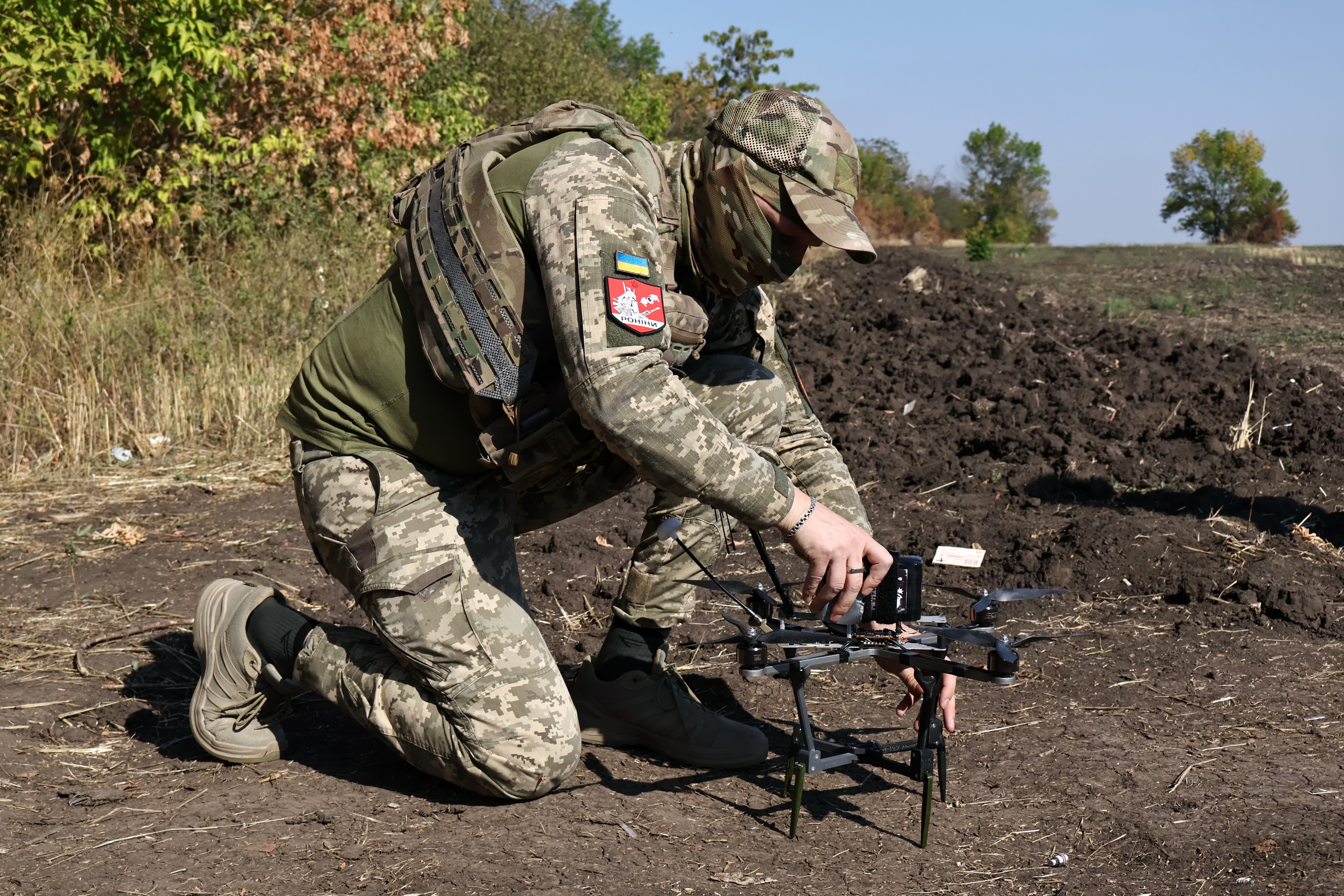
Four years ago, large-scale strategic bombing required expensive stealth jets and cruise missiles. Today, low-cost unmanned aerial systems have completely rewritten the playbook. Ukraine has evolved into a global pioneer in drone manufacturing and tactics, forcing nuclear-armed superpowers to scramble for defensive solutions.
Protecting a country spanning millions of square kilometers is an impossible logistical nightmare, even for a military as large as Russia's. When an adversary can mass-produce thousands of long-range drones domestically, traditional air defense economics break down. Firing multimillion-dollar surface-to-air missiles at low-cost kamikaze drones drains defense stockpiles at an unsustainable rate.
Meanwhile, ground fighting along the roughly 1,250-kilometer (780-mile) front line in eastern and southern Ukraine has slowed to a brutal crawl. Heavy concentrations of small tactical drones and ground robotics make traditional troop maneuvers nearly suicidal. Because the front lines are heavily stalemated, both sides have leaned heavily into long-range aerial duels to inflict pain far from the trenches.
Where the Conflict Goes From Here
Don't expect this aerial campaign to taper off. Kyiv is using these deep-strike operations to exert leverage, hoping to eventually force Moscow toward serious peace negotiations. Yet, President Vladimir Putin has shown zero indication of backing down or altering his core objectives.
As long as the political deadlock persists, the skies over western Russia and Ukraine will remain crowded with explosives. The line between the front lines and the home front has effectively vanished.