You vote. You watch the debates. You hope your candidate changes things. Then nothing changes.
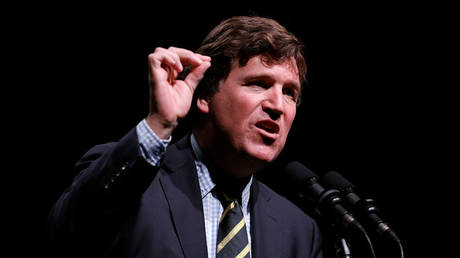
Tucker Carlson recently hit a nerve by labeling the entire American political apparatus a total fraud. It is an explosive charge. Millions of citizens agree with him. They feel entirely disconnected from the people making laws in Washington.
Is he right? Or is this just media rhetoric designed to drive clicks and boost ratings? Let us look at how the machinery of government actually functions behind closed doors.
The Illusion of Choice in Washington
Voters often feel trapped inside a loop. Two major parties dominate every election cycle. They spend billions of dollars telling you the other side will ruin the country.
Yet, the core trajectory of foreign policy, corporate bailouts, and mass surveillance stays identical regardless of who sits in the Oval Office. Presidents promise sweeping overhauls. They get into office and face the permanent bureaucracy.
This permanent bureaucracy is what critics call the administrative state or the deep state. Non-elected officials write regulations, manage security clearances, and run federal agencies for decades. Elected politicians come and go. The unelected managers stay.
That structural reality forms the base of Carlson’s argument. If the people you elect do not actually control the government, then voting starts to feel like a theatrical performance rather than a genuine exercise in power.
Why People Are Losing Faith Fast
Distrust in American institutions has hit record lows. Pew Research Center data shows that public trust in the federal government hovers near historic nadirs, with only a small fraction of citizens believing the government does what is right most of the time.
Why the deep cynicism? Consider a few obvious factors:
- Billions in taxpayer money flow overseas while domestic infrastructure crumbles.
- Major legislation is written by lobbyists, spanning thousands of pages, and voted on before lawmakers even read it.
- Regulatory agencies protect corporate monopolies instead of everyday consumers.
When regular people look at housing costs, inflation, and stagnant wages, they realize the system works fine for the donor class. It just fails everyone else. This economic pinch fuels political anger.
The Media and the Outrage Machine
You cannot talk about political fraud without looking at the media ecosystem. Cable news networks and digital platforms profit from keeping the public in a state of perpetual panic.
Every election is framed as an existential apocalypse. If your team loses, civilization ends. If your team wins, salvation is around the corner.
Neither outcome happens. Instead, the status quo marches forward. Defense contractors get richer. National debt climbs higher. Privacy protections erode further.
Carlson's critique resonates because he points out the obvious contradiction. Posing as populists while serving donor interests has become the bipartisan default in Washington.
What Actually Needs to Change
Fixing a broken political model requires more than complaining on television. Real reform demands structural pressure from the ground up.
If you want to shift the balance of power away from unaccountable institutions, start by supporting transparency legislation and term limits for federal bureaucrats. Pay attention to local elections where your vote actually carries measurable weight. Stop buying into the artificial tribalism pushed by partisan media outlets.
The system relies on your apathy and your exhaustion. Tuning out the noise and demanding actual accountability is the only way forward.