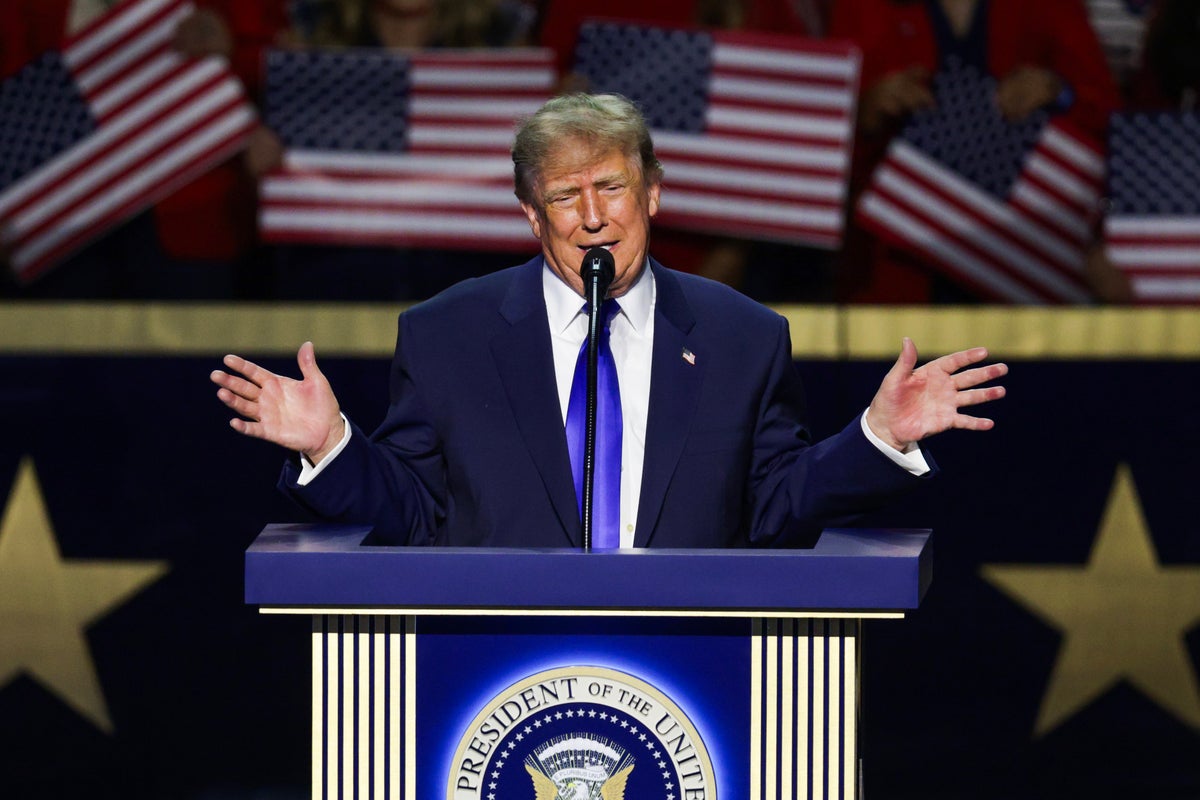
Donald Trump just dropped a massive policy bombshell. He wants to hand every adult American a $5,000 cash check, but there is a major catch. You only get the money if Republicans maintain control of both the House and the Senate in the upcoming midterm elections.
Trump calls it the "Trump Dividend." He compares the payout to corporate cash distributions given out to shareholders after a profitable year.
Naturally, this caught everyone's attention. Is it legal? Can it actually happen? Let's break down what this proposal means, why economists are raising red flags, and how the political reality looks on Capitol Hill.
The Mechanics and the Math Behind the Proposal
Let's look at the raw numbers. The U.S. Census Bureau estimates there are roughly 245 million adult citizens living in the United States. Handing out $5,000 to each of them carries a staggering price tag exceeding $1.2 trillion.
Where would that money come from? Vice President JD Vance suggested the funds could stem from tariff revenues. But there is a glaring problem with that logic. The total revenue generated by federal tariffs falls nowhere near the $1.2 trillion mark required to foot this bill.
Furthermore, the national debt recently surpassed $40 trillion, and annual budget deficits sit near $2 trillion. Handing out trillions in new cash creates massive inflationary pressures. Economists from groups like the Committee for a Responsible Federal Budget warn that this kind of fiscal stimulus would blow up the federal budget, push up interest rates, and erase recent gains against inflation.
Trump also stipulated that recipients must spend the cash inside the United States. He explicitly joked at the convention in Dallas that citizens shouldn't take the money to Canada, China, or Germany. Yet, monitoring how millions of citizens spend a direct cash transfer remains a logistical nightmare.
Is the Trump Dividend Legal?
When politicians dangle cash in front of voters right before an election, alarms go off. Critics immediately called the plan a blatant attempt to buy votes using taxpayer funds. Democratic Representative Dan Goldman labeled the proposal corrupt and illegal, pointing out that federal law heavily restricts payments meant to influence elections.
However, legal experts have a different take. Criminal defense attorneys and election law specialists point out that a broad campaign pledge is entirely legal. Because the proposed $5,000 would go to every American adult regardless of whether they actually vote or who they cast a ballot for, it functions legally as a broad policy promise or tax-related proposal rather than a direct bribe at a polling booth.
First Amendment protections also give politicians wide latitude to make wild campaign promises. Voters hear plenty of unrealistic financial pledges every election cycle. Whether voters find this promise credible is an entirely different matter.
The Congressional Roadblock
Even if the promise survives legal scrutiny, putting cash in citizens' pockets requires an act of Congress. Under the U.S. Constitution, the executive branch cannot unilaterally spend trillions of dollars from the Treasury without explicit statutory appropriations passed by lawmakers.
Trump claimed in interviews that he didn't think the payments would need congressional approval, though he offered no legal justification for that claim. Constitutional scholars quickly pushed back, noting that the president holds no unilateral power to distribute trillions of dollars without Capitol Hill signing off.
Republicans currently hold slim majorities in Congress, but keeping the House through the midterms is an uphill battle. Political prognosticators note that the party in power historically loses seats during midterm cycles. If Democrats take over the House or Senate, passing a $5,000 direct payout becomes dead on arrival. Even within the Republican party, fiscal hawks would likely balk at adding another trillion dollars to the national debt.
This isn't the first time voters have heard about direct federal dividends. Last year, the administration floated similar ideas tied to savings from government efficiency projects or tariff refunds, none of which materialized into direct checks for taxpayers.
Voters should look at the proposal through a pragmatic lens. It serves as a high-stakes political strategy to galvanize turnout on the right rather than a guaranteed check arriving in your bank account next year.
If you want to track how this plays out, watch the congressional races closely over the next few months and monitor real legislative text introduced by lawmakers.
US President Trump Pledges $5,000 Dividend to Every Adult if Republicans Win Midterms
This video provides an overview of President Trump's pledge to distribute $5,000 cash payments to every American adult contingent on a Republican midterm victory.
http://googleusercontent.com/youtube_content/1