The fragile diplomatic peace in West Asia didn't just crack this week—it shattered completely. On July 15, 2026, the region awoke to a terrifying escalation as the June 17 ceasefire collapsed into direct, multi-front military confrontation. In a rapid-fire sequence of events, U.S. forces launched a fourth consecutive day of heavy air strikes against Iranian coastal positions, Donald Trump formally reimposed a controversial naval blockade on Iran's ports, and Tehran retaliated with missile strikes targeting neighboring Jordan.
We're no longer talking about a shadow war. This is a direct, overt conflict threatening to choke off a fifth of the world's energy supply. If you think this is just another typical flare-up in Middle Eastern geopolitics, you're missing the bigger, far more dangerous picture.
The Day the Ceasefire Died
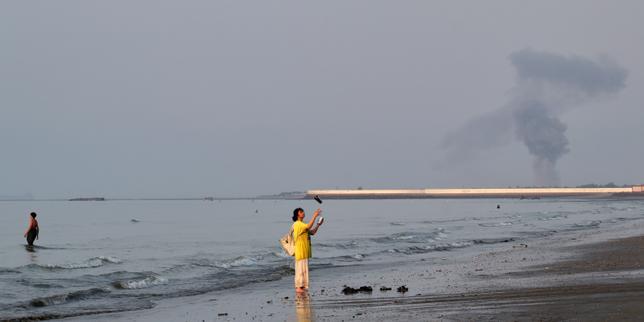
The calm of early summer was deceptive. The June 17 truce—brokered under immense international pressure—was always on thin ice. It officially disintegrated when the U.S. military's Central Command (CENTCOM) launched what they called "preventative and degrading strikes" against Iranian coastal defense systems, missile bases, and drone sites. U.S. forces blasted several locations, including the Persian Gulf port city of Bushehr, which was rocked by at least four major explosions.
Tehran's response was swift, coordinated, and deliberately designed to widen the conflict's geography. Instead of just striking back at U.S. naval assets, Iran launched a barrage of missiles directly at Jordan.
According to Jordan's state-run Petra news agency, the kingdom’s military successfully intercepted and shot down at least three Iranian missiles targeting its territory.
Why Jordan? Amman has increasingly cooperated with Western defensive alliances, making it a prime target for Iranian signaling. By targeting Jordan, Tehran is sending a clear message to every regional partner of the United States: if Washington suffocates our economy, no one in the region gets to sleep peacefully.
But Jordan wasn't the only target. Iran also directed retaliatory strikes toward Bahrain and Kuwait—both hosts to major U.S. military headquarters—and launched aggressive drone and missile operations against commercial tankers transiting near Oman.
A Fire in the Strait of Hormuz
While politicians argue in Washington and Tehran, mariners are paying with their lives in the shipping lanes. Iran’s paramilitary Revolutionary Guard (IRGC) targeted three major commercial tankers transiting near the mouth of the Persian Gulf.
- The Mombasa & The Al Bahiyah: Both tankers, linked to the United Arab Emirates, were set ablaze after ignoring what Iran called "repeated warnings." The International Maritime Organization confirmed that these strikes killed two mariners and wounded 14 others, prompting furious retaliatory threats from the UAE.
- The Stolt Magnesium: Owned by Dutch shipping giant Stolt Tankers, this vessel was hit off the coast of Oman. While the engine room caught fire, the company reported that the crew luckily survived unscathed.
The IRGC issued an ultimatum: the Strait of Hormuz will remain completely closed to international shipping until the U.S. halts its "acts of aggression." Because the standard shipping routes pass extremely close to Omani territorial waters, Iran has begun aggressively hunting vessels even outside its own maritime borders.
The immediate result? Global oil prices jumped more than 2% in a single trading session, hitting a fresh one-month high. If the blockade drags on, energy analysts fear we could see a return to triple-digit crude prices, throwing the global economy into a severe tailspin.
The Art of the Blockade and the 20% Toll Flop
The catalyst for this latest explosion of violence is President Donald Trump’s aggressive new economic offensive. On Monday, Trump announced that the U.S. Navy would reimpose a strict maritime blockade on all Iranian ports. In a classic display of his highly transactional foreign policy, he also declared that the U.S. would begin charging all commercial vessels using the Strait of Hormuz a 20% toll based on the value of their cargo. The logic? Trump claimed this tax would defray the immense military costs the U.S. incurs protecting these international shipping lanes.
It was a staggering proposal that immediately drew fierce condemnation from allies and adversaries alike. Allies in Europe and Asia pointed out that charging a tariff to navigate international waters violates basic maritime law.
Sensing the massive diplomatic backlash and the sheer logistical nightmare of trying to collect a 20% tax on foreign-flagged vessels, Trump quietly backed off the toll plan just 24 hours later.
However, don't mistake that tactical retreat for a softening stance. The naval blockade itself went into full effect right on schedule. Trump's ultimate objective remains unchanged: squeeze Iran’s remaining oil exports to absolute zero and force Tehran back to the negotiating table to sign a highly restrictive new deal.
Speaking to Fox News, Trump didn't mince words about his willingness to escalate. He warned that if Tehran refuses to negotiate, the U.S. will expand its target list next week to hit Iranian domestic infrastructure. "Next week it gets really bad for them," Trump threatened. "We're going to knock out all their power plants. We're going to knock out all their bridges unless they get to the table."
Why the Current Strategy is a Flawed Gamble
From a strategic standpoint, the administration's maximum pressure campaign relies on a deeply flawed premise: that pushing Iran's economy to the brink of collapse will force its leadership to surrender. Historically, the opposite has proven true. When backed into a corner, Iran's defensive doctrine dictates asymmetric escalation to share the pain globally.
If Iran cannot export its oil, its military strategy is to ensure no other country in the Persian Gulf can either. By shutting down the Strait of Hormuz, targeting UAE tankers, and launching missiles at regional U.S. partners like Jordan, Tehran is actively demonstrating that it has the power to hold the global economy hostage.
Furthermore, the U.S. military is finding that blockading a country with a highly developed asymmetric arsenal is incredibly difficult. Iran’s Revolutionary Guard doesn't rely on standard warships to challenge the U.S. Navy. Instead, they use swarms of fast-attack craft, low-flying anti-ship cruise missiles, and cheap, GPS-guided suicide drones. These low-cost assets can easily overwhelm sophisticated naval air defenses, as the tragic strikes on the Mombasa and Al Bahiyah have already shown.
The Immediate Global Fallout
We are already seeing the ripple effects of this escalation beyond the Middle East. For example, the intense focus on maritime blockades and global supply disruptions is stretching Western resources thin.
At the same time, the broader geopolitical shockwaves are triggering economic crises elsewhere. Global shipping companies are now routing vessels entirely around the southern tip of Africa, avoiding the Middle East altogether. This detour adds up to two weeks to transit times, sending shipping container rates skyrocketing and threatening to reignite global inflation.
Your Next Steps to Navigate This Crisis
If you are a business owner, investor, or simply someone trying to protect your household finances from the fallout of this escalating war, you cannot afford to sit idly by. Take these concrete actions immediately:
- Diversify Energy Dependencies: If your business is highly sensitive to fuel prices, hedge your exposure. Look into locking in energy contracts now before the conflict escalates to Iranian domestic power infrastructure next week.
- Audit Supply Chain Vulnerabilities: Map out where your imported goods or raw materials originate. If they rely on transit routes through the Indian Ocean, Red Sea, or Persian Gulf, expect significant delays and rising freight surcharges. Seek alternative domestic or Western-hemisphere suppliers.
- Rebalance Investment Portfolios: Traditionally, major geopolitical escalations favor defense equities, commodities, and safe-haven assets like gold. Ensure your portfolio isn't overly exposed to highly vulnerable sectors like global logistics, retail, and tech manufacturing, which are highly sensitive to supply chain bottlenecks.