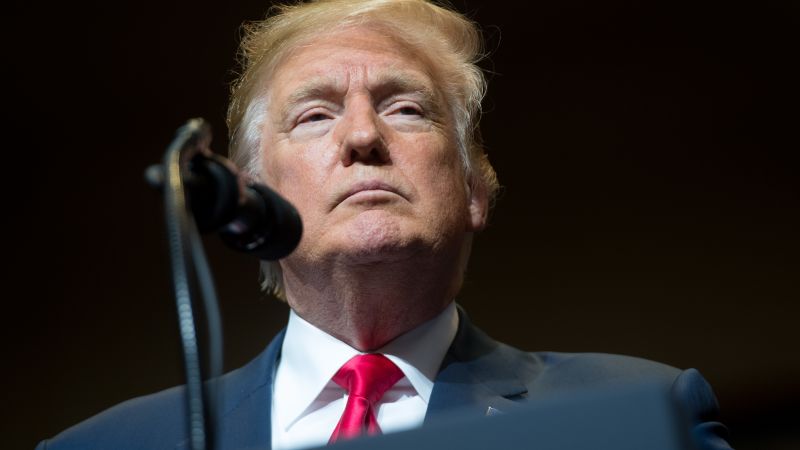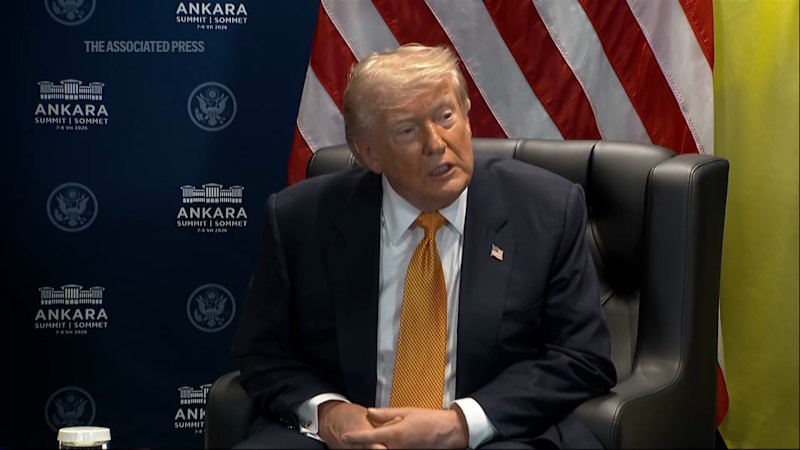
The fragile peace in the Middle East just went up in smoke. Speaking from the sidelines of the NATO summit in Ankara, Turkey, President Donald Trump declared that the newly minted US-Iran ceasefire is completely over. He didn't mince words either. Trump openly threatened to target Iran's civilian infrastructure, specifically its power grids and desalination plants, adding a blunt justification: "They really deserve it."
This isn't just standard political chest-thumping. Striking desalination facilities, which provide vital drinking water to millions of civilians, crosses into territory that international legal experts openly classify as a war crime. Yet, the White House seems entirely unfazed. The situation on the ground has deteriorated at breakneck speed, forcing oil markets into a frantic tailspin.
If you're trying to make sense of how a historic peace deal unraveled in less than a month, you have to look at the chaotic chess match happening in the Strait of Hormuz.
The June 17 Illusion
It feels like ancient history, but the US and Iran signed an interim ceasefire agreement on June 17, 2026. The deal was supposed to buy sixty days of peace. Under the terms, Iran agreed to let commercial shipping pass through the Strait of Hormuz without paying exorbitant transit fees or facing harassment. In exchange, the Trump administration offered major sanctions relief, including oil waivers that threw an economic lifeline to Tehran.
The deal looked great on paper. It didn't last.
The core issue is that neither side ever agreed on who actually runs the waterway. Twenty percent of the world's petroleum flows through that narrow choke point. Iran immediately insisted that any maritime traffic must follow routes dictated by the Islamic Revolutionary Guard Corps (IRGC). When commercial tankers ignored those demands and used international shipping lanes, the IRGC attacked them with drones and small missile boats.
You can't have a ceasefire when one side keeps blowing up merchant ships. By July 7, the Trump administration had enough. The White House officially revoked Iran's oil waivers, effectively choking off their cash flow again. Hours later, US Central Command launched a massive wave of airstrikes.
What the US Actually Hit
The Pentagon didn't hold back during the initial retaliatory strikes. US forces targeted over 80 distinct sites inside Iran.
According to official CENTCOM briefings, the operation focused heavily on neutralizing the immediate threat to shipping lanes. The military pounded:
- Radar installations tracking commercial vessels.
- Advanced air-defense networks protecting Iranian coastlines.
- More than 60 fast-attack boats used by the IRGC to terrorize tankers.
The strikes lit up the night sky across the Persian Gulf. In response, Iran didn't back down. They launched retaliatory salvos at American bases, triggering missile alerts in Bahrain, Qatar, and Jordan.
This brings us to Trump's escalatory rhetoric in Ankara. When reporters asked if the US would launch a second consecutive night of attacks, Trump promised a heavy hand. He confirmed that while the initial strikes hit Kharg Island, they intentionally avoided the vital energy infrastructure located there. That restraint is officially on the chopping block.
The Targeting of Kharg Island and Civilian Life
Kharg Island is the undisputed heart of Iran's economy. Because most of the Iranian coastline is far too shallow for massive supertankers to dock, roughly 90 percent of the country's crude oil exports must pass through this single terminal.
If the US military takes over Kharg Island, Iran's economy stops existing. Trump noted that the US could simply seize the island, claiming "there's not a thing they could do about it." He compared the strategy to the way the US took control of Venezuelan oil markets.
But Trump went a step further this time by looping in civilian infrastructure. Targeting electric grids is one thing; threatening desalination plants is a totally different ballgame. In an arid region like Iran, knocking out clean water production creates an immediate humanitarian catastrophe. It triggers massive civilian casualties that have zero to do with military operations.
Why the Military Strategy Might Fail
Behind the tough talk from the White House, there is a glaring strategic flaw. A lot of intelligence analysts and military experts think these strikes won't actually change Iran's behavior.
Iran already weathered an incredibly intense bombing campaign earlier this year during March and April. Their leadership views control over the Strait of Hormuz as an existential necessity, not a bargaining chip. They are entirely willing to absorb heavy military losses if it means keeping a stranglehold on global energy.
Look at what Iranian Parliament Speaker Mohammad Bagher Qalibaf posted on social media right after Trump's threat. He stated plainly that "the era of bullying and extortion is over," adding that Iran won't fold. The hardline factions running the IRGC believe they have the upper hand. They know the global economy is incredibly fragile right now, and they are using that leverage like a sledgehammer.
The Economic Fallout for the Rest of the World
When the US and Iran fight, regular people pay for it at the gas pump. Immediately following Trump's comments, Brent crude prices spiked by over 5 percent.
If the Strait of Hormuz closes completely, oil prices won't just rise; they'll skyrocket. We are talking about a massive supply shock that drives up the cost of food, manufacturing, and basic utilities globally. Shipping companies are already rerouting vessels around Africa, adding weeks to transit times and millions of dollars in fuel costs. Insurance premiums for any vessel brave enough to enter the Persian Gulf have naturally gone through the roof.
The White House is betting that economic ruin will force Iran to accept a permanent peace deal on American terms. Iran is betting that global economic chaos will force Trump to back down first. It's a high-stakes game of chicken with the global economy serving as the highway.
Real Steps to Protect Against Volatility
If you operate a business reliant on global supply chains or manage investments, don't wait around for diplomatic breakthroughs. The US-Iran conflict is locked into a cycle of escalation. Take these immediate steps to insulate your operations.
Diversify Supply Chains Immediately
If your manufacturing relies heavily on components moving through Middle Eastern maritime routes, look for alternative logistical pipelines. Transition to air freight for high-value components where possible, or explore suppliers based in the Western Hemisphere.
Hedge Energy Exposure
Energy markets are going to remain incredibly volatile for the foreseeable future. Talk to your financial advisors about implementing energy futures or options to lock in current prices before another round of strikes sends crude past the hundred-dollar mark.
Monitor Daily CENTCOM and IRGC Notices
Keep a close eye on maritime advisories if you deal with international trade. The security status of the Strait of Hormuz can change in a matter of minutes. Rely on verified military briefings rather than speculative social media reports to make routing decisions.
The conflict isn't winding down anytime soon. Trump has made his stance clear, and Tehran has dug in its heels. Brace for impact.