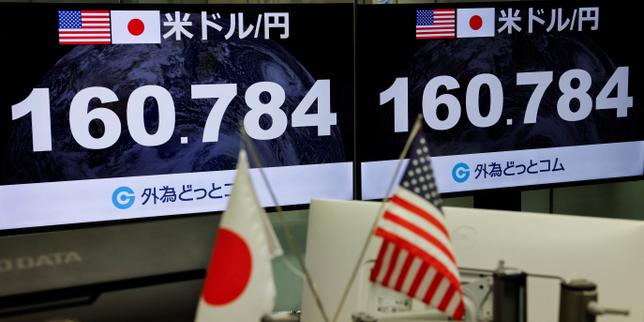
Donald Trump just confirmed that the United States stepped into the currency markets to prop up the Japanese yen, calling the rare joint maneuver a pure "signal of friendship".
If you have been watching the foreign exchange market lately, you know the yen has been bleeding value, sliding down toward levels last seen in the late 1980s. When the US Treasury and the Federal Reserve decide to burn through capital to rescue a foreign currency, world markets pay attention. But Trump frame-shifted the narrative away from dry macroeconomic stabilization, leaning instead into personal geopolitics while chatting with reporters aboard Air Force One.
Let's look at why this rare coordinated intervention happened, what it means for your portfolio, and why the White House decided to break decades of currency orthodoxy.
The Breaking Point Behind the Intervention
For months, the Japanese yen has taken a brutal beating. Driven by massive interest rate gaps between Washington and Tokyo, high global energy costs, and relentless capital flight, the currency slid past 163 per dollar. That is territory not touched since 1986.
For Japanese consumers, a collapsing yen means skyrocketing import bills for food and fuel. For Prime Minister Sanae Takaichi’s government, it meant plunging public approval ratings and an economic headache that required emergency action.
Enter Washington. Treasury Secretary Scott Bessent had already made his stance clear, pointing out that the currency looked deeply undervalued. Behind closed doors, things moved fast. Reports surfaced that the Federal Reserve Bank of New York took the unusual step of selling euros to buy massive amounts of yen on behalf of the US Treasury.
Why Trump Calls It Friendship
When reporters pressed Trump about why America was spending political and financial capital to rescue Tokyo's currency, his answer was remarkably casual.
"Because we have a good relationship with Japan," Trump stated aboard Air Force One. He insisted there would be financial benefits for the US and that stabilizing the region helps the global economy, but he drove home a different point: "It was really more than anything else, it was a signal of friendship".
He even threw in his classic unfiltered historical quip, noting that Japan has always been great to the US "with the exception, of course, of Pearl Harbor".
Beneath the diplomatic banter lies a very real economic calculation. A completely free-falling yen threatens global trade stability and creates chaotic ripples across equity markets. By orchestrating a coordinated intervention—the first major joint effort of its kind in nearly thirty years—Washington and Tokyo sent an aggressive message to currency speculators that multi-billion-dollar bets against the yen carry severe risks.
What This Means for Global Markets Right Now
Interventions of this scale do not happen in a vacuum. If you trade currencies, hold international equities, or import goods, you need to adjust your strategy for a few realities:
- Speculators are on notice: Central banks just proved they are willing to pull the trigger to reverse extreme currency trends. Betting blindly against battered currencies right now is dangerous.
- Policy divergence is under pressure: Tokyo wants higher interest rates at home to match Washington's aggressive stance, meaning monetary policy adjustments are likely far from over.
- Volatility is here to stay: Sudden shifts in US Treasury and Federal Reserve operations mean currency pairs will experience sharp, unpredictable swings.
Keep a close eye on Tokyo's official announcements and upcoming central bank meeting minutes. The era of passive currency neglect is over.