The headlines are buzzing about a catering truck and a secret flight out of Turkey. It sounds like something pulled straight from a spy novel, but for President Donald Trump, it was apparently just another day at the office. Reports surfacing this August reveal that in July 2026, the president didn’t just hop on Air Force One and fly home after the NATO summit in Ankara. He pulled off a high-stakes shell game to dodge a credible threat from Iran.
If you’re wondering why a world leader would need to be spirited away in a food transport vehicle, you aren't alone. The reality of presidential security in a volatile region is often stranger than fiction.
The truth behind the travel shell game
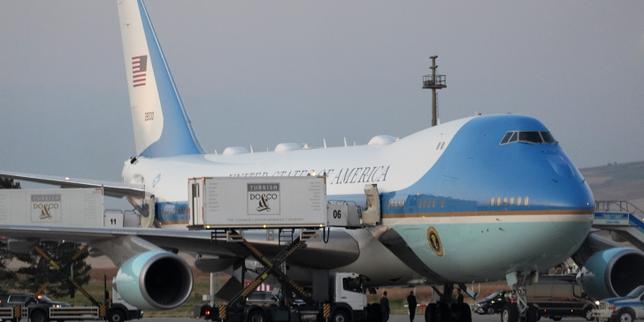
The official story back in July was straightforward enough. Trump had arrived in Turkey on a flashy new Boeing 747-8, a gift from Qatar that had been retrofitted for presidential use. But before heading back, he announced he’d be taking the older, iconic “baby blue” Air Force One for the return trip to RAF Mildenhall in the UK.
The public saw him board that older jet. Cameras were rolling. Everything looked normal. Behind the scenes, however, the Secret Service was running a classic deception operation.
Once the cameras were off and the doors were sealed, Trump wasn’t settling into his seat on the jumbo jet. He was being moved to a much smaller Air Force C-32A via—yes, really—an airport catering truck. It’s a surreal image, but in the world of high-level protection, hiding a dignitary in plain sight is often the safest bet.
Why go to such lengths? Intelligence officials had flagged a credible threat from Iran. Given that Iran shares a border with Turkey, the risk level wasn't just hypothetical. It was treated as an active, urgent danger.
Why the catering truck actually makes sense
You might be asking why they didn't just use a helicopter or a motorcade. When you’re at an international airport surrounded by foreign intelligence and potential threats, every movement is tracked. A motorcade creates a target. A helicopter is visible from miles away.
By using a catering truck—a mundane piece of ground support equipment—the security team essentially turned the President invisible. It’s a tactic that’s been used before in various forms; President Bill Clinton famously used an unmarked executive jet to slip into Pakistan while his official plane acted as a decoy.
This isn't about luxury or convenience. It’s about managing a "threat surface." By moving him to a smaller, less conspicuous aircraft, they successfully broke the pattern that potential attackers were monitoring.
The risks of the Qatar-gifted jet
The new Qatari-donated 747-8 has been a point of contention since its debut. While the White House insists it has top-tier security protocols, the fact that it was a recent arrival in the fleet sparked immediate questions about its readiness for a high-threat environment.
Intelligence agencies were already nervous about the plane’s maiden international voyage. When you add the escalation of tensions with Iran, it’s easy to see why security experts would push to keep the president off that specific aircraft during the most dangerous leg of the journey.
What this means for international diplomacy
This event is a stark reminder of the current state of global affairs. We aren’t in a period of quiet diplomacy. We’re in a phase where even a routine NATO summit requires military-grade deception to ensure the safety of the U.S. President.
Critics and supporters alike are now calling for a closer look at the logistics of this trip. Senator Richard Blumenthal has already suggested a congressional inquiry, labeling the event “unprecedented” and “downright scary.” Whether or not an investigation happens, the message is clear: the administration feels that the threats against the President are real, frequent, and persistent.
If you’re looking for a lesson here, it’s that the veneer of standard diplomatic travel is thinner than most of us realize. When the stakes are high, the rulebook gets thrown out the window, and security teams switch to unconventional tactics to keep their principal alive.
For now, the White House continues to emphasize that they’ll use every tool at their disposal to address these dangers. If that means crawling through a service door in a catering truck to fly on an alternate jet, then that’s what happens. It’s a sobering look at the reality of leadership in 2026. Keep an eye on how these security procedures evolve; it’s highly likely this won’t be the last time we see “deception operations” becoming a standard part of the presidential itinerary.