Donald Trump thought his conservative judicial supermajority would deliver his biggest immigration victory yet. He was wrong.
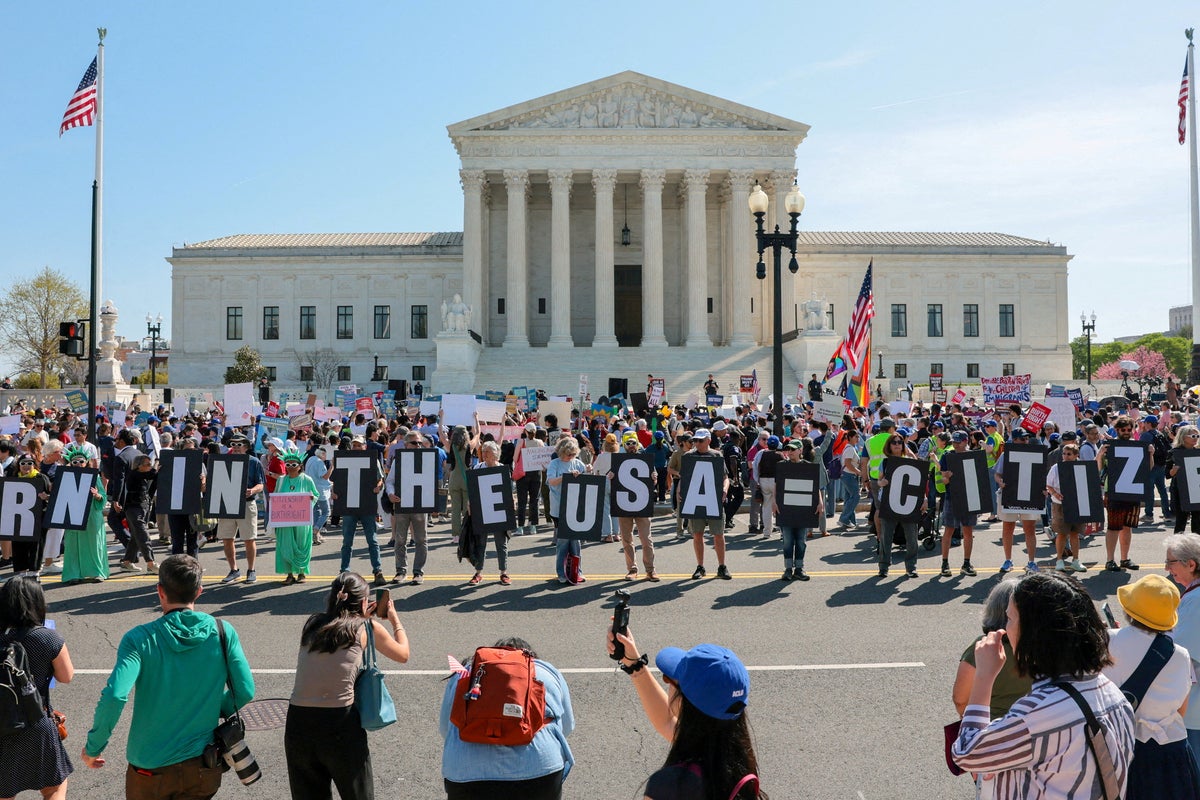
Hours after his second inauguration in January 2025, Trump signed Executive Order 14160. It was an outright assault on automatic birthright citizenship, aiming to deny passports and recognition to children born on U.S. soil to undocumented immigrants or temporary visa holders. The administration wanted a high-stakes showdown at the Supreme Court to rewrite a century of legal understanding.
On June 30, 2026, they got their answer. The Supreme Court decisively struck down Trump's order in a 6-3 ruling for Trump v. Barbara.
If you think a conservative court automatically means a win for right-wing policy, this ruling proves otherwise. Here is exactly why Trump's legal strategy crumbled and why the centuries-old rule of jus soli—the right of the soil—stands firmer than ever.
The Fatal Flaw in Trump's Strategy
The administration based its entire argument on a single phrase in the 14th Amendment: "subject to the jurisdiction thereof."
Trump's legal team, led by Solicitor General John Sauer, argued that undocumented immigrants or temporary tourists do not owe full allegiance to the United States. Therefore, they argued, their children are not fully subject to U.S. jurisdiction and shouldn't get automatic citizenship.
It was a clever theory on paper. But it completely ignored how American law actually works.
If you commit a crime on U.S. soil, you get arrested by American police and tried in an American court. Why? Because you are under U.S. jurisdiction. The conservative majority saw right through the administration's gymnastics. Chief Justice John Roberts, who authored the majority opinion, made it clear that children born to parents unlawfully or temporarily present are fully subject to American laws and are citizens at birth.
The Ghost of 1898
You can't understand this 2026 ruling without looking at a major historical precedent from 1898: United States v. Wong Kim Ark.
Wong Kim Ark was born in San Francisco to Chinese parents who were legally living in the U.S. but barred from ever becoming naturalized citizens due to racist laws at the time. When he traveled to China and tried to return, border officials blocked him, claiming he wasn't a citizen.
The Supreme Court stepped in and ruled that the 14th Amendment meant exactly what it said. Anyone born on U.S. soil is a citizen, with only a few obvious exceptions like the children of foreign diplomats or invading armies.
Trump's team tried to argue that Wong Kim Ark didn't apply because his parents were legal residents, whereas modern undocumented immigrants are not. But Chief Justice Roberts explicitly rejected this loophole. The court's extensive look back at English common law and American history showed no evidence that the authors of the 14th Amendment intended to limit citizenship based on a parent's legal status.
A Fractured Conservative Court
The 6-3 breakdown reveals a lot about the current state of the Supreme Court. This wasn't a simple left-versus-right split.
Chief Justice Roberts was joined by liberal Justices Sonia Sotomayor, Elena Kagan, and Ketanji Brown Jackson, alongside conservative Justices Amy Coney Barrett and Brett Kavanaugh.
Kavanaugh actually threw a unique wrench into the machine. While he agreed with the majority's final decision to block the executive order, he took a different legislative angle. He wrote that Trump's executive order violated an actual federal statute: 8 U.S.C. § 1401(a), which codifies birthright citizenship into law. Kavanaugh noted that while Congress technically has the power to debate and amend immigration laws, a president cannot simply use an executive order to bypass both Congress and the Constitution.
On the losing side, Justices Clarence Thomas, Samuel Alito, and Neil Gorsuch formed the dissent. Thomas wrote a massive 91-page dissent arguing that the 14th Amendment has been weaponized for political projects that its post-Civil War creators never intended. He pointed to historical speeches from 1866 where lawmakers suggested "foreigners" and "aliens" wouldn't be included.
But Thomas's deep dive wasn't enough to sway Barrett or Roberts, who stuck to a strict reading of established text and legal precedent.
Real World Fallout for Families
This legal battle isn't just an abstract debate for constitutional scholars. It has massive real-world consequences for hundreds of thousands of families.
Had Trump won, it would have created a permanent, multi-generational underclass of stateless children born inside the U.S. but denied the rights of citizenship. It also would have dismantled a core pathway for immigrant families. Right now, a U.S.-born child must turn 21 before they can legally sponsor their parents for a green card. Trump's order would have wiped that option off the table completely.
Instead, the status quo remains locked in place. The bureaucratic machinery of the federal government will keep issuing passports and birth certificates exactly as it has for the last 158 years.
What Happens Next
If you're tracking the future of American immigration policy, don't expect this issue to completely vanish just because Trump lost in court.
- Watch Congress, not the White House: Justice Kavanaugh's opinion practically laid out a roadmap for immigration hardliners. If opponents of birthright citizenship want change, they have to win a majority in Congress and pass actual legislation amending Title 8 of the U.S. Code, rather than relying on executive overreach.
- Expect localized battles: While universal executive orders are dead, states may still attempt to deny local benefits or create separate state-level identification systems for children of undocumented immigrants to force further litigation.
- Secure family documentation: For mixed-status families, the ruling means standard U.S. birth certificates remain ironclad. Ensure all hospital birth records and state-issued certificates are securely filed and copies are kept in safe locations to avoid local administrative hurdles.