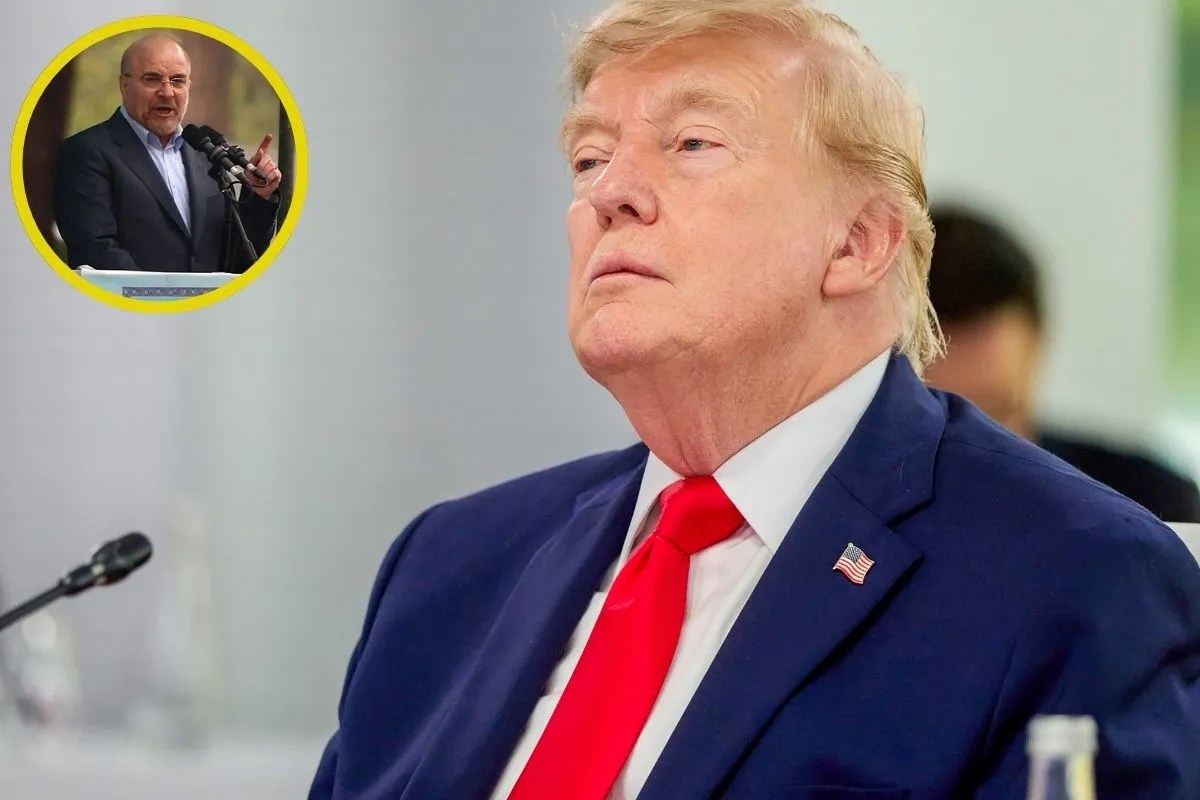
Donald Trump thought a quick Memorandum of Understanding would calm the Middle East. He was wrong. Today, the fragile truce between Washington and Tehran is completely falling apart, and the threat of an all-out military conflict is very real.
Iran's chief negotiator and Parliament Speaker, Mohammad Bagher Ghalibaf, just delivered an ultimatum directly to the White House. He made it clear that while Tehran prefers diplomacy, its military forces are fully prepared for war if the US refuses to honor its commitments. This isn't just standard political theater. It's a dangerous standoff over the world’s most critical energy chokepoint, and neither side is backing down.
The Doha Deadlock Explained Simply
Right now, US and Iranian delegations are holding separate, tense discussions in Doha, Qatar. But don't expect a breakthrough anytime soon. Ghalibaf openly dismissed the idea of entering into any new negotiations with the Trump administration.
The Iranian stance is simple. Why sign a new deal when you aren't honoring the old one?
Tehran insists that the current meetings in Qatar are strictly limited to executing the terms of the existing Memorandum of Understanding (MoU). Ghalibaf stated flatly on state television that Iran won't entertain any further talks until the US fully meets the conditions of the initial agreement.
The main point of contention? Sanctions and blockades.
Ghalibaf revealed the staggering economic toll of the recent conflict. During a 50-to-60-day US naval blockade on Iranian ports, Tehran was completely choked off from the global market. They couldn't export a single barrel of oil. Since that blockade was temporarily lifted under the MoU, Iran has rushed more than 40 million barrels of oil to international buyers. They aren't about to let Washington choke their economy again without a fight.
High Stakes at the Strait of Hormuz
If you want to know where this war will actually start, look at the Strait of Hormuz. Iran knows it holds a massive economic weapon, and they're starting to flex it.
Ghalibaf reasserted that Iran shares sovereignty over the strategic waterway with Oman and will never compromise on its rights. Under the terms of the current MoU, ships are allowed free transit through the strait, but that waiver only lasts for 60 days.
What happens when those 60 days run out? Iran and Oman are already planning to demand direct payments from commercial vessels transiting the strait for security, safety, and environmental protection services.
Trump isn't taking the news well. He publicly labeled the move "blackmail" and threatened to start dropping bombs again if a long-term deal isn't reached immediately. He even floated a wild idea in a Fox News interview about the US military taking over the Strait of Hormuz to collect its own tolls.
It’s a classic Trump escalation tactic, but Tehran isn't flinching. Ghalibaf mocked Trump’s aggressive Truth Social posts, calling the threats a sign of American desperation.
"They would do better to be careful with their statements," Ghalibaf warned. "Our armed forces are ready to respond to them in a different manner. No matter what they say, we are the ones who act."
Why the Truce Collapsed So Quickly
The current crisis traces back to a fundamental clash of red lines. Just days ago, a fragile ceasefire brokered by the US managed to temporarily halt fighting between Israeli forces and Iran-backed Hezbollah in Lebanon. But the peace lasted less than a week.
Trump demanded that Iran immediately cut off its proxies in Lebanon. When Iran refused, the US maintained its pressure, leading Tehran to accuse Washington of violating Article 1 of the MoU, which explicitly forbids both nations from using the threat of force against one another.
The diplomatic fallout has been swift. Qatari Prime Minister Sheikh Mohammed bin Abdulrahman al-Thani has been frantically meeting with US envoy Steve Witkoff and Trump’s son-in-law Jared Kushner in an attempt to salvage the framework. But when the two primary actors are actively preparing for a shooting war, regional mediation can only do so much.
What Happens Next
The timeline for a peaceful resolution is shrinking by the hour. If you are watching this conflict develop, these are the critical indicators to track next:
- The 60-Day Shipping Clock: Keep a close eye on commercial shipping data in the Strait of Hormuz. The moment Iran attempts to collect transit fees or halt tankers, global oil prices will spike, and a US naval response will be almost guaranteed.
- The Doha Disruption: Watch for an official suspension of the indirect talks in Qatar. If Qatari mediators walk away from the table, it means diplomacy has officially failed.
- The Proxies Factor: Monitor security updates along the Blue Line in Lebanon. If skirmishes break out again between Israel and Hezbollah, Trump will likely use it as a justification to launch direct strikes against Iranian military assets.