You can declare an "economic D-Day" against Tehran, but the policy hits a concrete wall the moment it meets Beijing. When Treasury Secretary Scott Bessent rolled out a sweeping financial offensive targeting Iran's remaining commercial networks, he left out the one country holding the entire system together. China buys roughly ninety percent of Iran's oil. Until Washington deals with that single reality, grand pronouncements about starving the Iranian government of cash remain mostly theater.
Understanding this dynamic requires looking past Washington's press releases and examining how oil actually moves across the water. Iran's economy is bleeding out, with its currency sliding past two million rials to the dollar, yet the regime survives because Beijing keeps buying what nobody else will touch.
The Mechanics of the Shadow Trade
Washington's latest campaign relies on penalizing dozens of front companies, shell entities, and shadow tankers. These operations are far from secret. Iranian crude slips out of ports, gets transferred between ships in open waters, and arrives at independent Chinese refineries disguised as Indonesian or Malaysian product.
The numbers tell a blunt story. Even with American naval pressure and disruptions in the Strait of Hormuz, tanker tracking data shows hundreds of thousands of barrels of Iranian oil flowing into Chinese ports every single day. Beijing isn't hiding this trade; officials at the Chinese foreign ministry routinely dismiss American restrictions as legally invalid under international law, insisting that commerce with Iran stays fully protected.
Stopping this flow means going after major Chinese financial institutions and multi-billion-dollar refineries. That is where the strategy collides with geopolitical reality.
The Upcoming Summit Dilemma
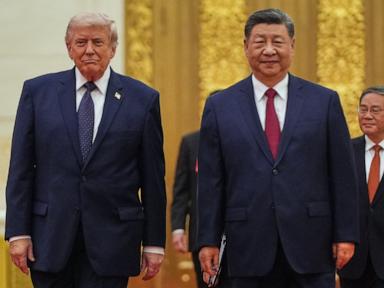
President Donald Trump is scheduled to host Chinese leader Xi Jinping for a high-stakes state visit, all while trying to keep a fragile bilateral trade truce alive. Pushing too hard against major Chinese banks right now risks blowing up that diplomatic schedule.
Analysts note that the Treasury Department's recent penalty list deliberately avoided top-tier Chinese banks, focusing instead on smaller Hong Kong and mainland entities. It’s a calculated balancing act. Washington wants to appear tough on Tehran without torpedoing the upcoming summit in Washington or ruining prospects for a follow-up trip to Asia.
Beijing knows this hesitation well. Chinese leadership is banking on the idea that the White House values its trade stability too much to impose crippling secondary sanctions on major institutions right before a leader-level meeting.
What Happens When the Smoke Clears
If Washington truly wants to break Iran's financial backbone, marginal measures against small shipping firms won't cut it. It requires risking a direct economic confrontation with the world's second-largest economy.
History shows that American sanctions can cause severe short-term pain, but they rarely alter strategic alliances unless enforcement reaches the primary nodes of trade. Right now, Beijing views American pressure through a lens of risk management, betting that Washington's bark is worse than its bite when it comes to major economic retaliation.
Until the White House decides whether it is willing to absorb the collateral damage of a real fight with China, Iran's primary economic lifeline stays wide open. The rest is just noise.