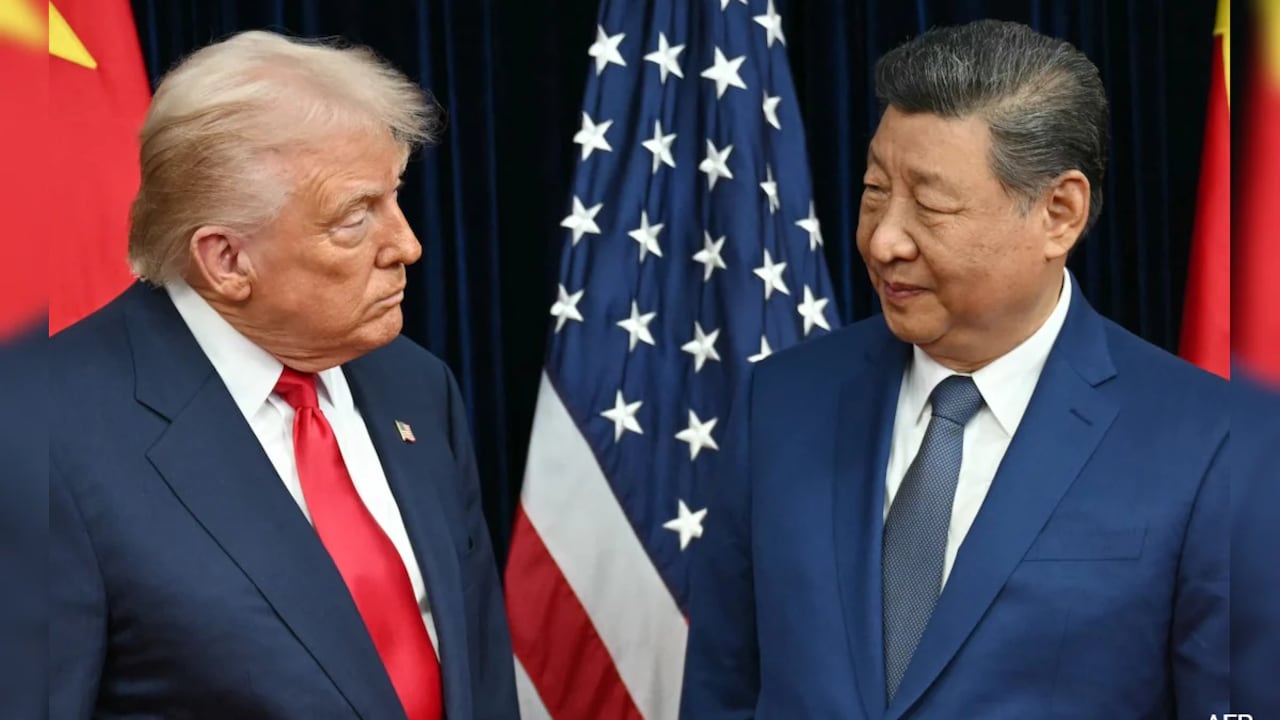
Donald Trump just threw a massive political wrench into the national conversation. In a prime-time address that felt more like a spy thriller than a typical policy speech, the president claimed that China executed the largest compromise of election data in history. The magic number he dropped was 220 million. According to Trump, Chinese actors illicitly snatched up the voter registration files of 220 million Americans starting during the 2020 election cycle.
Predictably, Beijing was quick to clap back, dismissing the accusations out of hand and insisting they don't meddle in the internal affairs of other nations. In related updates, take a look at: Why The Us Airstrike Campaign Against Iran Is Targeting Concrete Instead Of Missiles.
So, what is really going on here? Is this a genuine national security emergency that was swept under the rug, or is it a calculated political maneuver designed to rewrite the narrative of the 2020 election and push for new voting laws ahead of the 2026 midterms?
Let's skip the partisan talking points and look at what the newly declassified intelligence actually shows, where the data likely came from, and why this fight is far from over. The Washington Post has provided coverage on this fascinating topic in extensive detail.
What Trump Claims the Declassified Intel Shows
In his national address, Trump painted a picture of a massive, multi-year Chinese cyber campaign targeted at the heart of the American electoral system. He alleged that the Chinese Communist Party did not just passively watch the 2020 election. Instead, he claimed they actively sought to compromise state databases to scoop up names, addresses, phone numbers, and political party preferences.
Trump called the situation an unprecedented election security nightmare. He didn't stop at blaming Beijing, though. He pointed the finger squarely at what he termed deep state actors within his own intelligence agencies, accusing them of hiding these briefings from him during his first term in office. He claims that dozens of critical intelligence reports from the CIA and the National Security Agency regarding China's active targeting of the 2020 election were intentionally kept off his desk.
To back this up, the White House released a massive trove of declassified files. Many of these documents are heavily redacted, but they do paint a picture of a highly chaotic intelligence environment during the run-up to the 2020 vote. Among the released materials is a June 2020 President's Daily Brief item and a CIA summary prepared in June 2026. Trump argues these documents show that China wanted him gone and was actively trying to influence the political climate to make him lose.
The Big Snag in the 220 Million Files Claim
When you hear that a foreign superpower has stolen 220 million voter files, it sounds terrifying. It conjures up images of hackers breaking into top-secret government servers to change voter tallies or delete registrations. But cybersecurity experts and election officials have pointed out a massive caveat that Trump did not mention in his speech.
A huge chunk of the information contained in American voter registration files is public record.
In almost every US state, political campaigns, researchers, and even ordinary citizens can legally buy or access voter rolls. While some states restrict highly sensitive details like Social Security numbers or driver's license details, basic information like your name, address, party affiliation, and voting history is remarkably easy to obtain.
National security experts suggest that China could have built a database of 220 million Americans without ever launching a single cyber weapon. They could have simply harvested open-source data, bought commercial marketing lists, or combined public voter rolls that are floating around the web.
The declassified documents released by the White House don't actually clarify how China allegedly obtained this data. They do not show whether state election networks were compromised, or if Chinese intelligence was simply doing a massive data-scraping exercise to analyze American public opinion.
The Intelligence Community Civil War
The claims made in Trump's speech highlight a long-standing, bitter dispute inside the US intelligence community.
Back in March 2021, the National Intelligence Council released an unclassified assessment on foreign threats to the 2020 election. That report concluded with high confidence that China did not deploy active interference campaigns to influence the outcome. The consensus view at the time was that Beijing decided that neither a Biden nor a Trump victory was worth the immense risk of getting caught red-handed in a major election-meddling operation.
However, that consensus was never unanimous.
The 2021 report explicitly noted a minority view from the National Intelligence Officer for Cyber. This cyber chief argued with moderate confidence that China did indeed take steps to undermine Trump's reelection bid. They pointed to targeted social media campaigns, public messaging, and operations aimed at amplifying divisions within the US.
The newly declassified internal emails from late 2021 confirm that this analytical dispute was incredibly raw. Intelligence analysts were actively fighting over how to characterize Chinese cyber activity. Trump is now using these internal disagreements to claim a systemic cover-up.
But there is an important distinction to make here. Even the intelligence officials who believed China was acting maliciously in 2020 never claimed that Beijing actually changed votes, manipulated voting machines, or altered the final count. The 2021 assessment was clear that there was no indication of technical manipulation of the voting systems.
The Strategic Timing and the SAVE America Act
This primetime address isn't just about relitigating the past. It is a highly strategic play for the future.
Trump is using these newly declassified files to build momentum for sweeping changes to how Americans vote. He explicitly urged Congress to immediately pass the SAVE America Act. This proposed legislation would mandate strict voter-identification laws and proof-of-citizenship requirements nationwide.
Trump's argument is straightforward. If our election infrastructure is this vulnerable to foreign adversaries, we cannot afford to have lax voting rules. He noted that his administration is in the process of notifying states whose data may have been compromised. He also announced that Homeland Security Secretary Markwayne Mullin will be briefing state officials on critical cyber vulnerabilities in electronic voting systems.
Democrats and election security advocates see it differently. Senator Mark Warner, the vice-chair of the Senate Intelligence Committee, pushed back hard on the president's claims. He stated that the intelligence community remains unanimous in its finding that China did not alter a single vote in the 2020 election. Critics argue that hyping up unproven claims of Chinese data theft is a coordinated effort to undermine public trust in the upcoming 2026 midterm elections and justify voter restriction laws.
How to Protect Your Own Personal Data
Regardless of the political theater, the reality is that foreign adversaries and cybercriminals are deeply interested in American personal data. Whether it's state-sponsored hackers in Beijing or financial scammers in eastern Europe, your information is a commodity.
If you want to take action to secure your personal data and protect your identity, you don't have to wait for Congress to act. Here are the practical, hands-on steps you should take right now.
- Monitor your credit files regularly. A massive cache of personal data like names, addresses, and phone numbers makes identity theft much easier. Place a free credit freeze on your accounts with the three major bureaus: Equifax, Experian, and TransUnion. This prevents anyone from opening new lines of credit in your name.
- Opt out of data brokers. Companies make billions of dollars collecting and selling your public records, including voter registration details. Use online opt-out guides or paid services to remove your personal information from major data harvesting sites.
- Enable multi-factor authentication (MFA) everywhere. Make sure your email, online banking, and state government accounts require more than just a password to log in. This stops malicious actors from using leaked credential lists to compromise your accounts.
- Verify your voter registration status. Don't assume everything is fine. Check your registration status directly through your official state or local election office website well before any upcoming voting deadlines.
The battle over the security of our elections is going to rage on through the 2026 midterms and beyond. While politicians fight over heavily redacted intelligence memos, the smartest thing you can do is take control of your own digital footprint and keep a close eye on your personal security.