You can't just charge a 20% toll on a fifth of the world's oil supply and expect the global economy to keep standing.
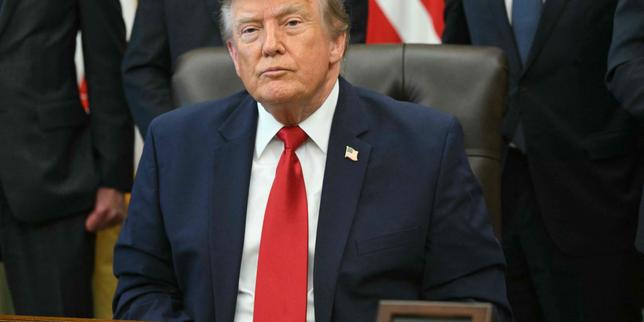
Donald Trump just realized that the hard way. In a classic piece of geopolitical whiplash, the White House completely abandoned its wild proposal to levy a massive 20% fee on cargo ships transiting the Strait of Hormuz. The sudden backtrack comes barely 24 hours after he proudly declared the US would act as the official "guardian" of the critical waterway and collect a hefty maritime premium.
The idea crashed and burned almost immediately. International maritime bodies gasped, Gulf allies freaked out, and oil markets went on a rollercoaster ride. Instead of the stick, Washington is now grabbing a very specific carrot. Trump announced on Truth Social that he's trading the widely criticized transit fee for massive trade and investment commitments from Gulf nations.
Let's look past the political theater and analyze why this plan was doomed from the start, what the new deal actually looks like, and what this means for the ongoing escalation with Iran.
The 24 Hour Toll Experiment
On Monday, the administration threw a massive wrench into global shipping. Following a violent breakdown of the June ceasefire with Iran, Trump announced that the US military would slap a total naval blockade back on Iranian ports. But he didn't stop there. He claimed that if the US Navy was going to keep the 21-mile-wide strait safe for commercial vessels, the rest of the world needed to pay up. A 20% toll on cargo value.
The shipping world fundamentally lost its mind.
The UN International Maritime Organization (IMO) quickly pushed back, firmly reminding everyone that mandatory tolls to transit an international strait have absolutely zero legal basis under international law. Maritime groups like Bimco openly warned that adding a 20% premium on top of already skyrocketing wartime insurance premiums would completely freeze traffic through a channel that controls 20% of global oil and vital goods like fertilizers.
By Tuesday afternoon, sitting next to Iraqi Prime Minister Ali al-Zaidi in the Oval Office, Trump shifted gears. He claimed "productive discussions" with Gulf partners convinced him to swap out the cargo fee for a promise of colossal domestic investments.
"I think it's actually much better this way," Trump said. It's a classic art of the deal pivot, but the reality is he ran straight into a wall of economic and legal impossibilities.
Why the Math Never Made Sense
The logic behind a 20% cargo fee on shipping traffic is fundamentally broken. If you're a supertanker carrying two million barrels of crude oil valued at roughly $80 a barrel, your cargo is worth $160 million. A 20% toll means writing a $32 million check to the US government just to sail through 21 miles of water.
That isn't a transit fee. That's an economic embargo on your own allies.
Supertanker Cargo Value: $160,000,000
Proposed 20% US Toll:    $32,000,000 per transit
Gulf allies like Saudi Arabia and the UAE, who rely on the strait to export their primary revenue source, were never going to accept this. They view the security of the Persian Gulf as a mutual geopolitical necessity, not a subscription service. Had Trump stuck to his guns, the move would've penalised the exact coalition Washington needs to isolate Tehran.
Instead, the administration pivoted to a narrative of "offsetting" costs through sovereign wealth fund investments back into the United States. It lets the White House save face while removing a massive, self-inflicted threat to global supply chains.
The Real Flashpoint is Still Coming
While the toll is dead, the underlying conflict is boiling over. Oil prices spiked more than 10% earlier in the week before easing down slightly to around $84 for Brent crude once the tax proposal was pulled. The brief market relief won't last long, because the US naval blockade on Iran officially goes live tonight at 20:00 GMT.
Crude Oil Market Reaction (Brent)
- Peak Spike: +10% (Monday blockade/toll news)
- Post-Pivot: $84.73 / barrel (+1.72% stabilization)
The core issue stems from the highly ambiguous wording of the short-lived June memorandum of understanding. The document vaguely stated that Iran would use its "best efforts" to ensure safe passage of commercial vessels. Washington interpreted that as an open, free-flowing international waterway. Tehran interpreted it as an acknowledgement of their local authority, insisting all ships register with their newly formed Persian Gulf Strait Authority and pay local "service fees".
Iran's military command has already issued explicit warnings to its Gulf neighbors against cooperating with the US blockade. They've made it clear they won't tolerate American interference in the management of the strait.
Your Next Steps for Supply Chain Survival
If you're managing international logistics, importing energy products, or handling commodities exposed to Middle Eastern shipping lanes, you can't rely on day-to-day political rhetoric to protect your margins.
- Audit your exposure: Identify any tier-1 or tier-2 suppliers relying heavily on Persian Gulf transit. Even with the 20% toll dropped, physical disruptions from the upcoming blockade will trigger force majeure clauses.
- Secure alternative routes now: Divert non-essential maritime freight away from the region. The Cape of Good Hope adds transit time but guarantees predictable delivery over sudden wartime blockades.
- Re-evaluate commodity pricing models: Expect energy costs and maritime freight insurance premiums to remain highly volatile. Lock in freight rates through Q3 to shield your operational costs from the next inevitable flare-up.