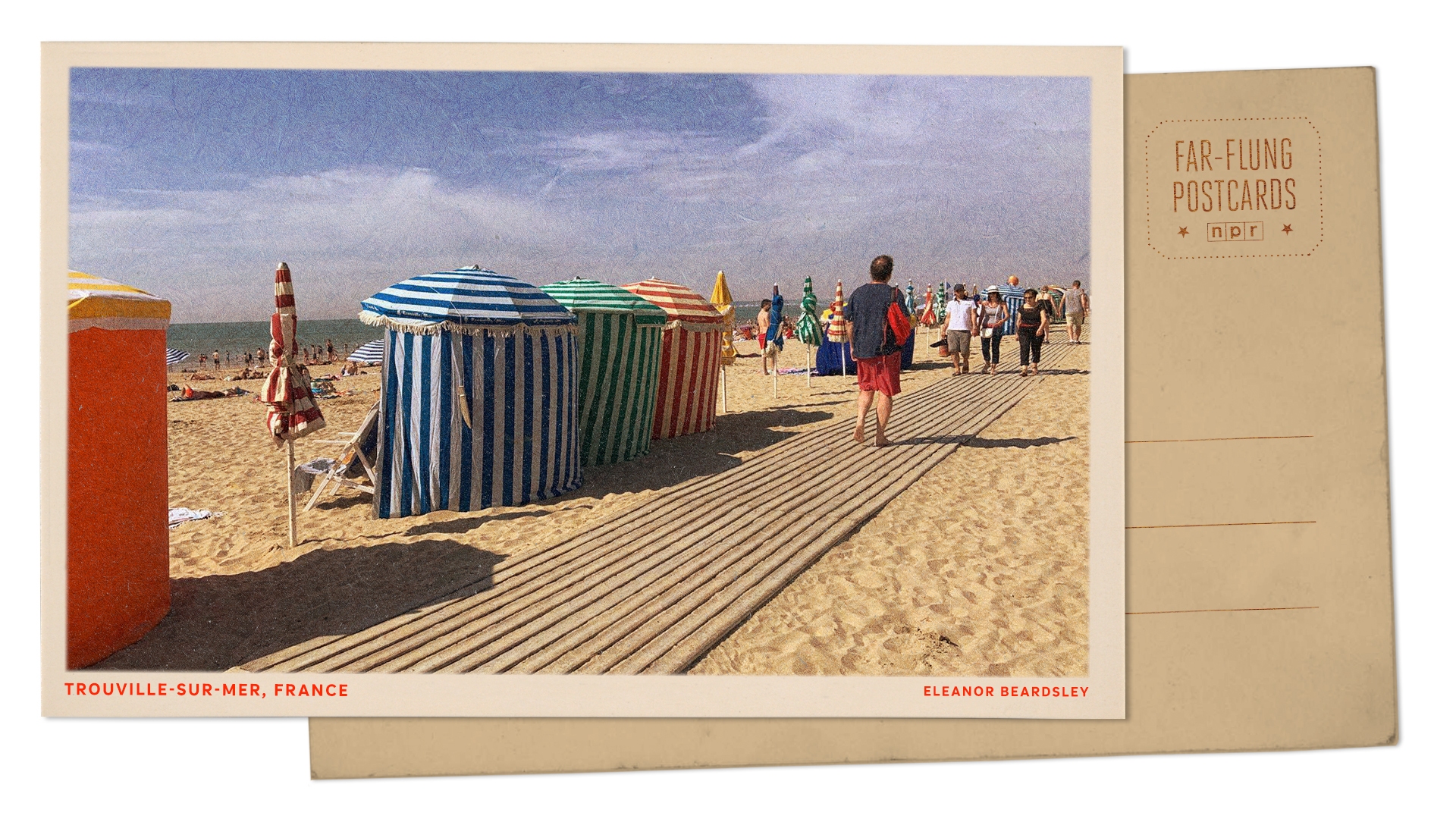
If you think a trip to the Normandy coast has to be all about high-fashion boutiques and luxury hotel bills, you’ve clearly missed the point of Trouville-sur-Mer. While its neighbor across the Touques River, Deauville, spends its time chasing cinematic glamour, Trouville has spent the last century and a half doing something much more impressive: it has stayed exactly who it is.
I’ve walked that boardwalk more times than I can count. It isn't just a place to see; it’s a place to feel. Claude Monet saw it, too. Back in 1870, he set up his easel right on the sand to capture the light hitting the water and the bustle of the early "sea bathing" crowd. He painted the same striped tents, the same shifting skies, and the same breezy optimism that you find there today. Honestly, the only real change is the fashion.
Why Trouville-sur-Mer Remains Authentically Norman
Most travelers fall into the trap of assuming that because a place is historic, it’s a museum. Trouville isn’t a museum. It’s a living, breathing fishing port that just happens to be a beautiful seaside resort. You don’t come here for the "lifestyle brands" that dominate the Deauville side of the bridge. You come here because you want an actual oyster, pulled from the local waters, served to you on a wooden table that looks like it’s survived a few storms.
The heart of the town is the Marché aux Poissons—the fish market. It’s not some sanitized tourist trap. It’s loud, it’s chaotic, and it’s arguably the best place in Normandy to grab a quick plate of whelks or langoustines with a glass of crisp white wine. If you’re looking for a formal white-tablecloth experience, go elsewhere. If you’re looking for the soul of the French coast, pull up a stool here.
The Monet Connection and the Art of Observation
When Monet painted The Beach at Trouville in 1870, he wasn’t trying to capture a postcard. He was experimenting with the immediacy of the moment. He worked en plein air, meaning he actually had sand stuck to his wet canvases because of the wind.
That wind is still there. It’s a bracing, salt-heavy breeze that forces you to put down your phone and just look at the horizon. If you walk along the Promenade Savignac today, you’ll see the same turreted villas that caught the Impressionists’ eyes. Many are private homes now, but their architecture—a wild, ornate mix of styles—still dominates the skyline. It’s a visual reminder that this town was built for leisure, not for industry.
Practical Insights for Your Visit
Don’t bother renting a car if you’re coming from Paris. You’ll just spend your entire weekend sitting in traffic on the A13. Take the train from Gare Saint-Lazare. It’s a direct, two-hour shot to the Trouville-Deauville station. You’ll step off the train and realize you’ve effectively traveled to a different century in less time than it takes to watch a movie.
Here is what you need to know to avoid the rookie mistakes:
- Timing is everything. If you go in July or August, you’ll be sharing that beach with half of Paris. It’s fun, but it’s packed. Go in late September or early June. The weather is still solid, the light is arguably better for photography, and the local restaurants actually have room for you.
- Walk the harbor. Most tourists stay on the beach. That’s a mistake. The real charm hides in the narrow, winding alleys that lead up the hillside. Look for the Villa Montebello, which now houses the town museum. It’s one of the few places where you get a clear view of how the town looked when the Impressionists were sketching the coastline.
- Cross the river. You can walk to Deauville in fifteen minutes. Do it to see the contrast, but don’t stay there. Use Deauville for your window shopping, then retreat back to Trouville for your dinner. It’s the smart way to experience both sides of the coin.
- Tide tables matter. Normandy isn't the Mediterranean. The tide here goes out a long, long way. If you’re planning a swim, check the local tide schedule. If you get it wrong, you’ll be walking half a mile across wet sand just to reach the water.
Stop Overthinking the Trip
People spend way too much time worrying about whether they’re hitting every single "top-rated" spot. The beauty of a place like Trouville is the lack of a forced itinerary. It’s a town designed for aimless wandering.
Find a spot on the boardwalk. Watch the clouds change over the English Channel. Order a crepe at a stand that looks like it hasn't changed its menu since the 80s. When you’re ready, head to the fish market and eat whatever the ocean yielded that morning.
You’re not going to "discover" anything new here, and that’s the point. The town has already done the hard work of remaining itself. You just have to show up and pay attention. Take the train, ditch the car, and leave the expectations at the station.