Every time Disney announces another sequel, the internet groans about original ideas being dead. Audiences claim they want something new. Critics write think-pieces about the exhaustion of intellectual property. Yet, when the lights dim in the theater, history keeps repeating itself.
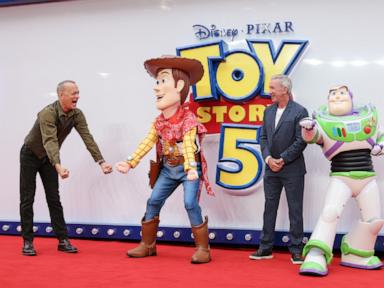
Toy Story 5 just crushed the box office with a massive 160 million dollar domestic opening weekend. That is not just a win for Pixar. It is the biggest theatrical debut of 2026 so far, easily blowing past every expectation and setting an absolute record for the 31-year-old franchise.
When you add the 152 million dollars pulled from international markets, the global opening weekend tally hits a staggering 312 million dollars. For a series that supposedly wrapped up perfectly back in 2010 with Toy Story 3, Woody and Buzz Lightyear clearly still hold an unbelievable amount of leverage over our wallets.
The Massive Box Office Numbers Breaking Records
Let's look closely at the data because the sheer scale of this debut is wild. Until this weekend, Toy Story 4 held the franchise record with a 120.9 million dollar opening back in 2019. Toy Story 5 outperformed that by nearly 40 million dollars.
To put this in perspective, only one animated movie in history has ever had a bigger opening weekend. That was Incredibles 2 back in 2018, which brought in 182.7 million dollars. Toy Story 5 now sits comfortably in the number two spot of all time for animation debuts.
The tracking before the weekend predicted a healthy opening, but nobody expected families to rush the multiplexes like this. Premium ticket options did massive heavy lifting here. According to studio reports, IMAX and other premium formats made up 40 percent of total ticket sales. IMAX alone accounted for 11.5 million dollars. People did not just want to see the movie; they wanted the biggest screen possible.
The internal audience breakdown shows exactly who is buying these tickets. It is a brilliant mix of multi-generational nostalgia and standard family outings.
- Parents aged 25 to 44 made up 42 percent of the audience.
- Kids under the age of 12 represented 25 percent.
- The crowd split 57 percent female and 43 percent male.
This means adults who grew up with the 1995 original are now taking their own kids to see the exact same characters. That kind of multi-generational loyalty is something money can't buy, and it explains why the movie earned a glowing "A" CinemaScore from opening-night crowds.
Why Woody and Buzz Still Bring Families into Theaters
It takes serious narrative skill to keep audiences caring about plastic toys for more than three decades. A huge part of the success of Toy Story 5 comes down to who is behind the camera. Pixar veteran Andrew Stanton returned to direct alongside co-director McKenna Harris. Stanton is the creative mastermind who helmed Finding Nemo and WALL-E. He understands the emotional DNA of these characters better than almost anyone alive.
Instead of repeating old plotlines about a toy getting lost or stolen, the writers took a highly relatable, modern angle. In this fifth installment, the toys face an existential crisis when their kid, Bonnie, gets a brand-new electronic tablet. Suddenly, Woody, Buzz, Jessie, and the classic gang find themselves entirely pushed aside for a glowing screen. The core conflict forces the old-school plastic figures to confront a terrifying army of electronic toys.
It is a clever mirror of what actual parents deal with every single day at home. Trying to get a child to put down an iPad and play with real toys is a universal struggle right now. By tackling the tech obsession head-on, the film found an immediate emotional hook for both frustrated parents and tech-dependent kids.
The voice cast brings back the comforting familiarity of Tom Hanks as Woody, Tim Allen as Buzz Lightyear, and Joan Cusack as Jessie. Pixar also sprinkled in fresh energy by adding the voices of Conan O’Brien, Greta Lee, and Tony Hale.
To guarantee the film dominated pop culture conversations, Disney pulled off a massive marketing coup. They secured an original song by Taylor Swift titled "I Knew It, I Knew You" specifically for the movie. When you combine Pixar's legacy with Taylor Swift's fan base, you are essentially building a bulletproof box office monster.
The Astronomical Cost of Modern Animation
Making a movie of this scale is incredibly expensive. Toy Story 5 carried a production budget of 250 million dollars, and that does not even include the massive global marketing campaign which likely added another 100 million to 150 million dollars to the bill.
High-end animation requires thousands of computers, years of rendering, and massive teams of highly skilled digital artists. Every single strand of fur on a plush toy or reflection on Buzz's helmet takes hours of processing power. When a studio spends nearly 400 million dollars total to clear a movie for theaters, the stakes are terrifyingly high. A bad opening weekend can ruin a studio's entire fiscal year.
Fortunately for Disney, this franchise has proven to be an absolute cash machine. Before this weekend, the previous four films had collectively brought in more than 3 billion dollars in global ticket sales. That number ignores the billions more generated by toy sales, theme park attractions, clothing, and video games. Toy Story 4 easily crossed the 1 billion dollar mark during its theatrical run. Looking at the initial trajectory of Toy Story 5, it is almost guaranteed to join the billion-dollar club over the next month.
Critics have been highly supportive, giving the film a 93 percent rating on Rotten Tomatoes. While that is technically the lowest score for a mainline Toy Story film—the first two hold a flawless 100 percent—it is still a massive critical win. Audiences rated it even higher, holding a 95 percent audience score.
A Hybrid Summer Saving the Multiplex
The massive debut of Toy Story 5 completely transformed the 2026 summer box office. Total ticket sales for the weekend finished an incredible 80 percent ahead of the exact same weekend last year. The total year-to-date box office has climbed to 4.46 billion dollars, which tracks 14 percent ahead of 2025.
Industry analysts are now predicting that this summer could reach 4 billion dollars in total ticket revenue. That has only happened once since the pandemic hit the theater industry years ago.
What makes this summer fascinating is that big studios aren't the only ones winning. The theater market has turned into a highly eclectic, hybrid ecosystem. Big legacy brands are drawing massive crowds, but tiny indie projects are holding their ground right alongside them.
Look at how the domestic top five looked during this record-breaking weekend:
- Toy Story 5 — $160 million (Week 1)
- Disclosure Day — $17 million (Week 2)
- Obsession — $14.2 million (Week 6)
- Backrooms — $7.3 million (Week 4)
- Scary Movie — $6.7 million (Week 2)
Steven Spielberg's sci-fi thriller Disclosure Day took a steep 62 percent drop in its second weekend, settling for second place with 17 million dollars. It star-studded cast including Emily Blunt, Josh O'Connor, and Colman Domingo has managed to cross 160.4 million dollars globally against a 115 million dollar budget. It is a solid performer, but it got completely overshadowed by the Pixar juggernaut.
The real shockers of the summer are sitting in the third and fourth spots. Focus Features' horror phenomenon Obsession added another 14.2 million dollars to its haul. This is a microbudget film directed by 26-year-old Curry Barker that cost less than 1 million dollars to make. In its sixth weekend, it almost matched the numbers of a Spielberg film. Obsession has now amassed a mind-boggling 215.8 million dollars domestically and over 333 million dollars worldwide. It is officially one of the most profitable movies of the decade.
Right behind it is A24's Backrooms, directed by Kane Parsons. In its fourth weekend, the internet-lore inspired horror movie pulled in 7.3 million dollars, pushing its domestic total to 175.2 million and its global score past 300 million.
The lesson here is loud and clear. Audiences will show up in droves for trusted, high-budget nostalgia like Toy Story 5, but they are equally hungry for cheap, inventive, original horror. The multiplex is healthiest when it offers both.
If you plan to track how these numbers hold up, keep a close eye on the box office drops next weekend. A standard blockbuster drops around 50 to 60 percent in weekend two. If Toy Story 5 drops less than 45 percent, it means word-of-mouth is stellar, and it will coast to a billion dollars completely unchallenged. Head to your local theater's app to check mid-week showtimes if you want to avoid the massive weekend crowds that are still packing out premium screens.