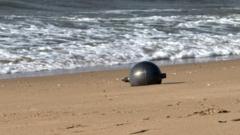
Six large metal spheres roll out of the surf onto a quiet stretch of sand. It sounds like the opening scene of a sci-fi thriller, but it just happened on Forrest Beach in northern Queensland.
If you've seen the headlines about mysterious space balls washing up in Australia, you're probably wondering what they are, where they came from, and if we should be worried. Let's skip the alien hype and look at the actual science because the truth is a lot more dangerous than a Hollywood script. Meanwhile, you can read other developments here: Why Mojtaba Khamenei Missing His Fathers Funeral Signals Deeper Trouble For Iran.
The short answer is they're almost certainly titanium propellant tanks from a rocket stage. But while the internet cracks joke about the 1980s comedy Spaceballs, emergency response crews are treating this with extreme seriousness. They've set up a 50-meter exclusion zone and stepped into hazmat suits for a very specific, highly toxic reason.
Why Space Debris Is Hiding a Toxic Secret
When these spheres washed up near Townsville, local authorities didn't just walk up and kick them. They called in the Queensland Fire Department and the Australian Space Agency. Crews quickly sealed five of the objects into heavy-duty hazardous material drums while working to secure a sixth. To explore the complete picture, check out the recent analysis by TIME.
Why the intense precautions? It comes down to what these spheres used to hold.
Space archaeologist Alice Gorman noted that these objects match the exact profile of pressurized fuel vessels used in spacecraft propulsion systems. Made from high-melting-point titanium alloys, these spheres survive the brutal friction of re-entering Earth's atmosphere when the rest of a rocket stage burns up.
The real danger lies inside. Spacecraft fuel systems frequently rely on hydrazine. It's a highly volatile, corrosive, and carcinogenic propellant. Even if a tank has drifted in the ocean for years, residual amounts of hydrazine can trap toxic gases inside. A sudden breach or leak on a public beach could cause severe chemical burns or respiratory damage to anyone standing too close.
If you ever stumble across an unidentified metallic object on a beach, don't touch it, don't move it, and don't try to clean it. Move away immediately and call emergency services.
Tracking the Origin of the Forrest Beach Spheres
This isn't Australia's first rodeo with orbital junk. The country is a massive landmass surrounded by ocean, making it a frequent landing pad for things falling out of the sky.
- In 2023, a massive metallic dome washed up on a beach in Western Australia. It was later confirmed to be a piece of a Polar Satellite Launch Vehicle (PSLV) operated by India.
- Back in 2011, an identical titanium sphere was discovered in the remote grasslands of Namibia, traced back to an unmanned rocket launch.
So, who owns the latest batch? Experts speculate these specific pressure vessels might originate from a Russian Fregat upper-stage rocket, which uses a cluster of similar spherical tanks. The Australian Space Agency is currently working with the National Emergency Management Agency and international partners to pinpoint the exact launch.
Under international space law, specifically the 1972 Space Liability Convention, the country that launches an object remains legally responsible for it and retains ownership. That means once Australia identifies the origin country, they'll technically have to offer it back—though most nations aren't exactly rushing to pay the shipping invoice for ancient scrap metal.
The Growing Orbital Traffic Jam
What happened at Forrest Beach highlights a much larger crisis. We've had more space launches in the last five years than in the entire previous history of space flight.
There are currently over 30,000 tracked pieces of space debris orbiting the planet. That includes dead satellites, spent rocket stages, and stray hardware. While most orbital debris burns up completely upon re-entry, heavy components like titanium fuel tanks, engine fragments, and shielding frequently make it down to the surface.
As commercial satellite constellations expand and global launch frequencies hit record highs, these incidents will transition from rare anomalies into routine coastal management issues.
If you live along coastal areas or find yourself exploring remote shorelines, keep an eye out for unusual metallic debris, but maintain your distance. Report any sightings to local police or the Australian Space Agency directly through their official reporting channels.
The video below offers an excellent breakdown of the ground response at Forrest Beach, showing the actual hazmat containment process and interviews with local residents who witnessed the cleanup.