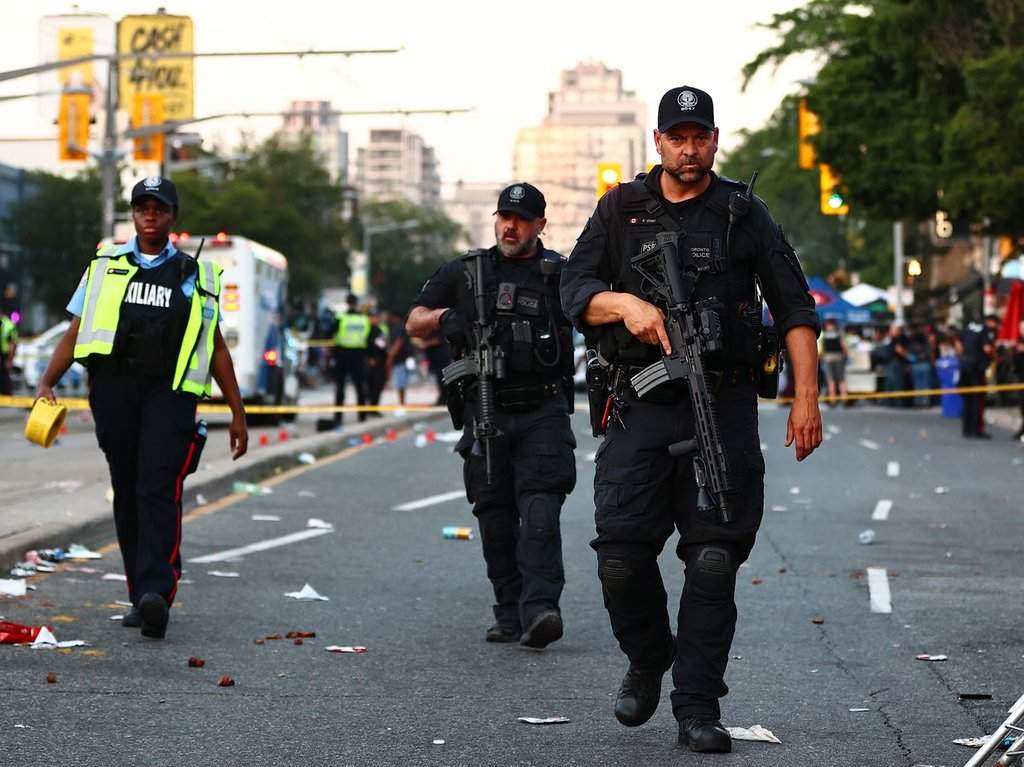
When 13,000 people gather on a midtown Toronto street for music, dancing, and street food, nobody expects to dive behind empanada stalls to dodge bullets. Yet that's exactly what happened when gunfire erupted at the 2026 Salsa on St. Clair festival, leaving two men dead, multiple people injured, and a community traumatized.
Now, the future of the flagship event hangs in the balance. TLN Media Group, the long-time organizer behind the premier celebration of Latino culture, dropped an ultimatum: fix the security issues or we walk away for good.
It’s an ultimatum that strikes at the core of urban public life. How do you keep an open, free street festival safe without turning it into a militarized zone?
The Reality of What Went Down on St Clair Avenue
Let’s skip the sanitized press releases and get straight to what happened.
Shortly after 8 p.m. on a Saturday evening near St. Clair West and Arlington Avenue, two individuals targeted each other in the middle of a dense crowd. Police confirmed two firearms were recovered at three distinct crime scenes on the strip.
The resulting stampede was pure chaos. Families with strollers rushed into nearby storefronts. Vendors abandoned their grills. The second day of the festival was instantly canceled, marking one of the darkest days for Toronto's summer event calendar.
INCIDENT AT A GLANCE:
Location: St. Clair Ave W & Arlington Ave
Attendance at time of shooting: ~13,000 people
Casualties: 2 deceased, multiple injured
Status: Organizers threaten permanent cancellation
Organizers rightly point out that warning signs were flashing weeks prior. Social media had been buzzing with reports of escalating disruptions at other street events across the city earlier in the summer. The tension was building. The breaking point just happened to land on St. Clair.
Why Open Street Festivals Are Hard to Secure
Here’s the hard truth most politicians won't say out loud: securing an open street festival is a logistical nightmare.
Unlike gated venues or paid concerts where you can funnel crowd flow through metal detectors and bag checks, public street festivals are designed to be accessible. Anyone can walk onto the street from an alley, a side street, a balcony, or a subway entrance.
+------------------------------------+------------------------------------+
| GATED EVENTS                       | OPEN STREET FESTIVALS              |
+------------------------------------+------------------------------------+
| - Single entry/exit points         | - Dozens of access points          |
| - Bag searches & metal detectors   | - Free movement from side streets  |
| - Perimeter fencing controls crowd | - Blends directly into residential |
| - High cost absorbed by ticket price| - Free entry, funded by BIA/grants |
+------------------------------------+------------------------------------+
Local business leaders and city councillors quickly noted that you simply cannot turn ten blocks of a major arterial road into a fortress without destroying the very spirit of the event. If you put up perimeter fences and check thousands of bags, you kill the spontaneous, neighborhood vibe that made Salsa on St. Clair famous in the first place.
The Finger-Pointing Game Between City Hall and Organizers
In the aftermath, a familiar cycle set in—frustration, grief, and bureaucratic deflection.
TLN Media Group expressed anger over what they viewed as municipal leaders treating public violence as an unavoidable norm. They made it clear that putting on an event under current conditions imposes an unfair burden. Organizers spend hundreds of thousands of dollars navigating municipal permits, insurance requirements, and emergency planning. Yet when a violent incident occurs, the community group takes the financial and reputational hit.
THE CYCLE OF FESTIVAL FRUSTRATION:
1. Tragic Incident Occurs -> 2. Outrage & Demands for Action
                             |
4. Rising Costs Kill Event <- 3. More Permits & Fees Imposed
Meanwhile, city officials point to police response protocols and municipal festival support frameworks. The city raised ideas like creating a centralized "Toronto Festivals Association" to help organizers share best practices for safety. But for organizers who just watched a decades-old cultural celebration shattered in seconds, policy committees feel like a day late and a dollar short.
What Needs to Change for Festivals to Survive
If Toronto wants its summer culture to survive without constant threats of cancellation, the old playbook has to be thrown out. Here is what actionable event safety actually looks like going forward:
- Proactive Intelligence Sharing: The city and police need to monitor real-time security threats and crowd dynamics across the summer, rather than leaving event non-profits to guess security needs on their own.
- Subsidized Off-Duty Policing: Security costs are crippling small community organizations. If public safety is a municipal responsibility, the financial burden of uniformed police presence should not fall entirely on event hosts.
- Tactical Zone Infrastructure: Designating clear emergency egress corridors and utilizing high-visibility lighting tower setups at key intersections along festival routes.
- Decoupling Guns from Festival Blame: Blaming the existence of a street party for a targeted shooting misses the root cause. Guns are coming into public spaces because of broader societal issues, not because a Latin band is playing on a stage.
The Next Steps for Event Organizers and City Leaders
The standoff between TLN Media Group and the City of Toronto is a test case for every major festival in the region.
If you are an event organizer, business improvement area (BIA) member, or public safety advocate, here is how to navigate this changing landscape:
- Audit Your Security Plan Immediately: Review your emergency action plans with local divisions to ensure clear protocols for mass panic situations.
- Push for Shared Risk Models: Demand that municipal permits include city-backed emergency response resources rather than forcing private non-profits to absorb all security liabilities.
- Engage the Community Early: Work with local businesses and residents to build eyes-on-the-street vigilance before festival day arrives.
Salsa on St. Clair isn't just another weekend party; it's a 20-year pillar of Toronto's cultural identity. Letting it die because public officials and organizers can't agree on a modern safety strategy would be a devastating loss for the entire city.

/cdn.vox-cdn.com/uploads/chorus_image/image/73064899/1255687.0.jpg)