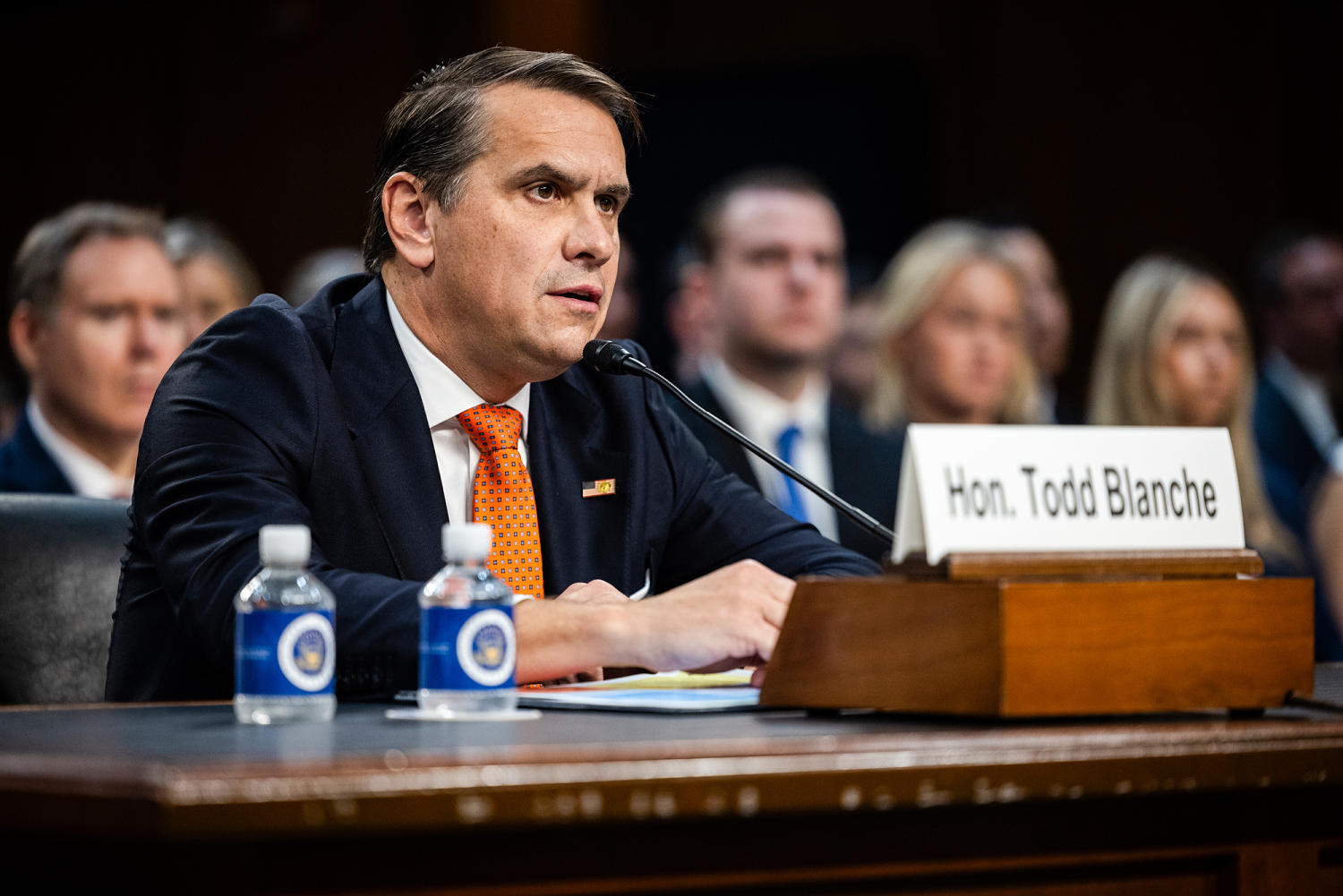
Politics moves fast, but political survival moves faster. Acting Attorney General Todd Blanche just found out how quickly support can vanish when Capitol Hill smells a slush fund.
Blanche signed a formal order late Sunday night killing the proposed 1.8 billion dollar "anti-weaponization" fund. This was the exact mechanism meant to compensate political allies and critics of past government overreach tied to a settlement with Donald Trump. The move comes straight off a high-stakes standoff with key Republican senators who threatened to block his permanent confirmation.
You don't get to skate past the Senate Judiciary Committee with vague verbal promises. Senators wanted it in writing. Now they have it.
The Pressure That Forced the Deal
For weeks, Blanche insisted the fund was a dead issue. He testified under oath that the Department of Justice had zero plans to actually launch or finance the multi-billion-dollar project.
Words didn't satisfy Capitol Hill.
Republican heavyweights like Senator John Cornyn of Texas and Senator Thom Tillis of North Carolina dug their heels in. They refused to back Blanche's path to the permanent Attorney General job without absolute, black-and-white proof that the fund was gone for good. They worried the legal language in the original IRS settlement left an open door for future administrations or legal teams to revive the payout structure.
The standoff reached a breaking point right before the committee vote. Blanche realized verbal assurances weren't enough to pass the senate math. He gave them the formal rescission order to clear his path.
What the Formal Order Actually Changes
The signed document leaves zero ambiguity. It explicitly rescinds the original May order that created the fund.
According to the text released by the Justice Department, no money ever moved. No claims office ever opened. No individuals received checks.
The order also tackles a second flashpoint: broad tax audit immunity. Critics pointed out that parts of the original settlement shielded Trump and his family members from future tax scrutiny. The new directive narrows that protection significantly. It explicitly clarifies that tax audit immunity applies strictly to past, closed claims rather than acting as a blanket shield going forward.
Why the Deal Matters for the Department of Justice
Confirmation battles get messy. This one threatened to derail the leadership of the entire Justice Department.
By bending to legislative pressure, Blanche sacrificed a controversial policy tool to secure the votes he needs. Bipartisan backlash had already poisoned the well, with federal judges raising eyebrows over the origins of the original IRS settlement.
Senators wanted control over the purse strings and agency priorities. They proved that even high-ranking administration nominees cannot bypass institutional checks and balances without paying a political price.
Watch the Senate Judiciary Committee vote closely. Blanche traded away a billion-dollar political project to buy his confirmation. Now he has to prove he can run the department without it.
Blanche rescinds fund for Trump supporters
This video provides further context on the political negotiations and pressure from holdout senators that led Acting Attorney General Todd Blanche to scrap the controversial fund.