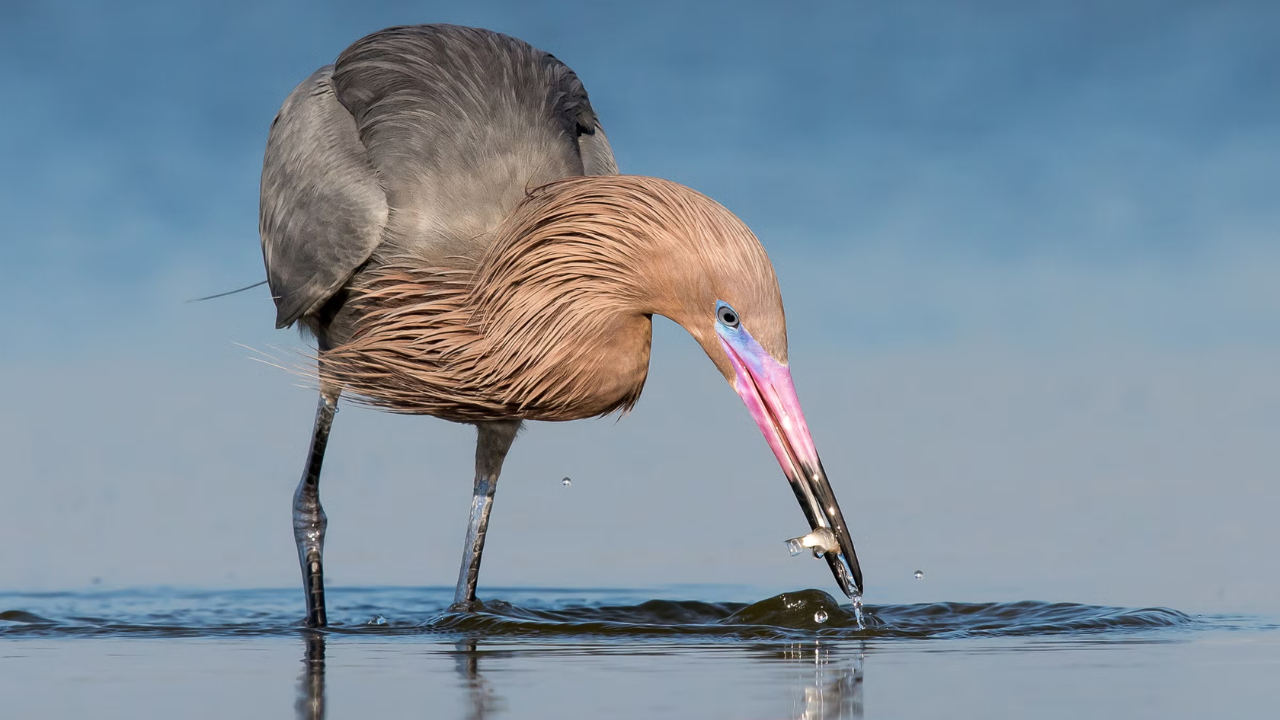
Drive down the South Texas coast and you'll find plenty of ordinary dredge-spoil islands shaped by shipping channels. But tucked away in the shallow, hypersaline waters of the Laguna Madre sits Green Island, a rugged 35-acre sanctuary that looks like nothing else. A century ago, this isolated patch of land was the absolute last stand for the reddish egret in Texas.
If you want to understand how modern wildlife conservation actually works when human greed pushes a species to the edge, you have to look at what happened here. Back in 1923, Audubon Texas signed its first-ever sanctuary lease with the Texas General Land Office to throw a protective ring around the island. It changed the trajectory of coastal bird populations forever.
Why Green Island Became the Last Refuge
At the turn of the 20th century, the fashion industry had an insatiable appetite for feathers. Millinery trades paid top dollar for plumes, turning colonial waterbirds into walking gold mines. Hunters didn't just target adults for their breeding plumage; people also raided nests for eggs and slaughtered birds for meat.
Populations crashed hard. By the early 1920s, the reddish egret was on the brink of local extinction across Texas.
Enter Green Island. Unlike the artificial islands built from waterway dredge spoil, Green Island formed naturally. It wasn't welcoming. The place was packed with vicious, thorny brush like spiny hackberry (granjeno) and swarmed with biting insects.
Those miserable conditions kept human poachers and land-based predators away. Conservationists realized that if they could secure this natural fortress, the state's remaining reddish egrets might just stand a chance.
Living in a Two-Room Hut
Declaring an island a sanctuary on paper doesn't stop poachers. Early conservationists knew they needed boots on the ground, or rather, boots in the mud.
During the early decades of protection, coastal wardens lived on Green Island full-time to keep hunters at bay. One family famously lived there year-round in a basic, two-room wooden hut, enduring the brutal South Texas heat, relentless humidity, and thick swarms of bugs to guard the rookery.
It wasn't a glamorous posting. It was grueling physical survival paired with constant vigilance. That permanent human presence gave the birds the breathing room they desperately needed to nest and raise chicks without interference.
Vertical Architecture in the Rookery
Step onto Green Island today during nesting season and you're hit with an overwhelming wall of sound and heat. Thousands of birds crowd the dense vegetation, and they've organized themselves vertically.
- The Canopy: Large birds like Great Blue Herons and Great Egrets claim the highest branches at the top of the brush.
- The Middle Tier: Reddish egrets, Roseate Spoonbills, and Black-crowned Night-Herons nest lower down in the thick middle sections.
- The Understory: Smallest species, including Snowy Egrets, tuck their nests deep into the lowest, most protected branches.
- The Ground and Margins: Glossy Ibis lay claim to sandy patches, while Clapper Rails scurry through the mangrove roots.
It's a tightly packed ecosystem where every square foot counts. Even predators find a way in occasionally. Audubon coastal wardens regularly patrol the island to remove swimming predators like coyotes, bobcats, and raccoons that manage to cross the lagoon. Wardens also have to balance protecting native wildlife like Crested Caracaras—which sometimes raid heron nests to feed their own young—without disrupting natural ecological dynamics.
The Modern Battle Against Rising Seas
Hunting isn't the primary threat anymore. Today, the biggest danger to Green Island is climate change and the steady creep of sea-level rise.
Storms routinely batter the sanctuary. Hurricane Hanna destroyed the elevated observation blind that researchers used to monitor nesting colonies without disturbing the birds. While that structure has since been rebuilt, computer modeling suggests rising waters could eventually swallow up to 15 acres of the 35-acre island, wiping out nearly half of its total area.
Audubon staff now look beyond Green Island, managing a network of 175 coastal sanctuaries along the Texas coast to ensure these birds have alternative habitats when storms hit or tides rise.
A century of hard work turned a desperate, last-ditch sanctuary into the largest reddish egret nesting colony on Earth. Protecting wild spaces takes more than a legal decree; it takes constant, unglamorous stewardship on the ground.
Check out this Welcome to the Island Where Egrets Rule overview to see footage of the rookery and conservation efforts along the Texas Gulf Coast.