The shadow of the marble tower stretches across the flagstones of Konak Square, a long, dark finger pointing toward the Aegean Sea. High above the bustling commuters and the swirling clouds of pigeons, the copper hands of the clock click forward with a rhythmic, metallic precision that has defined this city’s pulse since 1901. Fethi Pamukoğlu, a man whose family has tended to the internal gears of this monument for generations, knows that the seconds here do not feel like the seconds in Istanbul or Ankara. In this ancient port, time is a physical weight, scented with salt and roasted chestnuts. A visitor standing beneath the Moorish arches might check their watch or glance at a smartphone, asking the simple, mechanical question: What Time Is It In Izmir? The answer is not merely a numerical alignment of hours and minutes. It is a measurement of the golden hour hitting the white slopes of Kadifekale and the precise moment the first tray of boyoz pastry leaves a stone oven in a back alley of Alsancak.
Izmir occupies a strange, beautiful crease in the map of the world. It is a city that has burned and rebuilt itself, a place where the Roman Agora sits quietly beneath the gaze of modern glass skyscrapers. To understand the temporal reality of this place, one must look at the way the light changes over the Gulf of Izmir. Turkey moved to a permanent daylight savings time in 2016, a decision that decoupled the nation from the seasonal shifts of its European neighbors to the west. This legislative choice had profound effects on the biological clocks of its citizens. In the deep winter, the sun in this coastal province does not rise until nearly eight in the morning. Schoolchildren walk to class in a pre-dawn gloom that feels like midnight, their breath visible in the chilly Aegean air. The government’s rationale was centered on energy conservation and synchronization with financial markets to the east, but for the people of the coast, it created a surreal disconnect between the clock on the wall and the sun in the sky. Don't forget to check out our earlier article on this related article.
The Geometry of the Sun and What Time Is It In Izmir
The mechanics of the planet dictate that Izmir sits at roughly 27 degrees east longitude. This positioning means that while the entire country follows the same official time, the actual solar noon—the moment the sun reaches its highest point—occurs significantly later here than it does in the eastern border cities like Iğdır. There is a lag, a soft delay that gives the city its reputation for a slower, more epicurean pace of life. When a businessman in the eastern highlands is finishing his lunch, a merchant in the Kemeraltı Bazaar is perhaps only just considering his first glass of tea. This geographical stretch creates a tension within the national identity. The question of What Time Is It In Izmir becomes a meditation on the distance between the center of power and the edge of the sea.
Social scientists have long noted that time perception is influenced by climate and proximity to water. In Izmir, the "imbat"—the cooling sea breeze that arrives in the late afternoon—acts as a natural regulator. It signals the end of the crushing midday heat and the beginning of the "kordon" hours, when the city spills onto the grassy embankments of the shoreline. Dr. Arzu Deniz, a sociologist who has studied urban rhythms in Mediterranean port cities, suggests that the "izmirli" identity is fundamentally tied to this afternoon transition. To her, time is not a linear arrow but a series of overlapping circles. The circle of the prayer call, the circle of the ferry schedule, and the circle of the family dinner. These layers do not always align with the digital readout on a glowing screen. To read more about the context here, AFAR offers an in-depth breakdown.
The Great Fire of 1922 serves as a jagged scar in the city's timeline, a point where the old world stopped and the modern era began. Before the fire, the city was a polyglot marvel of Levantines, Greeks, Armenians, and Turks, each group often keeping time by different calendars and traditions. The European merchants in the Frankish quarter lived by the Gregorian calendar and the clocks of London or Paris, while the Ottoman administration operated on a different rhythmic logic. When the clock tower was gifted by Sultan Abdülhamid II to celebrate his 25th anniversary on the throne, it was an attempt to unify these disparate heartbeats into a single, imperial standard. It was a statement of modernity, a declaration that the empire was moving in lockstep with the industrial world. Yet, the tower’s clock stopped at 11:17 during the 1974 earthquake, as if the city itself needed a moment to breathe before restarting its journey.
Living on the edge of the Mediterranean basin requires a certain fluidity. On a Tuesday morning in the Karşıyaka district, the commuters boarding the ferry boats are participating in a ritual that feels timeless. The hum of the engines and the cry of the gulls create a sensory experience that defies the urgency of the modern workday. It is here that one realizes that the inquiry regarding What Time Is It In Izmir is best answered by looking at the color of the water. If the sea is a bright, shimmering turquoise, it is the hour of labor and commerce. If it has turned a deep, bruised purple, it is the hour of the "rakı-balık," the long, storied evening meal where time is measured in empty glasses and stories told with increasing fervor.
The architecture of the city also plays its part in this temporal theater. In the narrow passages of the Kızlarağası Hanı, a sprawling caravanserai built in the 18th century, the thick stone walls dampen the noise of the 21st century. Inside, the air is cool and smells of ground coffee and old carpets. The light filters down from high domes, creating pools of gold on the floor that move with an agonizing slowness. For the shopkeepers who have spent forty years in these stalls, the concept of an hour is flexible. They speak of time in terms of "before the holiday" or "after the harvest." Their clocks are the faces of their regular customers and the changing temperature of the stone beneath their feet.
The Pulse of the Modern Aegean
Despite its ancient bones, Izmir is a city of the young. With several major universities and a growing tech sector, there is a frantic energy pushing against the traditional lethargy of the coast. For a software developer working in a glass-walled office in Bayraklı, the temporal reality is dictated by the opening of the New York Stock Exchange or the deadline of a client in Berlin. These residents live in a state of dual consciousness. They are physically anchored in the salty air of the Aegean, but their minds are synced to a global, digital clock that knows no geography. This friction is where the modern Turkish experience is most visible. It is the struggle to maintain a cultural rhythm that prizes long breakfasts and evening strolls while participating in a global economy that demands instant responses and 24-hour productivity.
The digital transition has stripped away much of the mystery of time. We no longer look to the stars or the shadows to know when to act. Yet, in Izmir, the mechanical world feels slightly less dominant. Perhaps it is the presence of the ruins of Ephesus and Pergamon just a short drive away, silent reminders that entire civilizations have risen and fallen while the sun continued its arc across this specific patch of sky. When you stand in the center of a Roman theater that once held twenty-five thousand people, the urgency of a calendar notification feels like a triviality. You are standing in a place where time has been measured in centuries, not seconds.
Researchers at Ege University have conducted studies on the "slow city" movement, or CittaSlow, which has found a significant foothold in the towns surrounding the city, like Seferihisar. This movement is a conscious rebellion against the "fast" life, an attempt to reclaim the human pace of existence. It encourages residents to eat local food, support local artisans, and, most importantly, to stop obsessing over the clock. In these communities, time is seen as a resource to be savored rather than a currency to be spent. This philosophy is slowly trickling back into the urban center of Izmir, manifesting as a renewed interest in traditional crafts and a communal rejection of the more aggressive aspects of modern urbanism.
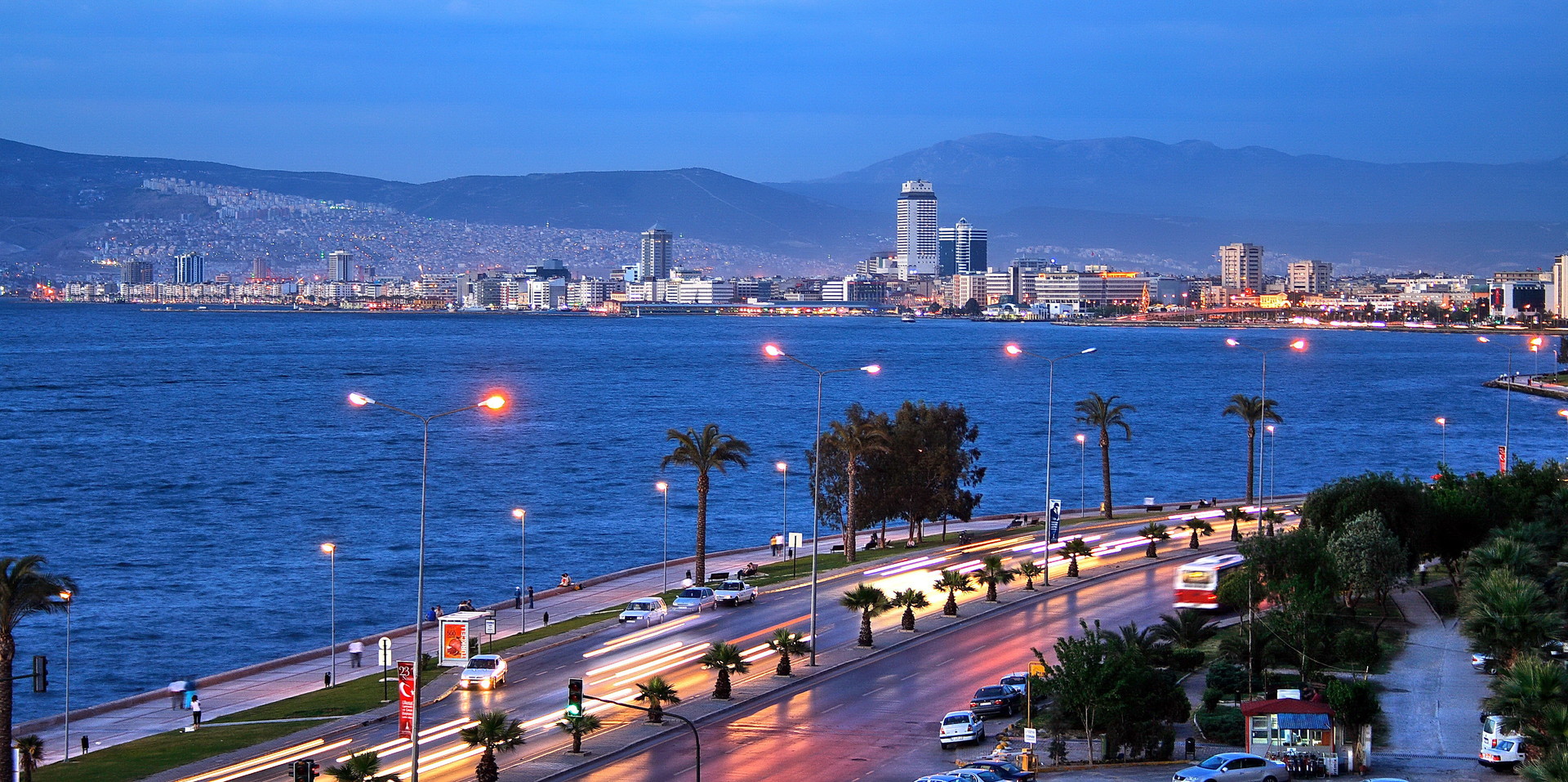
As the sun begins to dip below the horizon, the city undergoes its most dramatic transformation. This is the "akşam" hour, a word that carries more weight than the English "evening." It is a transitional state, a softening of the world's edges. The minarets of the mosques are silhouetted against a sky that turns from orange to pink to a deep, electric blue. The lights of the houses on the hillsides begin to twinkle, mirroring the stars above. At this moment, the clocks seem to hold their breath. The frantic honking of traffic on the highway slows to a steady drone, and the sound of laughter from the waterfront cafes carries further on the still air.
Fethi, the clockmaker, sometimes climbs the narrow stairs of the tower just as the light is fading. He checks the weights and the pulleys, ensuring that the heart of the city continues to beat with a steady rhythm. He is a man who understands that his job is not just to maintain a machine, but to preserve a promise. The promise is that no matter how much the world changes, no matter how many empires rise or fall, there will be a constant point of reference for the people of this shore. The clock does not just tell the time; it tells the history. It records every earthquake, every celebration, and every quiet afternoon spent watching the ships come in from the wine-dark sea.
To live in Izmir is to accept a different kind of contract with the universe. It is to understand that you are part of a long, unbroken chain of humans who have looked out at this same water and wondered about their place in the grand design. The numbers on a digital watch are a useful fiction, a way to coordinate our lives, but they are not the truth of the experience. The truth is found in the smell of the sea, the warmth of the sun on a stone wall, and the sound of a distant bell. It is found in the patient eyes of the elders sitting in the shade and the exuberant energy of the children playing in the fountains.
The day ends not with a shutter or a click, but with a lingering, golden fade. The fishermen pull in their nets, their silhouettes sharp against the shimmering wake of the last ferry. The city settles into its evening skin, prepared for the long, cool night. The clocks will keep ticking, the gears will keep turning, but for those who know how to listen, the heartbeat of the city remains unchanged. It is a rhythm of endurance, a steady pulse that has survived the fires of the past and the uncertainties of the future.
In the end, we are all just temporary residents in the house of time. We try to measure it, to capture it, to save it, but it flows through our fingers like the sand on the beaches of Çeşme. The only real way to know the hour is to stop and feel the wind on your face. To look at the person across the table and listen to what they are saying. To watch the way the light catches the ripples on the water and to realize that this moment, right now, is the only one that truly exists. The clock tower stands as a silent sentinel, a reminder that while we may be obsessed with the fleeting seconds, the city itself belongs to the ages. It is a place where the past is never truly gone, and the future is always just over the horizon, waiting for the sun to rise once more over the hills of Anatolia.
The last ferry of the night glides toward the pier, its lights reflecting in the dark, undulating water of the bay. The captain knows the schedule by heart, but he also knows the mood of the wind and the temper of the tides. As the ropes are thrown and the gangplank lowered, the passengers step off into the cool night air, returning to their homes and their dreams. The clock in the square strikes the hour, a deep, resonant sound that vibrates in the chest of anyone standing nearby. It is a sound that has echoed through the streets for over a hundred years, a constant companion in an ever-changing world. The day is done, and the city sleeps, tucked between the mountains and the sea, waiting for the first light of tomorrow to begin the cycle all over again.