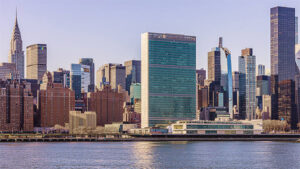
A man stood on the sidewalk outside the United Nations headquarters in New York, set down a Tibetan flag, and lit himself on fire.
It happened in broad daylight, right around 6:30 p.m. on Thursday, July 2, 2026. Passing drivers honked in absolute horror. First responders rushed to the scene with fire extinguishers within fifteen seconds, but the damage was done. The man was rushed to Bellevue Hospital, where he died from severe burns. Scattered on the pavement next to his flag was a single sheet of paper with four words: "CHINA OUT OF TIBET."
This wasn't just a random tragedy. It was a desperate, calculated act of political protest.
The mainstream media will report this as a isolated incident of self-harm. They're wrong. This act brings a terrifying new reality to light: China's reach is expanding far beyond its borders, and the international community is actively looking the other way. If you want to understand why a man would burn himself alive in the heart of Manhattan, you have to look at what Beijing quietly did earlier this week.
The Human Cost Behind the Flames
The man who died on the asphalt was identified by close friends and the exile media group Voice of Tibet as Lobga Rangzen. He was an ordinary guy with an extraordinary burden.
Rangzen was a 52-year-old Tibetan who had lived in the United States for two decades. To his neighbors and coworkers, he was a quiet, hard-working Uber driver. He navigated the chaotic streets of New York every day, building a life in exile like thousands of other Tibetans. He was deeply embedded in the local Tibetan community, known as a passionate advocate for his homeland's freedom.
Before he struck the match, Rangzen went live on Facebook to broadcast his final appeal. He didn't want his death hidden. He wanted the world to see the fire.
Lobsang Paljor, a fellow Uber driver and friend, told reporters that Rangzen was consumed by anger over what is happening back home. The Chinese government has been systematically squeezing the life out of Tibetan culture, and Rangzen couldn't take the silence anymore. He chose the United Nations building because that's where the world's leaders are supposed to protect human rights. Instead, he found an empty street and a closed door.
The Trigger: China's New Ethnic Unity Law
Why now? Why this week?
The timing isn't a coincidence. Just days before Rangzen stepped onto First Avenue with a gas can, Beijing officially implemented its new "Law on Promoting Ethnic Unity and Progress."
Don't let the corporate, sanitized name fool you. This legislation has nothing to do with unity or progress. It is a legal sledgehammer designed to completely erase the cultural, linguistic, and religious identity of China's minority groups—specifically Tibetans and Uyghurs. The law forces these groups to adopt a single, state-approved "shared" national identity. In plain terms, it criminalizes being uniquely Tibetan.
Even more terrifying is the law's extraterritorial reach. Beijing claims the legal right to punish anyone, anywhere in the world, who challenges this forced assimilation.
The U.S. State Department spoke out against the law, calling it highly problematic. State Department officials warned that the law forces individuals living outside China to actively promote the Chinese Communist Party's agenda or face severe retaliation. Think about that. An authoritarian regime is passing laws that dictate what citizens and residents in New York, London, or Paris can say.
Rangzen saw this law as the final nail in the coffin for his people. He watched the world ignore the slow cultural erasure of Tibet, and he decided to make the world look.
A Brutal Tradition of Extreme Protest
Self-immolation is the most horrific form of protest imaginable. It's violent, irreversible, and agonizing. Yet, for Tibetans, it has become a tragic recurring theme.
Data from the International Campaign for Tibet shows that more than 150 Tibetans have set themselves on fire since March 2009. Most of these acts happened inside Tibet, hidden behind China's massive digital blockade. When someone burns themselves in Lhasa or Amdo, the government cuts the internet, confiscates phones, and arrests anyone who tries to send photos abroad. The state hands down brutal prison sentences to the families of those who self-immolate, accusing them of "assisting" or "inciting" the act.
But Rangzen's death is different. It belongs to a much smaller, deeply troubling category. Only about ten Tibetans have ever self-immolated while living in exile.
When a protestor resorts to this outside the borders of China, it means the exile community is losing hope in international diplomacy. The Tibetan freedom movement has a proud history of nonviolent resistance. In the 1990s, global awareness peaked with massive Tibetan Freedom Concerts featuring bands like U2 and the Red Hot Chili Peppers. The Dalai Lama traveled the world, preaching a "Middle Way" policy that sought genuine autonomy through peaceful dialogue.
That dialogue completely stopped in 2010. China hasn't spoken to the Dalai Lama's representatives in sixteen years. While the West focuses heavily on trade agreements, Taiwan, and the semiconductor supply chain, Tibet has been pushed to the back burner.
The Hypocrisy of Global Institutions
The reaction to Rangzen's death from official channels has been predictably cold.
A United Nations spokesperson casually noted that the incident happened after all scheduled meetings were finished for the day, ensuring that no official UN business was disrupted. It's a grotesque metaphor for how the UN handles Tibet. A man burns to death on their doorstep to protest cultural genocide, and the organization's main concern is that the meetings ran on time.
Meanwhile, Beijing issued its usual boilerplate defense. Chinese foreign ministry spokesperson Guo Jiakun dismissed the tragedy during a press conference. He claimed Tibet has been an inalienable part of China since ancient times. He urged Western nations to respect the facts, stop spreading falsehoods, and stop interfering in China's internal affairs.
This response ignores the reality on the ground. Xi Jinping has rapidly accelerated surveillance and control in Tibet since taking power in 2012. Monasteries are heavily monitored. Children are forced into colonial boarding schools where they are banned from studying their native language. It's a systematic rewriting of an entire society.
Real Steps You Can Take Right Now
Lobga Rangzen gave his life to break through your social media feed. If you want his final act to mean something, you can't just read the headline and click away. Here is how you can actually engage with this issue:
- Track the overreach: Educate yourself on the Ethnic Unity Law. Read the analysis provided by human rights organizations like the International Campaign for Tibet and Free Tibet. Understand how foreign laws are beginning to police speech inside Western democracies.
- Pressure your representatives: Write to your local elected officials. Ask them where they stand on the enforcement of foreign extraterritorial laws inside your country. Demand that human rights remain a core component of any trade or diplomatic negotiations with Beijing.
- Support local Tibetan communities: The exile community is grieving. Reach out to local cultural centers, attend their peaceful rallies, and help amplify their voices so that future activists don't feel forced to use fire to get your attention.
The flames outside the UN headquarters have been put out, but the crisis that lit them is getting worse every single day. Do not let the silence win.