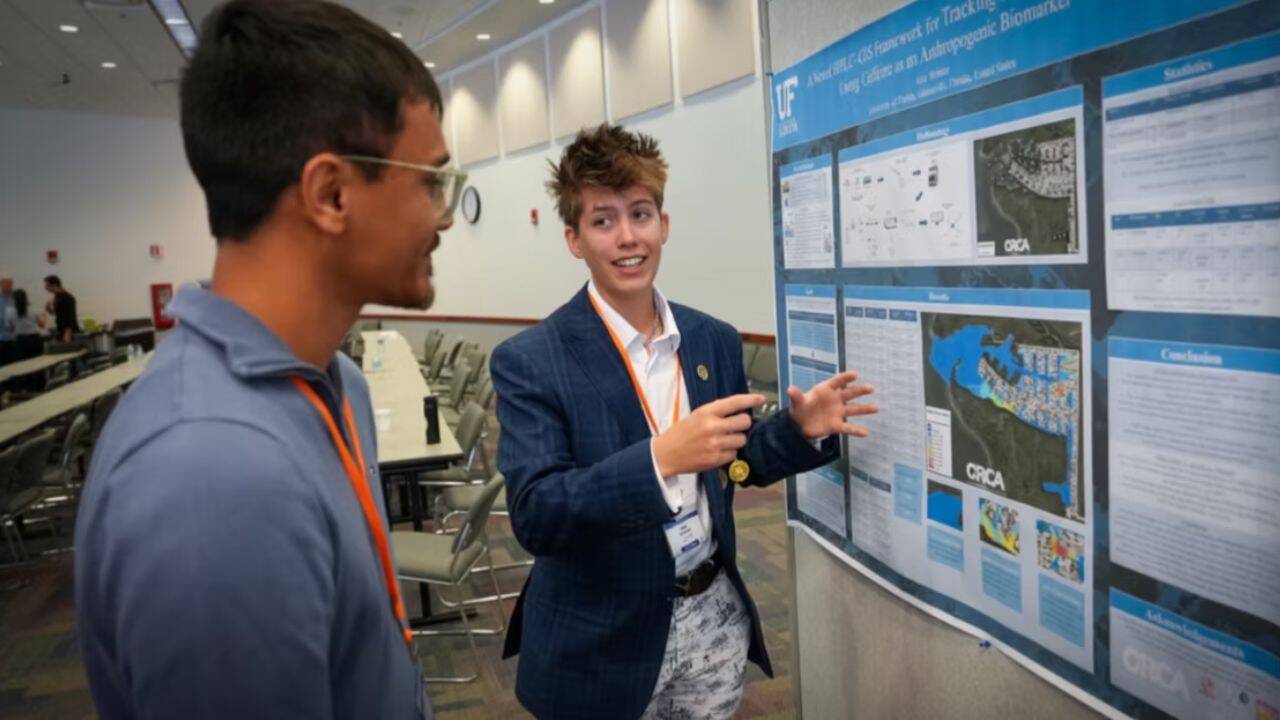
Most people see a tree and walk right past it. It is just scenery. It is just part of the background. But in Florida, a teenager named Alex Webster is trying to change that relationship by asking people to do something strange. He wants them to adopt a mangrove as a pet.
It sounds like a gimmick. Honestly, it is anything but.
We are losing coastal forests at an alarming rate. These systems act as the planet's armor, absorbing massive amounts of carbon and shielding our homes from storm surges. Yet, because they are often viewed as wild, distant, or just "swampy," they get ignored. Webster’s "My Pet Mangrove" initiative shifts the narrative from abstract environmentalism to personal responsibility. You don't ignore your pet. You don't let it starve or wither. You check on it. You care for it.
The psychology behind the pet label
Conservationists have spent decades trying to scare people into action. They use charts showing rising sea levels and melting ice caps. It rarely works. Fear shuts people down. It makes the problems feel too big to fix.
Webster takes a different route. By calling them pets, he taps into our innate desire to nurture. When you have a living thing in your home or on your balcony, your brain processes its existence differently. It is no longer "a mangrove in the wild." It is your mangrove.
I have seen this work with community gardens and urban farming projects. Once a person takes ownership of a specific plant—giving it water, watching its leaves unfurl, noticing when it looks thirsty—they stop seeing the environment as a separate, distant entity. They become ambassadors for the entire ecosystem.
Why mangroves are the ultimate survivor
If you are going to pick a plant to care for, you could do a lot worse than a mangrove. These trees are built for chaos. They live in saltwater, a place where almost nothing else can survive. They are the frontline workers of the coast.
Here is why they matter more than you might realize:
- Carbon powerhouses: Mangroves are incredibly efficient at pulling carbon out of the air and locking it away in the soil. They outperform many terrestrial forests in this regard.
- Shoreline security: Their complex, tangled root systems act as a natural barrier against erosion. They break the energy of waves before those waves can hammer the shoreline.
- Nursery grounds: These roots provide a safe haven for juvenile fish, crabs, and other marine life. Without them, the local food web collapses.
When you adopt one, you aren't just growing a plant. You are interacting with one of the most resilient biological designs on Earth.
Moving from apathy to action
The biggest mistake people make in conservation is thinking they need to buy thousands of acres or start a massive non-profit to make a dent. That is a myth. Real change is usually slow, quiet, and local.
Webster’s project is a perfect example of what works. It doesn't ask for a massive donation. It asks for a shift in perspective.
If you want to start making a difference, you don't necessarily need to be in Florida or have a mangrove in your living room. You can apply this same logic to any local environmental issue.
- Find your local equivalent: Every region has a plant or a habitat that is struggling. It could be native grasses in the Midwest, pollinators in your city, or local wetlands.
- Take personal interest: Stop looking at these things as part of the scenery. Read about what they need to thrive. Learn the specific threats they face.
- Become a steward: Share what you learn. When you show people that you care about a specific patch of land or a specific species, it creates a ripple effect. Others start to pay attention, too.
Forget the abstract
Stop waiting for some big organization to solve the problem for you. Those organizations have their place, but they cannot replace the connection that comes from individual attention.
Alex Webster is showing that you don't need a degree or a massive budget to start a conservation movement. You just need a different way of looking at the world. You need to stop seeing "the environment" as something out there and start seeing it as something you are actually responsible for.
Go find your own version of a pet project. Start small. Put in the effort. That is where real change starts.