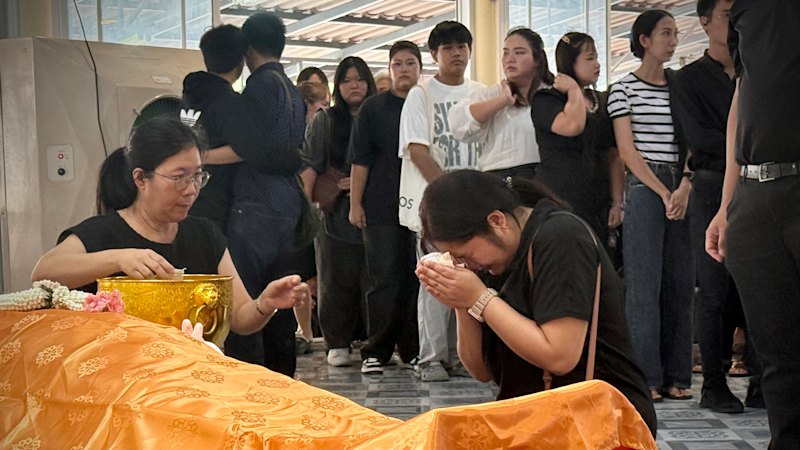
Grief rarely sounds articulate. When a parent steps forward after an unthinkable tragedy to utter those three heavy words, the public reaction splits instantly between condemnation and shock. Following the horrific events at Debsirin Nonthaburi School in Thailand, where a 14-year-old gunman killed his grandparents before opening fire at his campus, the national conversation shifted immediately toward weapon accessibility and youth mental health. But it's the father's raw public apology that has forced a much harder look at domestic responsibility.
You can't scroll through international news right now without running into debates about firearm regulation in Southeast Asia. Thailand carries one of the highest rates of private gun ownership in the region, holding an estimated 10 million firearms in civilian hands—roughly one for every seven residents. When a registered weapon kept inside a family home transforms into an instrument of mass violence, society looks straight at the adults who left the door unlocked, both literally and figuratively. You might also find this connected story interesting: Why The Latest Modi And Vance Phone Call Changes The Rules For India And Us Relations.
The Weight of Parental Liability
People want simple villains. We love painting stories in black and white because it feels safer. Yet, real life operates in terrifying shades of gray. The shooter's father didn't pull the trigger, but the firearm belonged in that household. Survivors and grieving families are left asking a fundamental question: how do you miss the signs of a child breaking down so completely?
Classmates later described the teen as troubled and heavily bullied, spending time fixated on firearms. Prime Minister Anutin Charnvirakul pointed out that the assault was clearly planned, exposing a massive blind spot in how families monitor adolescent stress. When an apology finally comes from the home, it raises a bitter issue. Words cannot patch up bullet holes or bring back the teachers and staff lost in the chaos. As reported in detailed coverage by USA.gov, the implications are notable.
Moving Past Empty Condolences
Public apologies from relatives of shooters carry a strange burden. They often sound hollow to a community drowning in fresh mourning. Still, acknowledging culpability early sets a baseline for legal and moral reckoning. Investigators are digging through mobile devices, school records, and friend circles to map out the exact sequence of failures that allowed a teenager to access a registered gun.
If you're watching this tragedy unfold from afar, the takeaway isn't just about Thai politics or regional gun laws. It's about a universal parenting crisis hiding in plain sight. Isolation eats away at teenagers. Digital echo chambers radicalize vulnerable kids. If households don't treat weapon security with absolute zero tolerance, tragedies will keep repeating.
We need to stop treating youth violence as an unpredictable weather event. It's a systemic failure built on unaddressed bullying, loose firearm storage, and missed mental health cues. Until society treats home gun safety as a non-negotiable legal obligation rather than a casual choice, apologies will remain the only thing left to offer.