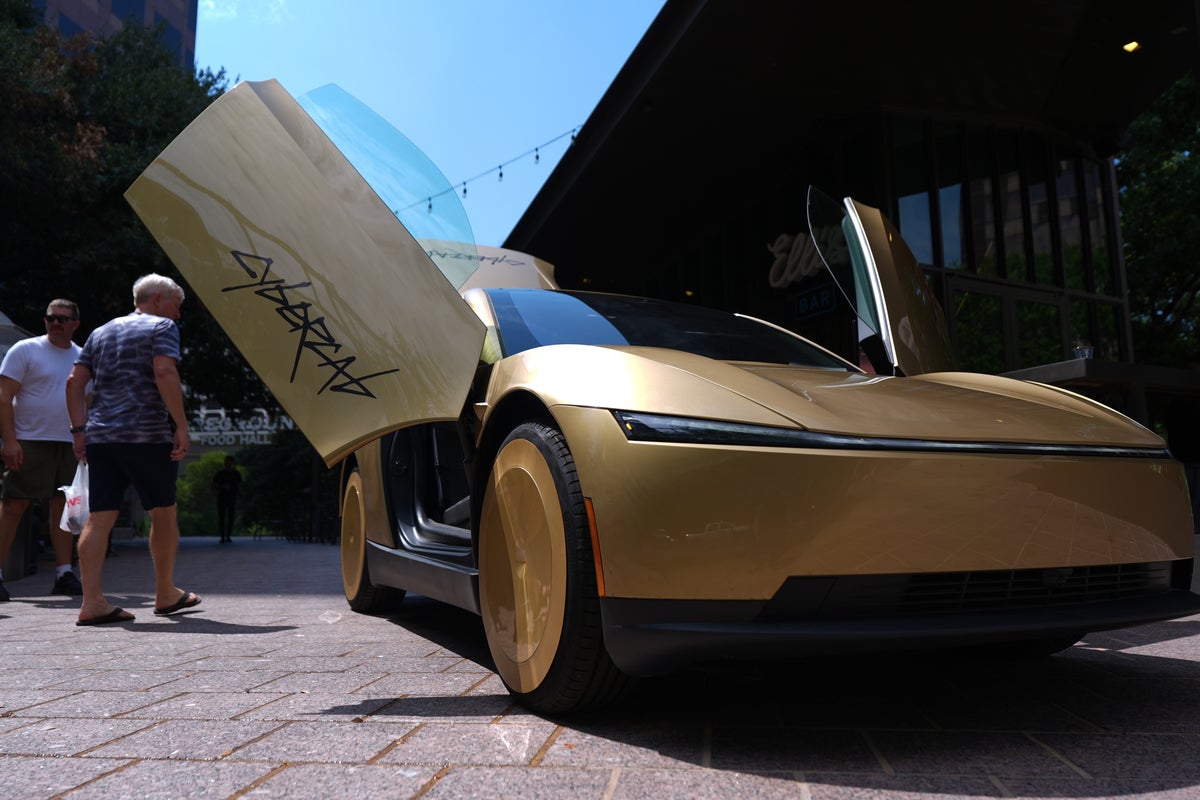
Dozens of gold-hued Tesla Cybercabs hit the streets of Austin, Texas, last Thursday with a glaring missing feature: steering wheels. There are no brake pedals either. Elon Musk is betting that Americans are finally ready to climb into a moving box with zero physical means of taking over if things go sideways.
If you've been following autonomous vehicle developments, this rollout represents a massive escalation. Tesla didn't just deploy another test fleet with safety drivers hiding behind the dash. These vehicles are completely stripped of manual controls. Passengers sit back, look at a blank dashboard or a display screen, and trust an automated vision system to navigate unpredictable city traffic.
Tesla shares jumped more than five percent on the news, offering a temporary cushion for a company battling sliding vehicle sales and a shifting global electric vehicle market. But the road ahead is anything but clear.
The Numbers Tell a Difficult Story
Let's look at the actual scale here. Tesla is playing serious catch-up.
Market leader Waymo currently deploys more than 4,000 driverless vehicles across 14 cities. Tesla tracks at just over 200 unsupervised robotaxis operating across five cities in Texas and Florida. The gap is massive.
Waymo, Zoox, and other competitors rely on a multi-layered sensor suite combining cameras, radar, and laser-based lidar. Tesla stubbornly sticks to a vision-only camera setup. Musk argues that human drivers navigate using only eyes and a brain, so cameras alone should suffice for computers. Critics and federal safety regulators remain intensely skeptical.
Public sentiment isn't doing Tesla any favors, either. A Pew Research Center poll showed that seven out of ten U.S. adults feel "not too" or "not at all" comfortable riding in a driverless car. Only a tiny fraction report feeling extremely comfortable. Convincing a skeptical public to trust a wheel-less robotaxi is a steep hill to climb, especially when brand perception faces its own hurdles. Musk's recent political alignment and government cost-cutting efforts sparked protests and customer boycotts in several key markets over the past year. BYD in China has already surged past Tesla in total electric vehicle sales volume.
Regulatory Headaches and Safety Probes
The National Highway Traffic Safety Administration is already looking closely at whether these steering wheel-free Cybercabs fully comply with federal motor vehicle safety standards. Traditional rules assume a human driver will occasionally grab a wheel or stomp a brake. Removing those components entirely throws existing regulatory frameworks into chaos.
Meanwhile, multiple active federal investigations focus on Tesla's software. Regulators are examining crashes occurring in low-visibility conditions like dense fog and blinding sun glare, instances where vehicles ran red lights, and questions over whether Tesla reported accidents quickly enough.
Europe presents an even tougher fortress. Tesla still lacks regulatory approval to deploy its partial self-driving software across most European Union nations. If regulators won't approve driver supervision there, getting approval for a completely driverless, wheel-less capsule will take years of legal battles.
What Comes Next for Autonomous Fleets
Musk's grand vision relies on more than just dedicated Cybercabs. The long-term plan involves pushing full self-driving updates to hundreds of thousands of customer-owned Teslas. The pitch sounds appealing on paper: your car sits idle in your driveway while you work, so why not let it roam the streets earning money as a taxi?
Reality is much messier. Turning a personal vehicle into an unsupervised commercial asset requires ironing out liability, insurance frameworks, cleaning logistics, and extreme edge-case driving scenarios.
If you are looking at the autonomous vehicle space right now, don't let the flashy launch event distract you from the grueling regulatory and consumer trust hurdles ahead. Tesla has proven it can build eye-catching prototypes and generate stock bumps. Now it has to prove those gold Cybercabs can navigate a rainy Tuesday afternoon in Austin without scraping a curb or frustrating human drivers.
Keep a close eye on local municipal filings and federal safety updates over the coming months. That is where the real story of autonomous transit will be decided.